
Heart disease remains one of the leading causes of death worldwide, and clogged arteries play a major role in that risk. When arteries narrow or become blocked, blood cannot reach the heart or brain as easily. That raises the chances of a heart attack and stroke. Doctors have ways to reopen these arteries, but the procedures can be complex and sometimes struggle to fully clear severe blockages.

Now, researchers are testing a different idea that sounds almost like science fiction. Instead of relying only on balloons, stents, or surgical rerouting, scientists are developing microscopic robots that can move through the bloodstream and help break apart plaque from inside the artery.
These devices are designed to swim through blood vessels, reach a blockage, and help loosen hardened plaque so surgeons can remove it more effectively. Early experiments suggest the approach could improve success rates for some of the most difficult arterial blockages and potentially shorten recovery time for patients.
Why Blocked Arteries Are Such a Serious Problem
Blocked arteries often develop slowly over many years and may not cause noticeable symptoms until blood flow is already severely restricted. This is one reason cardiovascular disease remains the leading cause of death globally. According to the World Health Organization, cardiovascular diseases account for an estimated 17.9 million deaths each year worldwide. Many of these events occur suddenly when a plaque rupture triggers a clot that blocks blood flow to the heart or brain. Because the buildup progresses quietly, many people do not realize they have advanced arterial disease until a major medical emergency occurs.
Another major concern is how plaque affects the inner lining of blood vessels. Healthy arteries rely on a thin layer of cells called the endothelium to regulate blood flow, prevent clotting, and control inflammation. As plaque accumulates, this lining becomes damaged and inflamed, which disrupts these protective functions. The artery becomes less able to expand when the body needs more oxygen, such as during physical activity. Over time, this dysfunction increases the likelihood of clot formation and sudden blockage. The National Heart, Lung, and Blood Institute notes that atherosclerosis can affect arteries throughout the body, including those that supply the heart, brain, kidneys, and legs.
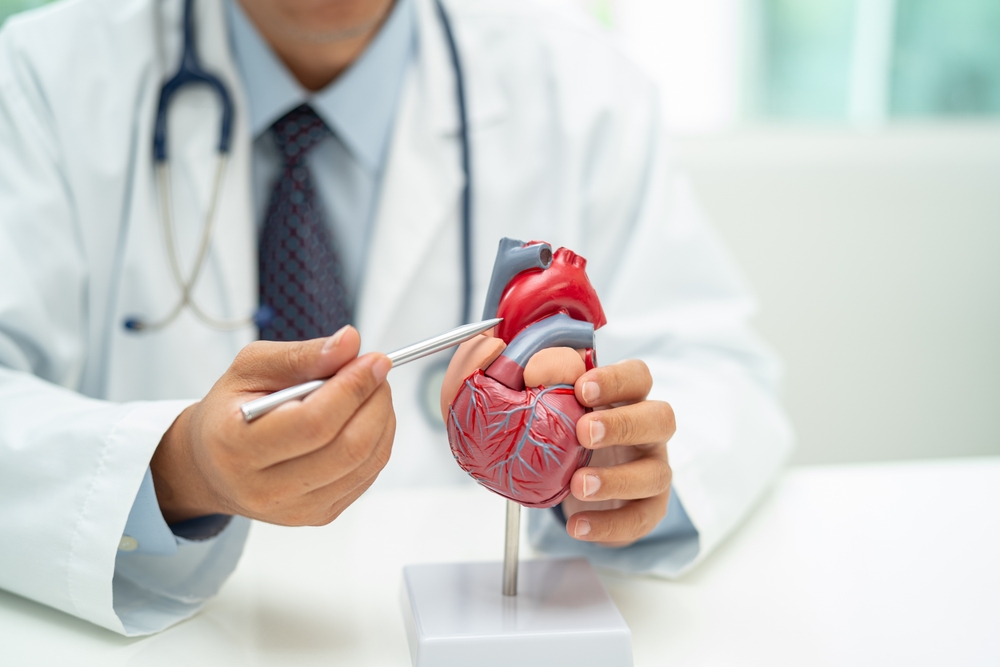
The broader health impact extends beyond heart attacks and strokes. Reduced blood flow from narrowed arteries can gradually damage organs and tissues that depend on steady oxygen delivery. In the heart, this can lead to chronic chest pain known as angina. In the brain, restricted circulation can contribute to cognitive decline and vascular dementia. In the legs, it can cause peripheral artery disease, which makes walking painful and increases the risk of infections and limb complications. These widespread effects explain why preventing and treating arterial blockages remains a central focus in cardiovascular medicine.
Current Treatments Doctors Use Today
Modern cardiology relies on catheter-based procedures and open-heart surgery to restore circulation when arteries become severely narrowed. Physicians typically begin with detailed imaging, such as coronary angiography or CT angiography, to determine the exact location and severity of the blockage. These scans help specialists decide whether a patient is a candidate for a minimally invasive catheter procedure or requires surgical revascularization. Interventional cardiologists most often perform angioplasty, a procedure in which a catheter is threaded through a blood vessel toward the blockage and a balloon is expanded to widen the artery. A small metal scaffold called a stent is commonly placed to keep the vessel open and maintain blood flow.
When arteries are extensively blocked or when multiple vessels are affected, surgeons may recommend coronary artery bypass graft surgery. During this operation, surgeons create a new route for blood flow using a healthy blood vessel taken from the chest, arm, or leg. The graft bypasses the obstructed segment of the artery so oxygen-rich blood can reach the heart muscle again. This operation has been performed for decades and remains one of the most studied cardiac procedures, with long-term data showing it can improve survival in certain high-risk patients and reduce symptoms such as persistent chest pain. Bypass surgery is often recommended when coronary arteries are severely narrowed or when previous stents cannot adequately restore circulation.

Despite these established treatments, some blockages remain difficult to treat, particularly chronic total occlusions in which the artery is completely sealed by hardened plaque. These cases require specialized techniques and can be technically demanding even for experienced surgeons and interventional cardiologists. According to Drexel University engineer MinJun Kim, success rates for certain cases remain limited. He said, “Current treatments for chronic total occlusion are only about 60 percent successful.”
Despite these established treatments, some blockages remain difficult to treat, particularly chronic total occlusions in which the artery is completely sealed by hardened plaque. These cases require specialized techniques and can be technically demanding even for experienced surgeons and interventional cardiologists. According to Drexel University engineer MinJun Kim, success rates for certain cases remain limited. He said, “Current treatments for chronic total occlusion are only about 60 percent successful.”
Inspired by a Bacterium
The shape of the micro robots did not come from traditional machinery. It came from studying how certain living organisms move in places where movement is difficult. The research team looked to Borrelia burgdorferi, the bacterium that causes Lyme disease, because of its distinctive spiral form. That corkscrew geometry allows the organism to travel through thick bodily fluids and tissue environments that would slow or trap other shapes. For engineers trying to move a tiny device through the body, that kind of natural design offers a useful model.

What makes this biological reference important is not the disease itself, but the movement strategy. A straight or simple symmetric structure is less effective in confined fluid environments at this scale. A spiral body, by contrast, can convert rotational motion into forward travel more efficiently. By borrowing that principle, the researchers created a form better suited to navigating the body’s internal fluid pathways. This is a good example of how medicine and engineering often advance by studying biological systems that have already solved a physical problem.
The section also matters because it shows the design was not chosen for novelty. It was chosen for its function. The bacterium provided a working example of how a very small structure can move through complex fluid environments, and that insight helped shape a device intended for a highly demanding medical setting.
How the Robots Would Remove Plaque
The micro‑robots are not intended to replace surgeons. Instead, they would work alongside existing surgical tools.
The proposed procedure would work in several steps:
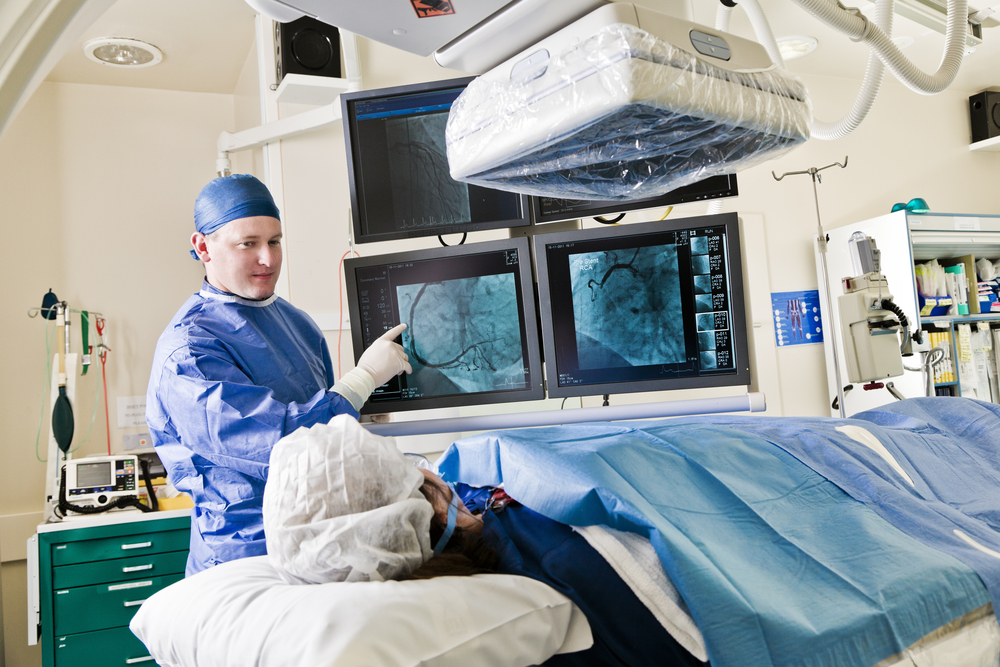
- Delivery through a catheter – Doctors would insert the micro‑swimmers into the bloodstream using a catheter.
- Navigation to the blockage – A magnetic field would guide the micro‑robots to the clogged artery.
- Initial plaque disruption – The spinning micro‑robots would help loosen hardened plaque.
- Final clearing with a vascular drill – Surgeons would then use a tiny surgical drill to remove the remaining blockage.
After the procedure, the beads are designed to break down and release anticoagulant medication that helps prevent new clots or plaque buildup.
This combination of mechanical plaque removal and medication delivery could potentially improve long‑term outcomes.
Why Working at the Microscale Is So Difficult
Building a device for use at this scale means dealing with a physical environment that behaves very differently from everyday experience. Kim explained the challenge clearly: “The microscopic world is completely different than the macroscopic world that we all live in.” He added, “We use inertia to move around in the macroscopic world, but on the microscopic level, inertia is not useful for movement.” At this size, motion is dominated less by momentum and more by constant resistance from the surrounding fluid. That means a structure cannot simply be made smaller and expected to behave like a miniature version of a familiar tool.
This is one reason the research team had to pay close attention to geometry. The device needed a shape that could translate rotation into meaningful forward movement under these conditions. Symmetrical forms did not work because they could rotate without producing enough propulsion to travel through fluid. The team found that they needed at least three beads to create the kind of asymmetry required for motion. This detail may sound small, but it highlights how exact the engineering has to be. At the microscale, even slight changes in structure can determine whether a device moves effectively or fails entirely.
Blood adds another layer of difficulty because it does not behave like a simple fluid in a laboratory model. Kim noted that controlling the robots required more elaborate algorithms based on nonlinear fluid dynamics, and he said, “This non-linear control makes it much more difficult to manipulate robots at the microscale.” In practical terms, that means researchers have to predict how the device will respond inside a constantly changing flow environment while still maintaining precise control. That challenge is a major reason why microscale medical robotics remains an emerging field rather than an off-the-shelf clinical tool.
When Could This Technology Reach Patients?
This technology is still far from routine medical use because it remains in the preclinical stage. So far, the micro robots have been tested only in artificial blood vessels, which means researchers are still studying whether the system can work safely and reliably in more realistic biological conditions. That next phase is essential. A device may perform well in a controlled lab setting but still face major problems once it is exposed to the complexity of living tissue, shifting blood flow, immune responses, and the practical demands of surgery.
The path to patient use will likely move through several steps. Researchers first need stronger preclinical evidence showing that the micro robots can be guided accurately, break up plaque as intended, and avoid harming the vessel wall or sending dangerous debris into circulation. If those results are strong enough, the next step would be human clinical trials, which are designed to test safety first and then measure how well the treatment performs compared with current care. The Smithsonian report notes that the project is part of an international collaboration involving institutions in the United States, South Korea, and Switzerland, supported by 18 million dollars in funding from the Korea Evaluation Institute of Industrial Technology, with hopes of reaching human clinical trials within four years.

Even if those trials begin on schedule, reaching hospitals would still take more time. Regulators would need convincing evidence that the treatment is both safe and effective, surgeons would need training on how to use the system, and hospitals would need the specialized equipment required to control the robots during a procedure. In other words, the question is no longer whether the idea is scientifically interesting. The real question is whether the technology can make the difficult transition from a promising lab platform to a treatment that works consistently in real patients.
What This Means for the Future of Heart Care
Heart disease remains a major global health challenge, and better treatment tools are urgently needed. Technologies that allow doctors to treat blockages with greater precision could reduce complications and shorten recovery times.
Kim believes the approach could improve outcomes for difficult cases. He said the new method “could be as high as 80 to 90 percent successful and possibly shorten recovery time.”
However, it is important to remember that the research is still early. Clinical trials will determine whether the technology works safely in real patients.
For now, the idea of tiny robots clearing clogged arteries is moving from science fiction toward real medical research. If the technology continues to advance, it may eventually give surgeons a powerful new tool for treating cardiovascular disease.



Hacklink
Friday 20th of March 2026
Hacklink satın alarak online itibarınızı güçlendirin. Güvenilir sitelerden gelen referans bağlantıları ile marka değerinizi artırın. 3949
Alprazolam 2mg
Monday 16th of March 2026
Alprazolam