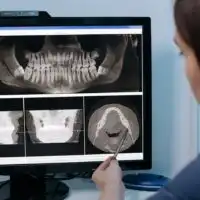
Most people think bleeding gums are a dental problem. A new study suggests they could be connected to something much more serious.
Researchers have found evidence that a bacterium commonly linked to gum disease may also play a role in dangerous calcium buildup inside the heart’s aortic valve. While the findings are still preliminary, they add to growing evidence that oral health and heart health are far more connected than many people realize.
A Surprising Discovery Inside Diseased Heart Valves
The research was presented at the American Heart Association’s Basic Cardiovascular Sciences Scientific Sessions 2026 in Boston. Scientists from Fuwai Hospital in Beijing investigated whether bacteria commonly found in infected gums could also be present inside diseased heart valves.
Their focus was on Porphyromonas gingivalis, often shortened to P. gingivalis. The bacterium is widely recognized as one of the primary drivers of periodontitis, an advanced form of gum disease that damages the tissue supporting the teeth and can eventually lead to tooth loss.
Previous studies had already linked P. gingivalis to inflammation throughout the body and to cardiovascular conditions such as coronary artery disease.
This time, researchers wanted to know whether it might also contribute to calcific aortic valve stenosis, a serious condition that slowly narrows one of the heart’s most important valves.
“There are currently no medications proven to prevent or slow the progression of CAVS,” said co-lead author Dr. Chenyang Li, a Ph.D. candidate in the Department of Cardiology at Fuwai Hospital’s National Center for Cardiovascular Diseases in Beijing. “We hope our findings demonstrating the link between periodontal disease and CAVS will stimulate further research into new preventive and therapeutic approaches for this condition.”
The results have attracted attention because they point toward an entirely new way researchers may eventually approach one of the most common forms of heart valve disease.
What Happens When the Aortic Valve Begins to Calcify?
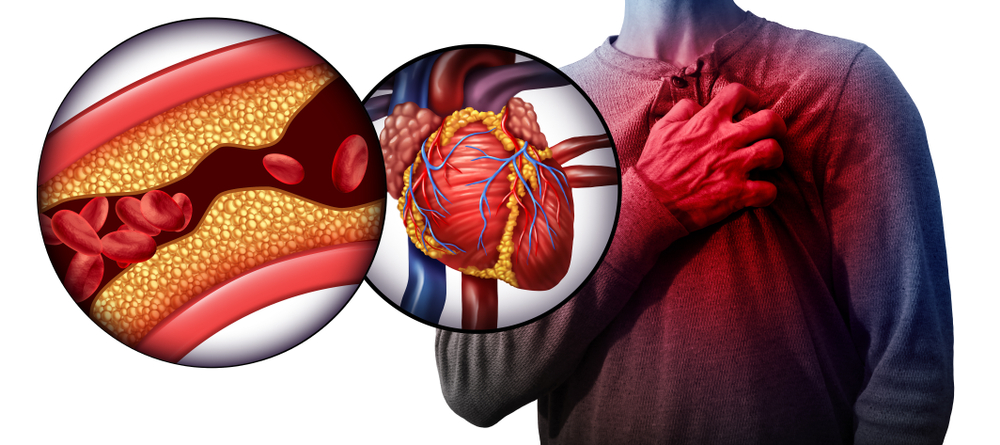
Calcific aortic valve stenosis, commonly called CAVS, develops when calcium gradually builds up on the aortic valve.
The aortic valve acts as the main gateway between the heart and the rest of the body. Every heartbeat pushes oxygen-rich blood through this valve before it travels to organs and tissues. When calcium deposits accumulate, the valve becomes thicker, stiffer, and less able to open fully.
In its earliest stages, the disease often develops silently.
Many people have no noticeable symptoms for years, making it difficult to detect without medical imaging or routine examinations.
As the condition progresses, however, the narrowing of the valve forces the heart to work much harder to pump blood.
Common symptoms include:
- Fatigue
- Chest pain
- Shortness of breath
- Fainting spells
- Heart failure in advanced cases
According to the American Heart Association, severe calcific aortic valve stenosis is currently treated through valve replacement surgery because there are no approved medications that can stop or reverse the disease.
That treatment saves lives, but researchers have spent years searching for ways to prevent patients from reaching that point in the first place.
This new research suggests that oral bacteria may become one piece of that puzzle.
Researchers Found Much More of One Bacterium in Diseased Valves

To investigate the possible connection, scientists first examined tissue taken from patients undergoing heart valve replacement surgery.
They compared aortic valves affected by calcific aortic valve stenosis with valves removed from patients who had different valve disorders.
Rather than simply looking for signs of inflammation, the team measured bacterial DNA inside the tissue itself.
What they found stood out.
Although P. gingivalis was not the most common bacterium detected overall, it showed one of the largest differences between calcified valves and healthy comparison samples.
“We were surprised by how much P. gingivalis was present in the calcified aortic valves,” Li said. “Although it was not one of the most abundant bacteria overall, it showed one of the largest differences between valves with CAVS and valves without CAVS. This unexpected finding led us to investigate its potential role in the development of CAVS.”
Live Science reported that calcified heart valves contained roughly 30 times more P. gingivalis DNA and bacterial proteins than valves without calcification, adding further weight to the researchers’ observations.
Finding bacteria inside diseased tissue, however, was only the first step.
The presence of the bacterium alone could not prove that it caused the damage.
To answer that question, the researchers needed to see whether the bacteria could actively trigger the disease process.
Mouse Experiments Offered an Important Clue

The second phase of the research moved into laboratory experiments using mice.
Scientists introduced live P. gingivalis into healthy animals to determine whether the bacteria would travel beyond the mouth and affect the heart.
They also included separate groups that received heat-inactivated bacteria, preventive antibiotics, or genetic modifications designed to block specific inflammatory pathways.
The differences between the groups quickly became apparent.
Repeated exposure to live bacteria caused P. gingivalis to accumulate inside the animals’ aortic valves. As the bacteria built up, researchers observed increasing calcium deposits and signs consistent with aortic valve narrowing.
The mice that received preventive antibiotics experienced far less bacterial buildup and significantly reduced valve damage.
Meanwhile, animals exposed only to inactive bacteria failed to develop the same harmful changes.
Those findings suggested that living bacteria, rather than bacterial remnants alone, were responsible for driving the inflammatory response.
Even more intriguing was what happened inside the valve tissue itself.
The bacteria appeared to activate a powerful immune signaling molecule called interleukin-1 beta, or IL-1β.
This protein normally helps the body respond to infection by triggering inflammation.
In the case of chronic activation, however, inflammation can begin damaging healthy tissue instead of protecting it.
Researchers believe that process may encourage normal heart valve cells to behave more like bone-forming cells, laying down calcium where it does not belong.
The result is a valve that slowly hardens over time.
Blocking Inflammation Dramatically Reduced the Damage

To determine whether inflammation was truly responsible for the calcification, researchers performed one final experiment.
Instead of removing the bacteria, they removed one of the body’s inflammatory signals.
Scientists genetically disabled IL-1β in another group of mice before exposing them to P. gingivalis.
The outcome surprised the research team.
Even though the bacteria were still present, the animals developed far less calcium buildup and significantly fewer signs of valve disease.
That finding suggests the inflammatory pathway itself may be the mechanism connecting chronic gum infections to heart valve calcification.
The results do not prove the same process happens in humans.
However, they provide one of the clearest biological explanations yet for why severe periodontal disease has repeatedly been linked with cardiovascular problems in earlier research.
The team has already begun a clinical study to investigate whether the same relationship can be confirmed in human patients.
Why Scientists Believe the Mouth and Heart Are More Connected Than We Thought

For years, researchers have noticed that people with severe gum disease often face a higher risk of cardiovascular problems. Exactly why that happens has remained uncertain.
One possibility is that chronic inflammation acts as a bridge between the mouth and the rest of the body. Periodontitis is not simply an infection confined to the gums. As the disease progresses, harmful bacteria and inflammatory molecules can enter the bloodstream, allowing them to reach organs far beyond the mouth.
The new research offers a possible explanation for one of those long-observed links.
Instead of showing only that people with gum disease have more heart problems, the study points to a biological pathway that may help explain how one condition could contribute to the other.
According to the researchers, P. gingivalis activated interleukin-1 beta (IL-1β), a signaling protein produced mainly by immune cells during infection.
Normally, inflammation is one of the body’s strongest defense mechanisms. It helps fight bacteria, repair damaged tissue, and eliminate harmful invaders.
Problems arise when inflammation becomes chronic.
Rather than protecting healthy tissue, persistent inflammatory activity can begin changing how cells behave. In this study, exposure to P. gingivalis appeared to encourage valve cells to take on characteristics similar to bone-forming cells, leading to calcium deposits that gradually stiffened the valve.
The findings also align with previous research that has linked chronic oral infections to plaque buildup inside arteries and other cardiovascular diseases.
Although scientists caution that this does not prove gum disease directly causes heart valve disease in people, the evidence suggests the relationship deserves much closer investigation.
Experts Say Good Oral Hygiene May Benefit More Than Your Teeth

Despite the promising findings, the researchers emphasized that this study should not change medical treatment today.
The results were presented as a scientific meeting abstract, meaning they have not yet undergone peer review or been published as a full scientific paper.
That distinction is important because early findings often require additional studies before becoming accepted medical evidence.
Still, the researchers believe the work reinforces something doctors and dentists have recommended for years.
“The key message is simple: take good care of your oral health,” Li said. “Good oral hygiene and treatment of periodontal disease are important for overall health and may also have benefits for cardiovascular health. While it is still too early to recommend specific treatments for preventing CAVS, our findings suggest that periodontal health could be an important piece of the puzzle.”
The study’s findings also received support from cardiovascular experts outside the research team.
“This study adds to the growing evidence that oral health and heart health are closely connected,” said Dr. Eduardo Sanchez, chief medical officer for prevention at the American Heart Association.
“For many people, regular visits to the dentist are their only connection to the healthcare system. That makes dental professionals important partners in spotting health conditions, including periodontal disease early, which can lead to quicker healthcare referrals and results, better health and lives saved.”
His comments highlight a growing shift in medicine.
Dentists are increasingly viewed as healthcare professionals who may identify warning signs extending far beyond cavities or gum disease.
The Findings Still Come With Important Limitations

As eye-catching as the research may be, the scientists stressed that several important questions remain unanswered.
The strongest evidence for a cause-and-effect relationship came from laboratory mice rather than human patients.
The human portion of the research showed that calcified heart valves contained significantly more P. gingivalis than valves without calcification. However, finding bacteria inside diseased tissue does not automatically prove the bacteria caused the disease.
The animal experiments strengthened the case by showing how live bacteria could trigger inflammation and calcium buildup, but mice do not perfectly mirror human biology.
Experts interviewed by Live Science also urged caution.
Dr. Elena Aikawa, a professor of medicine at Harvard Medical School who was not involved in the research, said the findings fit with current understanding that calcific aortic valve disease is driven by inflammation rather than simple aging.
At the same time, she noted that periodontal disease is likely only one factor among many that contribute to the condition.
Richard Lamont, chair of oral immunology and infectious diseases at the University of Louisville School of Dentistry, agreed that the mouse experiments identified a biologically plausible mechanism. However, he pointed out that mice have very different oral microbiomes than humans, making it difficult to know whether exactly the same process occurs in people.
Recognizing those limitations, the research team has already launched a clinical study to investigate whether the same relationship can be confirmed in human patients.
Future studies will determine whether reducing gum disease or targeting inflammatory pathways such as IL-1β could eventually slow the progression of calcific aortic valve disease.
Looking After Your Gums Could Be One More Way to Protect Your Heart
While scientists continue investigating the connection, the practical advice remains familiar.
Maintaining good oral hygiene has long been recommended to prevent cavities, tooth loss, and painful gum infections. This new research suggests those everyday habits may have wider health benefits than previously appreciated.
Brushing twice a day, flossing regularly, attending routine dental checkups, and seeking treatment for signs of periodontal disease all remain important parts of maintaining overall health.
Researchers are not suggesting that better brushing alone will prevent heart valve disease.
Rather, the study adds another piece to an expanding body of evidence showing that the health of different parts of the body is deeply interconnected.
Calcific aortic valve stenosis remains a serious disease with no approved medication capable of slowing its progression. If future clinical studies confirm that chronic gum infections contribute to the condition, oral healthcare could eventually become part of broader strategies aimed at reducing cardiovascular risk before irreversible damage occurs.
For now, the findings offer a compelling reminder that problems beginning inside the mouth may not always stay there. Something as common as untreated gum disease could influence the body’s health in ways researchers are only beginning to understand.