
Somewhere in the refrigerated aisle of your neighborhood Target, Sprouts, or Kroger, there is a carton of milk or a pint of ice cream that never came from a cow. It sits on the shelf beside the conventional products, priced and packaged like anything else, and unless you turned it over and read the fine print on the back, you would have no reason to suspect it was made in a bioreactor rather than a barn. The front of the package will not shout about it. In many cases, the front will not mention it at all.
This is not a glimpse of some distant future. Lab-created dairy has already cleared the federal regulatory process, earned its place on retail shelves, and worked its way into products from brands that shoppers have trusted for generations. For anyone who assumes the word “milk” on a label still means the same thing it did a decade ago, the reality has quietly shifted underneath them.
There is a catch that makes all of this more complicated than a simple story about cowless milk, though. What is actually on those shelves right now, what remains a laboratory experiment, and what the law requires companies to tell you about either one turns out to depend entirely on how the product was made. That distinction is where nearly all of the confusion begins.
Two Different Technologies People Keep Confusing
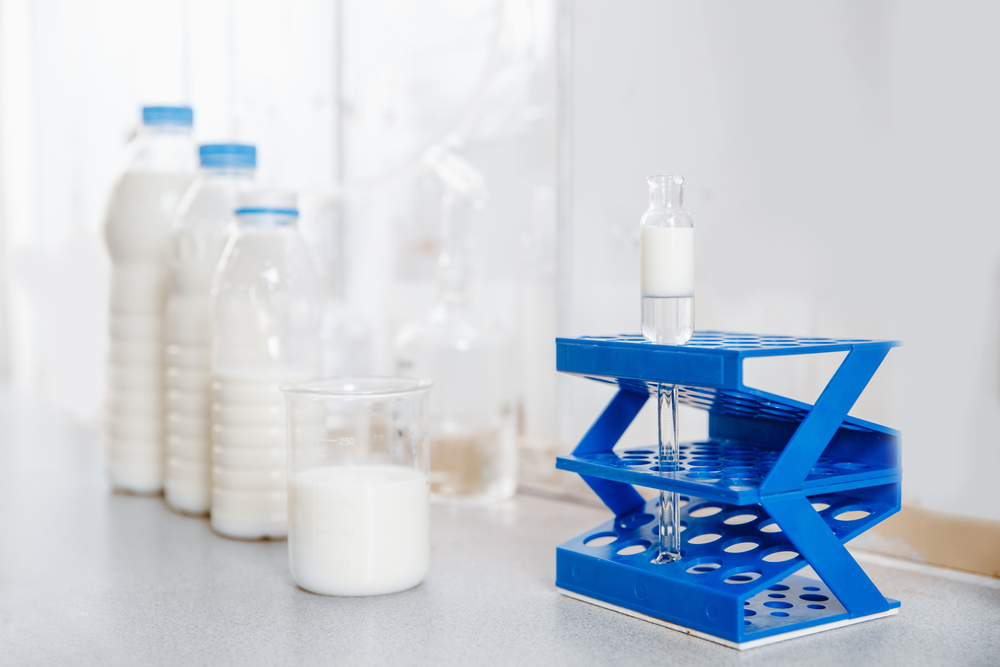
Before anything else makes sense, it helps to understand that “lab-created dairy” is not one thing. It is two very different technologies that often get lumped together, and separating them clears up most of the muddle.
The first is precision fermentation. Food technology companies take micro-organisms like yeast or fungi and program them with DNA sequences so that they produce specific milk proteins, primarily whey and casein. The result is a protein described as molecularly identical to what comes out of a cow, but grown in a tank rather than a mammary gland. This is the technology already on store shelves, used to formulate lactose-free and cholesterol-free products.
The second is mammalian cell culture, and it is a different animal entirely, so to speak. Rather than coaxing microbes into making isolated proteins, this method grows actual milk-producing cells to generate complete milk, fats and carbohydrates and proteins all together. That approach is newer, more ambitious, and, as of the reporting, still working its way toward commercial availability rather than sitting in your grocery cart.
How the FDA Clears These Products for Sale
The pathway that brings lab-created dairy to market runs through a regulatory framework known as GRAS, short for “Generally Recognized as Safe.” It is a decades-old mechanism, and it explains how novel ingredients reach shelves without the lengthy approval process most people assume every new food additive must undergo.
Under federal law, any substance intentionally added to food is treated as a food additive requiring premarket review, unless qualified experts generally recognize it as safe for its intended use. That exception is the GRAS pathway. A company producing microbially grown milk proteins compiles thorough safety and toxicological data into a dossier and submits it to the FDA. If the agency’s food scientists review the submission and find no lingering safety concerns, they issue what is known as a “No Questions” letter. That letter legally clears the ingredient to be manufactured, sold, and folded into everyday retail food products.
The GRAS status can rest on published scientific evidence and accepted methods, or, for ingredients used in food before 1958, on a substantial history of common consumption. For lab dairy, it is the scientific route that applies, and once that box is checked, the ingredient can travel from a fermentation facility straight into products on a supermarket shelf.
Why Cell-Cultured Milk Follows Different Rules
Here is where the labeling picture, which sounds contradictory at first, actually resolves. The rules differ depending on which of the two technologies produced the dairy.
Food made from cultured animal cells sits under a shared jurisdiction, with the FDA coordinating closely with the U.S. Department of Agriculture’s Food Safety and Inspection Service. Products in this category do carry distinguishing labels, described in the sources as “cell-cultured” or “cell-cultivated.” In other words, if you are buying milk made by growing animal cells, the packaging is required to say so in some form.
Precision-fermentation proteins are a different matter. There is currently no federal mandate forcing an explicit “lab-grown” or “synthetic” title onto the front-facing packaging of products built from these microbially grown proteins. That gap is precisely why a busy shopper can pick up an item, glance at the front, and walk out without ever realizing what they bought. The regulatory clearance is there. The prominent front-of-pack disclosure is not.
The Label Language Shoppers Should Learn to Spot
If the front of the package will not tell you, the ingredient statement on the back will, provided you know what you are reading. The tells are specific phrases that signal a product was made with fermentation-derived proteins rather than conventional dairy.
The clearest indicators include “animal-free dairy,” “precision fermentation” or “made with precision fermentation,” “non-animal whey protein” or “animal-free whey protein,” “made without cows,” “fermentation-derived dairy protein,” and “bioidentical milk protein.” Any one of these is a signal that what is in the carton did not originate with a grazing animal. Major consumer brands, including names as familiar as Breyers, along with newer entrants like Bored Cow, have used these lab-created ingredients to build their lactose-free and cholesterol-free offerings. The takeaway for a careful shopper is straightforward. If you want to know, you have to read the back of every dairy product, every time.
Inside UnReal Milk, the First Lab-Grown Whole Cow’s Milk
The most striking example of the second technology comes from a Boston startup called Brown Foods, founded in 2021 by Sohail Gupta, Bhavna Tandon, and Avhijeet Kapoor. Their product, UnReal Milk, is billed as the world’s first lab-grown whole cow’s milk, produced without a single cow.
What sets it apart from precision fermentation is completeness. Because it relies on mammalian cell culture, UnReal Milk aims to replicate the full composition of dairy, which means it can be processed into butter, cheese, and ice cream without additives or restructuring. Independent testing from the Whitehead Institute for Biomedical Research, affiliated with MIT, confirmed the presence of all essential dairy proteins, making the product structurally identical to traditional milk. The company secured $2.36 million in seed funding from investors including Y Combinator, and it laid out a timeline of taste tests in 2025 and a market pilot in 2026.
For Gupta, the ambition stretches well past replacing a gallon of two percent. “Though we are starting with cow milk, using our technology we can produce milk of any mammalian species, including human milk,” he said, gesturing toward a future that includes pharmaceuticals, cosmetics, disaster relief, and even space travel. It is a sweeping vision, and one still waiting on the practical work of scaling up.
The Environmental Promise Driving the Industry
The engine behind this entire movement is environmental. Traditional dairy farming carries a heavy ecological cost, consuming vast amounts of water and land while emitting methane, a greenhouse gas considerably more potent than carbon dioxide. As the food industry hunts for lower-carbon options, lab-created dairy presents itself as a way to sidestep those burdens along with the animal welfare concerns of conventional farming.
Brown Foods makes bold claims about the payoff. According to the company, its production method slashes carbon emissions by 82 percent, water use by 90 percent, and land use by 95 percent, all without relying on livestock. Those figures, paired with a cruelty-free production story, form the core of the pitch that lab dairy is not just an alternative but a meaningfully better one for the planet.
The Environmental Concerns That Complicate That Promise
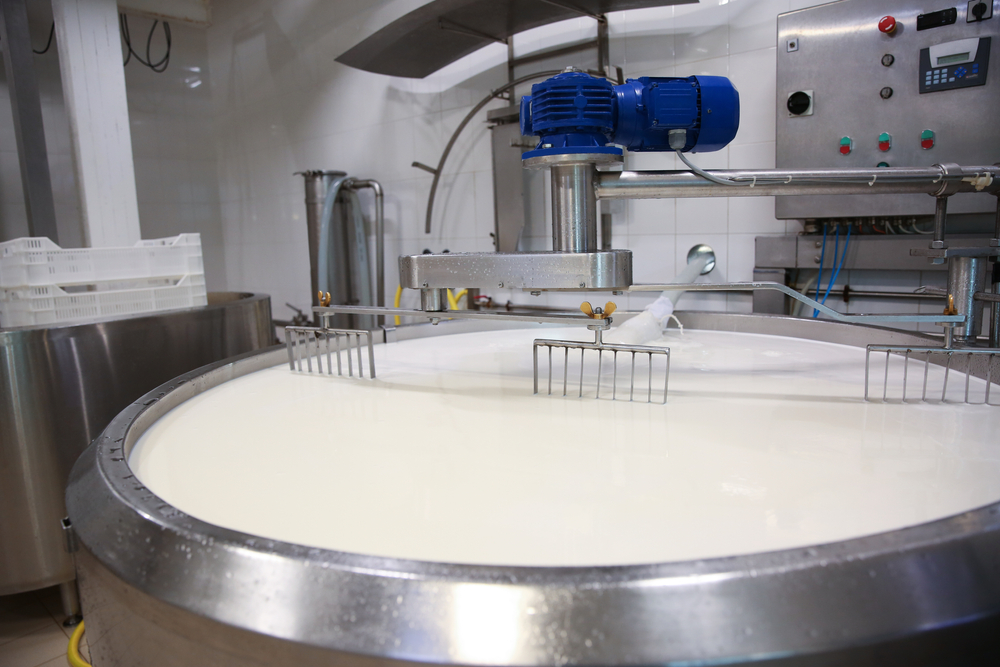
The environmental case is not as settled as the marketing suggests, and several counterpoints raised in connection with the reporting deserve equal air. They are worth treating as concerns under study rather than final verdicts, but they cut against the tidy narrative.
Bioreactors do not run on good intentions. They must be heated and agitated continuously, which demands enormous amounts of electricity, and if the facility draws from a standard fossil-fuel grid, its carbon footprint climbs sharply. One independent study by Behm and colleagues found the carbon footprint of precision-fermented protein ranging between 5.5 and 17.6 tonnes of CO2 equivalent per tonne of protein, roughly comparable to the estimated 10 tonnes for traditional milk protein extraction. The implication is that lab dairy is not inherently low-emission unless it is powered entirely by renewable energy.
There is also the matter of what the microbes eat. They cannot conjure protein from nothing and must be fed large quantities of simple sugars derived from corn or cane, which simply relocates environmental pressure from cattle grazing to intensive monoculture crop farming, with its own demands for land, pesticides, and water. On top of that, large fermentation facilities generate substantial spent microbial biomass and chemical wastewater, which, if poorly managed, could contribute to nutrient pollution and starve local waterways of oxygen.
Health Questions Researchers Are Still Asking
Alongside the environmental debate sits a set of health questions, and these too remain early and unresolved rather than proven. Still, they point to why some experts are urging caution before treating lab dairy as identical to the real thing.
Because lab-grown dairy contains whey and casein that are molecularly identical to those in cow’s milk, it carries the same allergen risks as conventional dairy, which surprises no one. More concerning is emerging research suggesting that when amino acid sequences are slightly altered to optimize production, the process could introduce novel allergenicity variants that even seasoned dairy-allergy sufferers might not anticipate. A 2025 study published in Microbiology Spectrum by researchers at the University of Nevada, Reno reported that synthetic whey protein did not interact with gut bacteria the way natural milk does, supporting lower diversity of beneficial gut bacteria in laboratory tests. A separate 2026 study in Scientific Reports raised alarms about unusual fungal proteins and rogue metabolites in tested samples, findings that challenge the industry’s claim of substantial equivalence to natural milk and that suggest more long-term toxicology work is needed, particularly regarding infants and children.
There is a nutritional wrinkle as well. Whole milk contains a complex matrix of thousands of compounds. Because lab dairy replicates only target proteins, companies must blend in plant-based fats and synthetic vitamins to approximate the real thing, which may not match natural bioavailability. Public health experts have also flagged that these heavily engineered products fall into the ultra-processed foods category, a group consistently linked to poorer metabolic outcomes.
A Fast-Growing Market and the Fights Around It
Whatever the unresolved questions, the money is moving. The dairy-alternatives sector is projected to expand from $31.13 billion in 2023 to $70.60 billion by 2031, and some analysts believe animal-free dairy could eventually capture as much as a third of the $893 billion traditional dairy market. Startups like Perfect Day and Remilk are pursuing precision fermentation, while others such as Germany’s Senara and Israel’s Wilk explore cell-based approaches, and investment continues to accelerate across the space.
That momentum has not gone unchallenged. In June 2023, the National Milk Producers Federation urged the FDA to bar precision-fermentation startups from labeling their products as “milk,” citing regulatory standards. Many farmers, unsurprisingly, view lab-grown dairy as a direct competitive threat. Whether consumers will fully embrace these products or leave them parked in a niche remains an open question.
What This Means for the Shopper Right Now
Strip away the noise, and the situation comes down to a few grounded facts. Lab-created dairy is legal and has passed FDA review. In the case of precision-fermentation products, it may be sitting on shelves with no obvious front-of-package announcement of how it was made. Cell-cultured milk, by contrast, remains early-stage and does carry identifying labels.
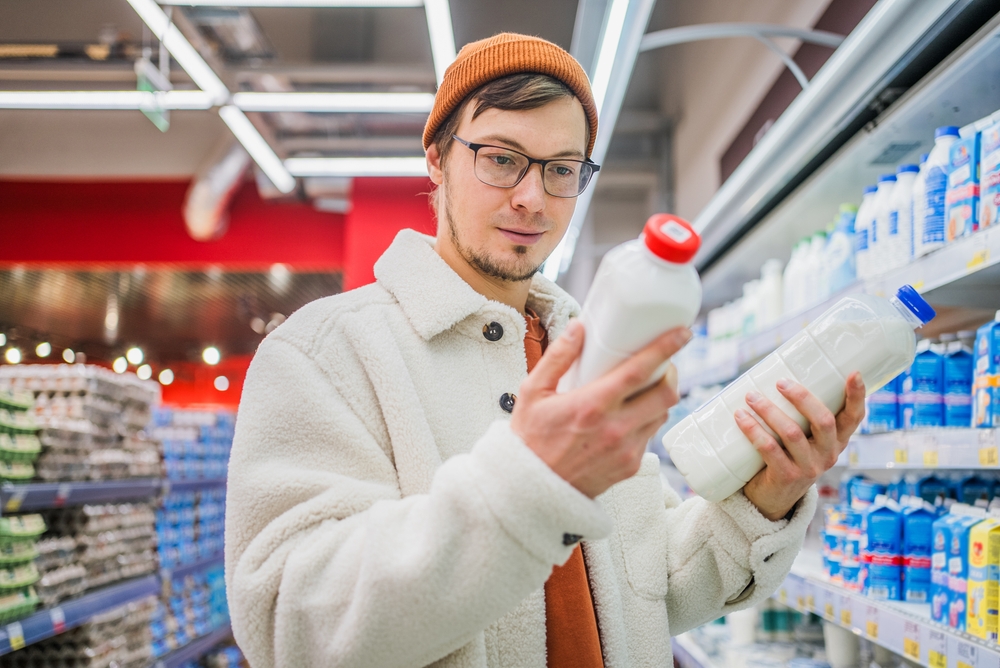
For anyone who simply wants to know what they are putting in their cart, the practical move is neither panic nor protest. It is turning the package over and reading the ingredient panel for the specific phrases that give these products away. The information is there for those who look. In a market shifting this quickly, that small habit may be the most reliable tool a shopper has.

pHqghUme
Thursday 17th of September 2026
1