
When CNN’s Dr. Sanjay Gupta traveled deep into the Bolivian Amazon, he expected to find a community shaped by hardship. What he found instead has since become one of the more quietly startling stories in modern medical research. Deep in the tropical forests of lowland Bolivia, roughly 17,000 people known as the Tsimané live in a way that bears almost no resemblance to life in any industrialized nation. According to a growing body of peer-reviewed science, their brains are aging at a rate that most neurologists in the Western world would consider close to impossible.
What drives that difference is not what most people would guess. Genetics does not explain it, nor does geographic isolation, nor any kind of designed health strategy. Scientists who have spent years studying the Tsimané say the answer sits much closer to home, found in choices that modern societies make daily without giving them much thought. Before getting to those choices, it helps to understand just how far the numbers diverge.
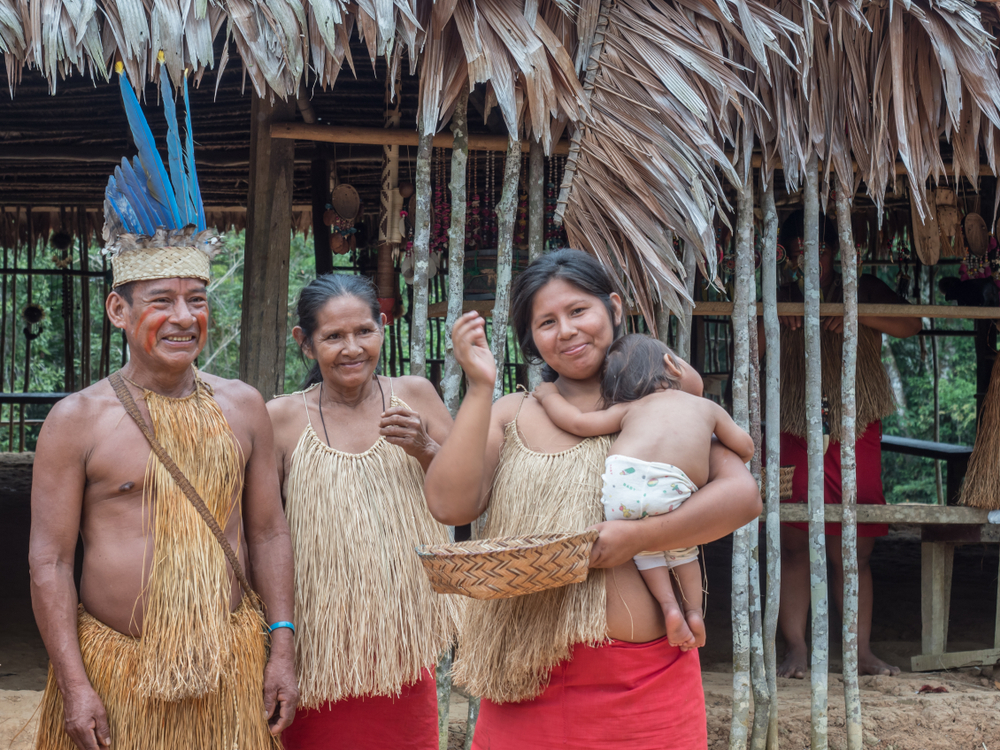
Who the Tsimané Are and How They Live
Spend a day with a Tsimané adult, and the picture becomes clear. An average community member walks around 17,000 steps per day, not to meet a fitness goal, but because getting food requires it. Hunting, fishing, farming, and foraging fill most days. None of it happens with motorized help.
Their diet would look foreign to most Western households. Roughly 70 percent of their calories come from complex carbohydrates, primarily plantains, cassava, rice, and corn. Protein and fats each account for around 15 percent. Processed foods, added sugars, and added salts are mostly absent. Fiber and micronutrients, including selenium, potassium, and magnesium, run through much of what they eat. Food availability has natural limits in its environment too, which means intermittent fasting is not a wellness strategy for the Tsimané. It is simply a fact of daily life. Sleep follows a consistent schedule, and physical activity fills most waking hours out of practical necessity rather than deliberate choice.
Against that backdrop, the Tsimané carry a dementia rate of approximately 1 percent. Among Americans aged 65 and older, that figure sits at around 11 percent. Researchers who have studied the community through work published in both PNAS and Alzheimer’s and Dementia are consistent on one point. That gap is not written in their DNA.
A Landmark Record of Brain Health
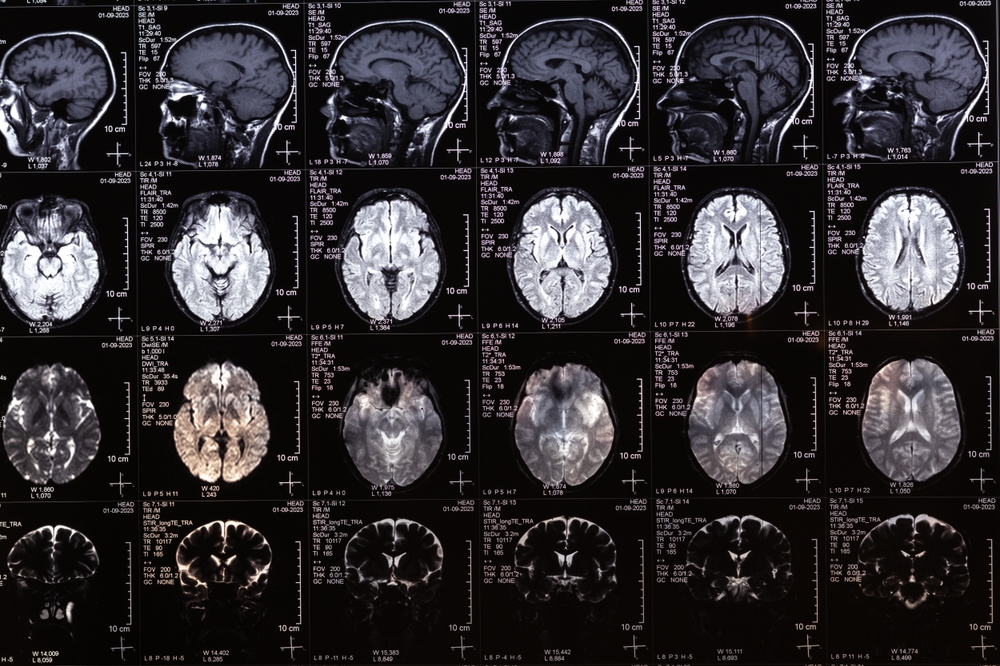
A research team from USC, Chapman University, and UC Santa Barbara set out to understand what the Tsimané, alongside a related group called the Mosetén, could reveal about brain aging. Together, the team enrolled 1,165 adults between the ages of 40 and 94, transporting participants from remote villages to the nearest hospital with CT scanning equipment. Researchers measured brain volume by age and collected data on BMI, blood pressure, cholesterol levels, and other health markers. Findings appeared in the Proceedings of the National Academy of Sciences.
Lead researcher Hillard Kaplan, a professor of health economics and anthropology at Chapman University, has studied the Tsimané for nearly two decades. His co-corresponding author, Andrei Irimia of USC’s Leonard Davis School of Gerontology, brought expertise in brain imaging and aging to the project. What their team produced stands as one of the most closely examined records of brain health in a non-industrialized population ever published.
“The lives of our pre-industrial ancestors were punctured by limited food availability,” Irimia said. “Humans historically spent a lot of time exercising out of necessity to find food, and their brain aging profiles reflected this lifestyle.”
What the CT Scans Revealed
To ensure a more accurate comparison than simply pitting the isolated Tsimané against fully industrialized nations, the study included a sister population: the Mosetén. Sharing language and ancestry with the Tsimané, the Mosetén also engage in hard physical labor but have greater access to modern infrastructure, markets, and medicine. As Irimia explained, they serve as an “important intermediary population” that allows researchers to track how transitioning to a modern lifestyle impacts health.
The CT scans produced a clear, gradient pattern that proved the researchers’ logic. The Tsimané showed the shallowest rate of age-related brain shrinkage (atrophy). The partially modernized Mosetén fell perfectly in the middle, and American and European populations showed the steepest losses.
Because brain atrophy connects directly to cognitive decline, these scans reinforced a staggering clinical finding: researchers found zero cases of dementia before age 80 in either Bolivian group. The data also highlighted a strong link between heart health and brain aging, as arterial disease correlated with lower brain volume across all demographics. Interestingly, among the Tsimané, moderate BMI and mid-range cholesterol were linked to larger brain volumes—a surprise that researchers attribute to the Tsimané carrying more muscle mass than Westerners at equivalent BMI levels.
The “Embarrassment of Riches” Model
To explain what they found, researchers developed a framework they call the “embarrassment of riches” model. At its core, it asks a simple question. If human biology evolved under conditions of limited food and high physical demand, what happens when those conditions reverse completely?
For most of human evolutionary history, more food and less energy spent acquiring it meant better odds of survival and reproduction. Human biology adapted by building strong drives toward calorie-dense foods and strong resistance to unnecessary physical effort. In the environments where those drives evolved, they served a clear purpose. Food was scarce, movement was constant, and storing every available calorie made good biological sense.
Industrialization changed the equation without changing the underlying biology. Calorie-dense, processed food became cheap and widely available. Physical labor in daily life dropped sharply. Yet the ancient drives stayed in place, now operating in a world they were never built for.
As Kaplan explained, “During our evolutionary past, more food and less calories spent in getting it resulted in improved health, well-being and ultimately higher reproductive success or Darwinian fitness. This evolutionary history selected for psychological and physiological traits that made us desirous of extra food and less physical work, and with industrialization, those traits lead us to overshoot the mark.”
What the Tsimané represent, in that reading, is a population still living close enough to the original conditions that their biology has not yet overshot anything.
Patterns We Can Change

None of these points toward the Bolivian jungle as a destination. Life among the Tsimané carries real costs, including limited access to medical care for acute conditions and a significant infectious disease burden. Researchers are not romanticizing what pre-industrial life requires of a person.
What they are saying, with increasing confidence, is that the chronic disease burden weighing on industrialized nations is not a fixed feature of human biology. It reflects, at least in meaningful part, specific patterns around food, movement, and daily routine that modern societies have built over the past century. Patterns, unlike genetics, can shift.
No wellness trend produced what the Tsimané have. No protocol or optimization strategy explains it. They moved because survival required it, ate what the land and their labor provided, and managed, without any deliberate intention, to hold on to something that modern medicine is still working hard to recover.
Source:
- Kaplan, H., Hooper, P. L., Gatz, M., Mack, W. J., Law, E. M., Chui, H. C., Sutherland, M. L., Sutherland, J. D., Rowan, C. J., Wann, L. S., Allam, A. H., Thompson, R. C., Michalik, D. E., Lombardi, G., Miyamoto, M. I., Rodriguez, D. E., Adrian, J. C., Gutierrez, R. Q., Beheim, B. A., . . . Irimia, A. (2023). Brain volume, energy balance, and cardiovascular health in two nonindustrial South American populations. Proceedings of the National Academy of Sciences, 120(13), e2205448120. https://doi.org/10.1073/pnas.2205448120