
We’ve all heard the phrase “sleep on it” when we’re wrestling with a difficult problem or decision. The advice often feels like common sense: give your mind a break, let the subconscious do its work, and return to the challenge later with fresh eyes. Yet what has long seemed like anecdotal wisdom is now being supported by rigorous neuroscience. Recent studies show that even short naps, lasting just twenty minutes, can significantly improve problem-solving ability, provided they dip into a particular stage of sleep known as N2. This stage, deeper than a light doze but not yet the heavy slow-wave slumber of N3, appears to be the secret ingredient for unlocking sudden flashes of insight. Instead of simply refreshing the body, N2 sleep may reorganize neural circuits in ways that allow us to spot hidden connections and creative solutions that had previously remained invisible.
The discovery comes from researchers at Universität Hamburg and their collaborators, who designed clever experiments to measure how different stages of sleep influence creative breakthroughs. Their work demonstrates that naps are not merely passive breaks from thinking but active periods in which the brain prunes unnecessary connections, consolidates useful ones, and literally rewires itself for clarity. Participants who reached N2 sleep during short naps were far more likely to experience the classic ‘aha’ moment, a sudden leap in problem-solving ability where an answer feels obvious in hindsight. This finding doesn’t just validate centuries of folk wisdom; it provides a tangible, scientific roadmap for how to use rest strategically to enhance creativity, decision-making, and innovation. In the sections that follow, we’ll explore how this process unfolds, why N2 sleep is uniquely suited to sparking insight, and how you can deliberately harness naps as a tool for both productivity and self-discovery.
Unlocking Hidden Rules Through Sleep
To test the connection between naps and problem-solving, researchers recruited ninety participants between the ages of eighteen and thirty-five. The volunteers were given a deceptively simple task known as the Perceptual Spontaneous Strategy Switch Task (PSSST). At first glance, the challenge involved following dots as they moved across a screen and responding via keyboard presses based on movement. What the participants didn’t know, however, was that there was a hidden shortcut built into the task: the dots’ colors also predicted the correct answers. Discovering this color-based rule represented the “insight” moment, a shift from a slower, effortful strategy to a faster and more elegant one.
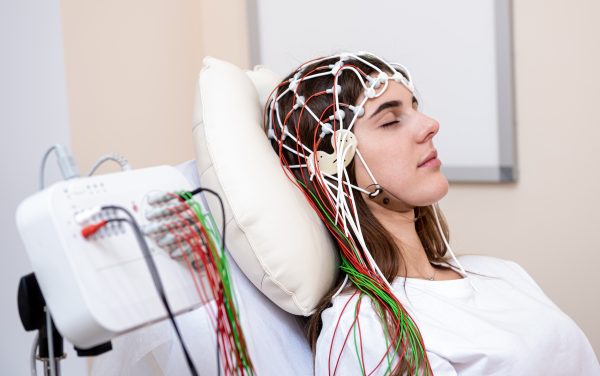
After completing several rounds, participants were asked to take a twenty-minute rest period. Some stayed awake, some drifted into light N1 sleep, and others descended into N2 sleep, the first true stage of deeper rest. Electroencephalograms (EEGs) monitored brain activity to verify the precise sleep stage of each participant.

When they were tested again, the results were striking: overall, seventy percent of participants eventually discovered the hidden rule. But those who had reached N2 sleep showed a massive advantage. Nearly eighty-six percent of them experienced the breakthrough, compared to sixty-three percent of those in N1 sleep and only fifty-five percent of those who had remained awake.
This difference suggests that the benefits of a nap are not uniform. Simply dozing lightly or closing your eyes is not enough; the specific physiological changes that occur in N2 sleep are what prime the brain for insight. By designing a task with a concealed shortcut, the researchers were able to measure creative leaps in real time, rather than relying on self-reports of feeling more refreshed or inspired. It was a clever design, and the numbers spoke for themselves: deeper naps led to dramatically higher rates of problem-solving breakthroughs.
What the Brain Revealed: Spectral Slopes and Neural Noise

One of the most intriguing aspects of the study was the use of EEG data to look beyond traditional sleep-wave analysis. Typically, researchers pay attention to rhythmic oscillations such as alpha, delta, or the sleep spindles characteristic of N2. But in this experiment, the scientists examined something called the spectral slope, a measure of the balance between low- and high-frequency brain activity. A steeper spectral slope indicates stronger low-frequency dominance and reduced high-frequency “noise.”
The results showed that participants who had steeper spectral slopes during their naps were significantly more likely to experience post-nap insight. This suggests that the brain’s ability to reduce background chatter and organize itself into a calmer, more regularized state is central to the creative benefit of N2 sleep. Unlike classical oscillations, which reflect specific rhythmic processes, the spectral slope captures more global shifts in neural excitability and network dynamics. It paints a picture of the brain clearing away clutter, shutting down irrelevant activity, and paving the way for new patterns to emerge.
This discovery dovetails beautifully with theories of synaptic downscaling, which propose that sleep trims back weaker synaptic connections accumulated during the day while preserving and strengthening the important ones. By removing redundant or noisy pathways, the brain achieves a more efficient state, one that can suddenly perceive patterns hidden beneath the static. In computational terms, it’s a kind of “regularization,” preventing the system from overfitting to irrelevant details and allowing simpler, more general solutions to surface. The spectral slope thus serves as a measurable biomarker for when the brain has entered this reset mode, where creative leaps become more likely.
Why N2 Sleep Matters More Than N1 or Wakefulness

Why is it that N2, and not N1 or simple wakeful rest, provides such a strong boost for problem-solving? To answer this, we need to understand the distinctions between these stages of sleep. N1 is the threshold between wakefulness and sleep, marked by drifting thoughts, fleeting imagery, and light theta brain waves. It’s often associated with hypnagogic experiences, those strange flashes of creativity or hallucination people report as they’re just falling asleep. While N1 can sometimes yield quirky associations, it doesn’t seem to reliably reorganize the brain’s deeper networks.
N2, on the other hand, represents the transition into genuine unconsciousness. It is characterized by the appearance of sleep spindles, bursts of brain activity and K-complexes, sharp waveforms that mark significant shifts in processing. During N2, the brain undergoes more profound synaptic rebalancing, consolidating memories and reconfiguring neural connections. It’s this deeper housekeeping that seems to allow hidden solutions to bubble up to consciousness upon waking. Importantly, the study confirmed that the observed benefits were not simply due to improved alertness. Participants across all groups performed equally well on vigilance tests, meaning that the creative advantage of N2 could not be chalked up to simply feeling more awake after rest.
This finding overturns some earlier research that suggested light N1 sleep might be the most fertile stage for creativity. While hypnagogic states can indeed produce novel associations, they may not provide the structural reorganization needed for breakthroughs in problem-solving tasks. Instead, it appears that dipping just a little deeper into N2 is where the real magic happens. The pruning, consolidation, and regularization processes that unfold there give the mind a chance to reset and reframe problems in ways that conscious effort often cannot.
How to Nap for Maximum Insight

The findings provide some practical guidelines for turning naps into a deliberate cognitive strategy. First, timing matters. A twenty-minute nap is often the sweet spot, as it allows enough time to move from wakefulness through N1 and into N2, but not so much that you risk slipping into the deeper N3 stage, which can cause grogginess upon waking. Early afternoon naps, between one and three p.m., tend to align with natural circadian dips in alertness, making it easier to reach N2.
Second, environment matters. A quiet, dark, and slightly cool space increases the likelihood of descending into N2 within the limited nap window. Reclining at an angle rather than lying flat may also help, as it balances comfort with a subtle awareness that prevents deeper, slow-wave sleep. Small details such as eye masks, white noise machines, or a consistent pre-nap ritual can make the process more reliable.
Third, it’s important to prime the problem before napping. Participants in the study had recently engaged with the dot-tracking task, giving their brains fresh material to reorganize during sleep. If you’re hoping for a breakthrough on a real-world challenge, spend ten or fifteen minutes reviewing or working on the problem before resting. Don’t try to force a solution, simply immerse yourself in the material, then let the nap take over. Upon waking, give yourself a short window of calm activity before re-engaging with the challenge. Many participants found that insights emerged not instantly upon waking but a few minutes afterward, once their reorganized brains had a chance to reapply themselves.
Finally, some people swear by the “coffee nap” strategy, where you drink a small amount of caffeine immediately before lying down. Since caffeine takes about twenty minutes to metabolize, it begins to kick in just as you’re waking, providing both the creative benefits of N2 and the alertness boost of caffeine. Individual tolerance varies, so this trick isn’t for everyone, but it illustrates how intentional timing can magnify the benefits of strategic napping.
Creativity, Memory, and Consciousness
The implications of this research stretch far beyond laboratory dot-tracking tasks. They touch on how humans innovate, make decisions, and even experience consciousness. For creatives, entrepreneurs, and problem-solvers in every field, the idea that a twenty-minute nap can double the likelihood of a breakthrough is both empowering and practical. Instead of seeing rest as wasted time, we can begin to frame it as an active investment in clarity. For educators, this research may inspire reconsideration of school schedules or encourage teaching students about the value of mindful rest. For workplaces, it provides scientific ammunition for nap-friendly policies, reframing breaks as productivity enhancers rather than indulgences.
On a more philosophical level, these findings highlight the mysterious relationship between consciousness and unconscious processing. The insight doesn’t occur while we are asleep, we wake up into it. This suggests that the mind is working behind the scenes, stitching together patterns, reorganizing memories, and pruning irrelevant noise while we are unaware. In some ways, this mirrors ancient spiritual practices that emphasize surrender, letting go, and allowing wisdom to arise naturally rather than forcing solutions. Science here converges with intuition: the moments when we stop grasping for answers may be the very moments when the answers can finally emerge.
Rest as a Creative Tool
The age-old advice to “sleep on it” has never looked more scientifically sound. Far from being a passive reset, short naps that reach N2 sleep actively reshape the brain, clearing away noise and spotlighting hidden connections. EEG studies reveal that this process correlates with measurable changes in neural dynamics, particularly the steepening of spectral slopes that reflect a quieter, more organized brain state. In practical terms, this means that just twenty minutes of rest at the right depth can dramatically increase the odds of experiencing that sudden, transformative ‘aha’ moment.
For those facing creative blocks, strategic decisions, or complex problems, the message is clear: napping is not a luxury but a cognitive tool. By learning to time, structure, and respect naps, we can tap into one of the brain’s most natural yet underappreciated powers. In doing so, we align with both modern neuroscience and timeless wisdom, discovering that sometimes the best way to solve a problem is to stop trying so hard and simply sleep on it.






Willa Von
Friday 26th of September 2025
Order Adderall Online