
Memory goes beyond remembering names or faces. It weaves together our experiences and forms the fabric of our identity. In Alzheimer’s disease (AD), that thread frays. Neurons lose the ability to communicate effectively: synapses, those tiny junctions where one neuron talks to another degenerate, electrical rhythms go off-beat, and structures in the brain like the hippocampus and cortex begin showing damage. This process not only erases existing memories but also weakens the brain’s ability to form new ones. For decades, researchers have been chasing treatments that slow or reverse this synaptic decline, but progress has been agonizingly slow. The pharmacological approaches, targeting amyloid-beta plaques or tau tangles, show partial successes, many setbacks, and often treat symptoms rather than restoring underlying neural communication.
Recent work is shifting the paradigm. Instead of or in addition to targeting molecular aggregates, scientists are exploring techniques that modulate neuron function and network connectivity more directly. Among these, non-invasive brain stimulation (NIBS) methods such as repetitive transcranial magnetic stimulation (rTMS) are showing promise. In a recent mouse model of Alzheimer’s, rTMS helped restore synaptic plasticity, the ability of synapses to strengthen or weaken over time which is critical for learning and memory. Studies report that this stimulation can increase the number of axonal boutons (structures on axons that help form synapses), improve communication between neurons, and reduce some of the functional deficits typical of AD. These findings suggest that stimulating the brain’s electrical circuits may help repair, at least partially, the neuron-to-neuron communication breakdown at the heart of memory decline. The question now becomes: how solid is this evidence, what mechanisms are at play, and how close are we to usable therapies for people living with Alzheimer’s?
What Science Has Uncovered
To understand the repair of neuron communication in Alzheimer’s, we need to look at synaptic plasticity. In AD, there’s substantial evidence that synapses weaken or are lost completely, especially in the hippocampus and cortex areas essential for memory encoding and consolidation. Loss of synaptic plasticity correlates strongly with memory decline. A mouse model carrying Alzheimer-like amyloidosis (model APP/PS1) exhibits disrupted synaptic plasticity, reduced axonal boutons, and impaired memory tasks.
In a study reported in 2025, researchers applied repetitive transcranial magnetic stimulation (rTMS), a non-invasive method that uses electromagnetic pulses to induce electrical currents in targeted brain regions, to such Alzheimer’s model mice.
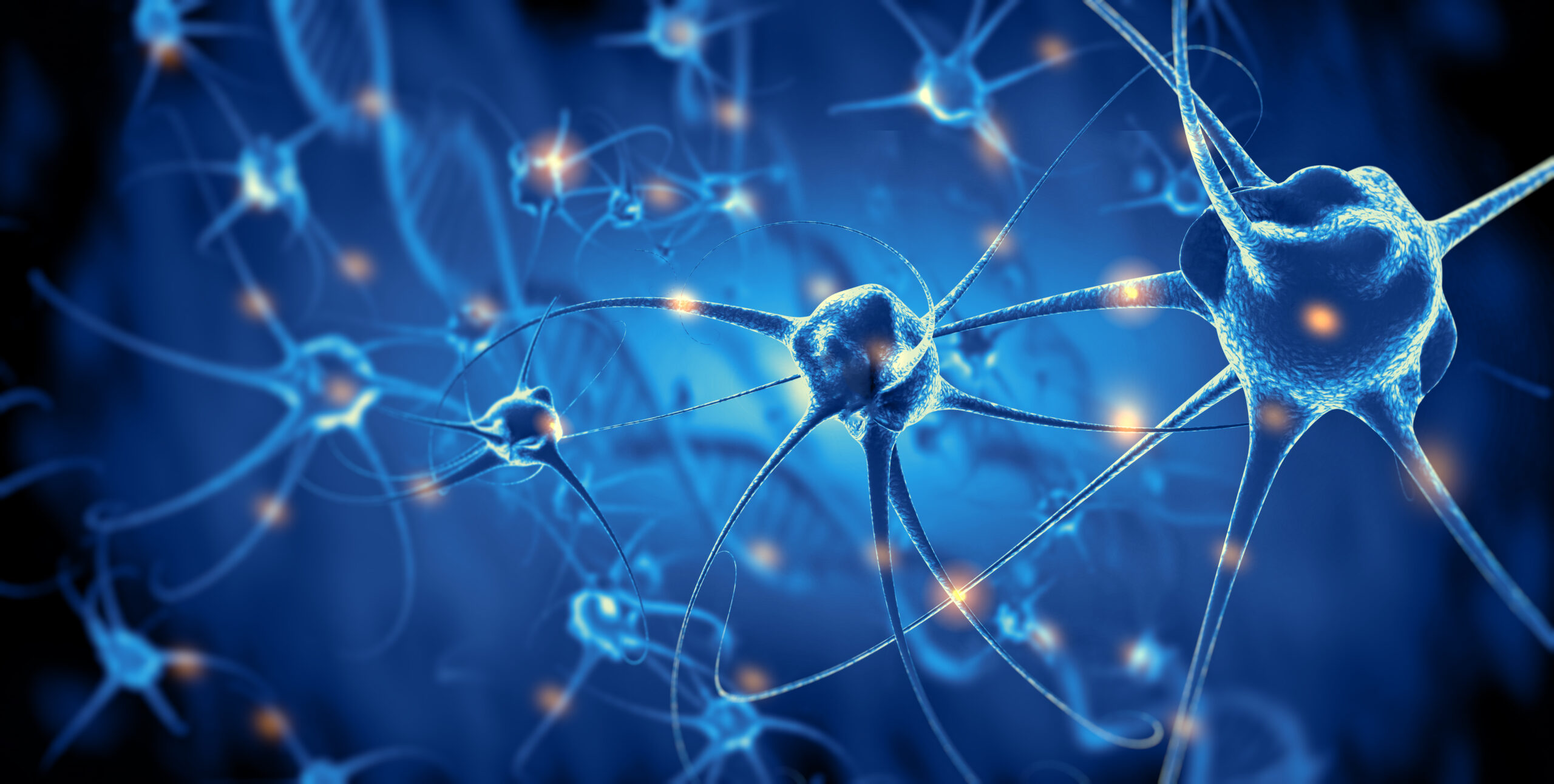
The results were striking: rTMS increased two types of excitatory axonal boutons terminaux boutons (TBs), which project locally, and en passant boutons (EPBs), which connect more distally along the axon. These structural enhancements were accompanied by improvements in synaptic function. In effect, the neurons regained some of their lost capacity to communicate.
Meanwhile, in human studies, non-invasive brain stimulation (including rTMS and transcranial direct current stimulation, tDCS) has been explored in mild-to-moderate Alzheimer’s disease. Protocols of transcranial magnetic stimulation (TMS) show improvements in global cognitive functioning, although effects vary depending on disease stage, stimulation site, frequency, and duration. Deep brain stimulation (DBS), an invasive technique, has also been tried targeting areas like the fornix, the basal forebrain (nucleus basalis of Meynert, NBM), and ventral capsule/ventral striatum region with some success in slowing cognitive decline or improving memory in clinical trial settings.
How Does Stimulation Repair Neuron Communication?
Brain stimulation appears to work on multiple levels. Here are some of the mechanisms researchers propose:
- Synaptic structural changes: The increase in axonal boutons (TBs and EPBs) suggests that stimulation can promote synaptogenesis (formation of new synapses) or restore degenerated ones. In the rTMS mouse model, the structural recovery in the cortex points to direct morphological repair of neuron communication sites.
- Plasticity of synapses: Beyond structure, synaptic plasticity long-term potentiation (LTP) or depression (LTD) is improved. Stimulation can help reset neuronal excitability and restore the ability of synapses to strengthen in response to learning signals.
- Modulation of neural networks and circuits: In Alzheimer’s disease, connectivity between brain regions (for example, in the default mode network, hippocampal-cortical circuits, Papez circuit) gets disrupted. Both rTMS and DBS can help re-synchronize disrupted rhythms, enhance communication across these networks, and increase metabolic activity in regions suffering reduced function.
- Neurochemical and molecular support: Stimulation may enhance release of neurotrophic factors like BDNF (Brain-Derived Neurotrophic Factor), modulate acetylcholine levels (especially via NBM stimulation), reduce inflammation by affecting glial cell behavior, attenuate tau phosphorylation, and even affect amyloid-beta pathology. These molecular effects help support the repair of structures and functions, not just stimulate them temporarily.
These mechanisms work together: structural repair gives the scaffolding, plasticity allows flexibility, circuit modulation ensures better signal flow, molecular support sustains the repair and counters further damage.
Clinical Evidence In Humans
While animal studies (mice) provide proof of concept, human trials are more complicated. Some of what we know:
- In mild-to-moderate Alzheimer’s patients, repetitive TMS (rTMS) has shown improvements in global cognition, memory tasks, and sometimes daily functioning. But results are inconsistent: improvements vary across individuals, and not all studies show strong, durable effects.
- The age and stage of Alzheimer’s seems to matter: early intervention tends to lead to better outcomes. Once neurodegeneration becomes extensive, the capacity for structural repair is reduced. Many trials report that earlier stimulation (i.e. before severe synaptic and neuronal loss) produces more reliable improvements.
- Parameters matter a lot: frequency of stimulation, duration per session, total number of sessions, where exactly the stimulation is targeted (which brain regions), whether stimulation is invasive (DBS) or non-invasive (rTMS, tDCS), etc. Small differences in these can lead to markedly different results. Some human studies remain underpowered, lack perfect control (placebo/sham), or have variability in protocols.
- Safety and tolerability are generally good for non-invasive methods. There are fewer risks than invasive stimulation, though discomfort, possible side effects like headaches or transient neurological symptoms sometimes occur. Invasive methods like DBS have higher risk but are being attempted in carefully monitored settings.
Toward Alzheimer’s Therapies With Neuron Communication Repair

If brain stimulation techniques can restore synaptic structure and network connectivity, therapies might move beyond symptomatic relief to more fundamental restoration of function. This could mean better memory preservation, slower decline, or even partial recovery of lost cognitive capacities.
Early diagnostics will become even more important. The earlier Alzheimer’s is detected before massive synaptic loss or neural death the more effective stimulation might be. This suggests synergy with biomarkers (CSF, imaging), genetic risk profiling, and other tools to catch Alzheimer’s early.
Personalization of stimulation protocols will likely be key: tailoring stimulation location, frequency and duration to each patient’s brain structure, connectivity, disease stage, maybe even daily brain state. Machine learning and neuroimaging may help with that. Closed-loop systems that monitor brain signals and adapt stimulation in real time look especially promising.
Safety, cost, and scalability will also matter: non-invasive methods have advantages here, so refining rTMS, tDCS or electromagnetic field stimulation that can be delivered outside the hospital (or at home) could broaden access. Meanwhile, invasive methods may remain for more severe cases if risks can be managed.
Future Directions: What Needs To Happen
To move from promising research to widely usable treatments, the following appear necessary:
- Larger, well-designed human trials
Randomized, double-blind, sham-controlled trials with sufficient sample sizes, standardization of outcome measures (memory tests, imaging of synaptic changes), long follow-ups to test durability. - Deeper mechanistic understanding
More work at the molecular, cellular, and circuit levels to map exactly how stimulation triggers repair: which genes turn on, which proteins are produced, how synaptic plasticity and neurotrophism are mobilized. - Optimization and personalization of protocols
Exploring dose-response relationships, timing (when in Alzheimer’s progression to start), frequency & patterns of pulses, combinations with other therapies (e.g. cognitive training, drugs, lifestyle). Also development of closed-loop systems. - Integration with biomarkers and diagnostics
To identify patients who will benefit most, to monitor effects (imaging, EEG, PET), to catch Alzheimer’s early enough that repair is possible. Also tracking molecular markers like tau, amyloid, inflammation. - Accessibility and translation
Engineering more portable, affordable, user-friendly stimulation devices; figuring out how to safely use at home or in outpatient settings; regulatory approvals; ethical oversight to avoid premature hype or unsafe commercialization.
Repairing Memory’s Fragile Circuits
Because research is advancing quickly, repairing the communication between neurons is shifting from science fiction to scientific reality, supported by animal studies and promising early human trials. Brain stimulation techniques like rTMS, DBS, and related tools seem capable of boosting synaptic plasticity, restoring structural synaptic elements, and improving cognitive performance tied to memory. Nevertheless, much work remains: understanding exactly how and when to stimulate, for which patients, under what conditions, and how to make lasting, safe effects. The great promise is that Alzheimer’s therapy might shift from slowing decay to rebuilding neural conversation. As research marches forward, this could change how we treat memory decline, not just holding back loss, but regaining connection.


Korey Kris
Saturday 27th of September 2025
Buy Adderall IR Online