At 25, most people are wrestling with first mortgages, career choices or wedding plans; Annaliese Holland is deciding how, and when, her life will end. After growing up in and out of hospital with a rare neurological autoimmune disease that has left her in multi-organ failure and constant pain, the young South Australian has been approved for voluntary assisted dying, a legal option where she can choose to die on her own terms. Yet alongside that decision, she has also been quietly building something for the living, shaped by the grief of losing her best friend and the stark clarity that comes with knowing time is short.
The Rare Disease Behind Annaliese’s Decision
Before she was old enough to finish high school, Annaliese Holland’s body had already turned against her. From childhood, she bounced between hospital wards with severe nausea, vomiting and pain, while her bowel behaved as if it were blocked, despite scans showing nothing there.
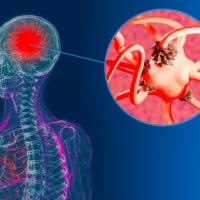
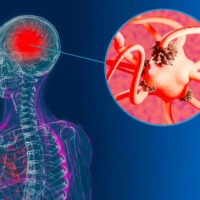
At 18, after years in paediatric care, she finally received a diagnosis: autoimmune autonomic ganglionopathy (AAG), a rare autoimmune disease in which the body attacks the autonomic ganglia, the nerves that control involuntary functions like heart rate, blood pressure, digestion and urination. In practical terms, it means systems most of us never think about have to be constantly managed just to keep her alive.
Because her stomach stopped emptying properly, Annaliese was placed on total parenteral nutrition (TPN), fed through IV lines for the past decade. Those same lines have repeatedly exposed her to life-threatening infections; she has survived sepsis 25 times. By 22, doctors told her the illness was terminal. Now 25, she lives with multi-organ failure and the cumulative damage of years of aggressive treatment.
“Life for me now is getting up each day doing what I need to do medically, taking the painkillers, trying to get through the day, just to go to bed and do it all again,” she has said. For Annaliese, AAG is not an abstract diagnosis. It is a daily negotiation with survival, made on a body that can no longer reliably sustain her.
A Life Shrinking Around an Illness
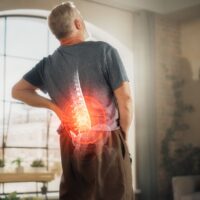
As Annaliese’s illness progressed, it did not just weaken her organs. It steadily stripped away the future she imagined for herself. Long-term steroid use and powerful medications have left her with severe osteoporosis. She has fractured her spine in four places and cracked her sternum, at one point placing such pressure on her heart and lungs that even breathing became precarious. Necrosis in her bones has caused her teeth to blacken and fall out.
These are not isolated medical events, but layers of loss. While friends moved through milestones such as formals, graduations, 18th and 21st birthdays, engagements and babies, she spent those same years in hospital wards. “Everyone’s life is moving and I’m just stuck. I’m not living. I’m surviving every day, which is tough,” she has said.
@annalieseholland I dont like posting stuff like this normaly and for me to even do this is huge! But i also want others to realize that hard days happen for even the most positive of people and thats okay too! I try my best to be so positive living with a terminal illness but days like these when im so sick and so tired its hard to see the light! Im so tired!!! Im so exhausted!! i’ll probably delete this later but for now…. This is me telling you that its okay to cry and jts okay to not be okay everyday!! #fyp #viral #terminalillness #hospital #chronicillness #surgery #tiktok #tiktokviral #sad #emotional #cancer #rare #raredisease #life #cry #hope #pain #foryou ♬ Last Hope (Slowed + Reverb) – Steve Ralph
Her illness has also reshaped her sense of self and relationships. Seeing her reflection in a hospital mirror one day, she did not recognise the woman looking back. The physical toll fed into social isolation and the quiet grief of feeling undateable. “No man wants to date someone dying, I get it,” she remarked, capturing the blunt reality many seriously ill young adults face but rarely voice.
Annaliese describes living with her condition as “walking on a field of landmines” – never knowing which day will bring another medical emergency or near-death experience. The uncertainty is not just frightening. It is exhausting, turning each day into another round of survival rather than a life she can meaningfully plan or inhabit.
Choosing Voluntary Assisted Dying
For Annaliese, the decision to pursue voluntary assisted dying did not arrive suddenly. It emerged after years of surviving close calls, resuscitations and invasive treatments that no longer offered real hope of recovery.
The turning point came after yet another collapse in hospital. Having been brought back once more, she pleaded with her father: “Dad, please let me go. I will not hate you if you let me go.” She later told him, “If this happens again, I don’t want anything… I’m happy with [you] saying no to treatment.” It was only then, she recalls, that he said he understood she had “had enough.”
Her mother still quietly hopes for a miracle, but also recognises the scale of what her daughter endures. That tension is common in families facing end-of-life decisions: the instinct to cling to any chance of more time sits alongside the knowledge that more time often means more suffering.
In Australia, medical aid in dying is now legal in every state for terminally ill, mentally competent adults who meet strict criteria. Patients must be assessed by multiple doctors and undergo a psychological evaluation. After a three-week process, Annaliese was approved.
She describes VAD as her “safety blanket” and admits she cried with relief when she heard the decision. “I think it’s so weird to be happy, but I was so happy when I found out I was approved,” she said. For her, VAD is not about giving up, but about finally having a say in how her story ends.
Creating Meaning in the Midst of Dying
@annalieseholland LILY Thai and I both suffer the same rare disease that has left us terminal. 2 years ago I came out about my illness after being embarrassed for almost 10 years by it. I walked a charity run for palliative care and the hospice I attended. A beautiful young girl messaged me. I ignored it because I couldn’t see much about her and you have to be careful with some chronic illness people. But when she mentioned she was in the same hospice and had the same disease I knew you wouldn’t lie about that. I visited her the following day and brought her blankets, pillows and things to make her feel nice. I very well know what it’s like to lie in that bed. I spent everyday visiting her for 3 weeks. It was like we knew each other for years. We talked and talked and talked. I would spend the days brushing her hair, massaging her hands and legs. It was the least I could do. From the moment we met she told me she was going to take the reins and she had enough. She was the youngest VAD patient. The day she told me I pinky promised her I wouldn’t leave her side and I would do anything she wanted. She wanted to tell her story so we made that happen. She also asked her parents if I could hold her hand throughout the process. What a honour it was. You were only allowed 6 people in the room ( which is wrong.) we all wrapped arms and her family became mine in that moment. I didn’t brake that pinky promise, I held her hand as she drifted to heaven pain free. I wish I knew her longer and I replied to her message a month prior. We also pinky promised that I wouldn’t stop fighting til there was a cure for our disease. So that’s what I shall do. It’s taken me a long time to listen to this. My mum took the video so I would never forget her voice. I also want her memory to live on and so the world knows her debilitating this illness is at only 23 at the time. #vad #euthanasia #terminal #terminalillness #chronicillness #intestinalfailure #autoimmunedisease #love #friends #heaven #fyp #viral #awarness #cancer #aag #hospice #palliativecare #life #foryoupage #foryou #fypp #bestfriend #rip #peace ♬ original sound – welcome
While preparing for her own death, Annaliese has been quietly focused on what she can leave behind for others who grieve. After losing her best friend, Lily Thai, to a terminal illness, she found herself drawn to Lily’s grave, talking to her, writing letters and sitting in silence. Those visits became “emotionally cathartic”, a place where grief felt less suffocating.
One day at Adelaide’s Centennial Park, as she knelt to place flowers, a note blew past her. Looking around, she noticed other letters scattered on the grass. That moment sparked a question: could there be a safer, more intentional way for mourners to send messages to those they had lost?
She researched similar ideas overseas and then approached cemetery management. The result is Echoes of Love, a dedicated letterbox at Centennial Park where anyone can post a private message to a deceased loved one. Centennial Park CEO Nadia Andjelkovic has emphasised that there is no limit to how often it can be used, and all letters remain confidential.
@annalieseholland A memory I will cherish forever and ever. To the man who has saved my life muliple times THANK YOU! I wouldnt be here on earth still if it wasnt for him. He never gave up on me and always treated me as a person not just a patient. Thank you for helping save not just me but all the lives over your 30+ years of being a ICU doctor. Most importanly the TPN service you have created as we know of today. What you have done for us HPN patients is something none of us will ever be able to thank you enough for. Happy HPN awareness week to all those on TPN. #chronicillness #intestinalfailure #ileostomy #feedingtubeawareness #tpn #hpn #marathon #charity #walk #doctor #fyp #fypシ #viral #emotional ♬ wait m83 sped up – 01
For Annaliese, who lives with multi-organ failure and has been approved for voluntary assisted dying, the project is deeply personal. “Living with a terminal illness has helped me confront the realities of death and made me recognize the need to break the stigma, creating better avenues for young people to talk about death and grief,” she has said. She hopes the letterbox offers others the same sense of comfort and connection it brings her.
What Annaliese’s Story Asks Of Us
Annaliese’s choice sits at the fault line of some of our hardest questions. How do we measure quality of life when medicine can prolong the body but not ease relentless suffering? What does autonomy look like when a young woman, fully informed and mentally competent, says she has reached her limit?
Voluntary assisted dying is tightly regulated in Australia, reserved for people who are terminally ill and meet strict safeguards around capacity and consent. It is not the same as suicide in the context of mental illness or emotional crisis, and it exists alongside, not instead of, palliative care. Ethicists often emphasise that the challenge is not only whether such laws should exist, but how society supports patients and families who must live with these decisions, whatever they choose.
Annaliese cannot control her disease, but she has tried to reclaim meaning: in her advocacy, in creating Echoes of Love, in speaking honestly about pain, fear and love. Her story invites us to do a few simple but difficult things. Talk more openly about death and serious illness. Listen when people describe suffering we cannot see. Support better palliative care and mental health services. And if we are grieving, find our own small rituals that make the silence a little less suffocating.
Featured Image Source: Annaliese Holland’s GoFundMe