
For people living with constant ringing in their ears, even a quiet room can become exhausting. The sound may follow them into bed, interrupt conversations, and make it difficult to concentrate on ordinary tasks. Now, researchers are investigating a treatment that uses mild electrical pulses on the tongue alongside carefully selected sounds to help reduce the persistent noise.
The approach, known as bimodal neuromodulation, has produced encouraging results in clinical studies. Some participants reported improvements lasting up to 12 months after treatment ended, raising interest in a different way to manage tinnitus. Although the treatment is not a cure, it could offer another option for people seeking relief.
How Tongue Stimulation Could Help Reduce Tinnitus
Tinnitus is the perception of sound when no corresponding external sound is present. People often describe it as ringing, buzzing, hissing, clicking, whistling, or roaring. The experience varies widely, with some people noticing it occasionally and others hearing it throughout the day.
Researchers increasingly recognize that tinnitus can involve changes in how the brain processes sound. Hearing loss may reduce the signals reaching the brain, prompting changes in neural activity that contribute to the perception of phantom noise. However, tinnitus has several possible causes, and scientists have not established one explanation that accounts for every case.

Image Credits – Website @Lenire
Bimodal neuromodulation aims to influence the nervous system by delivering two forms of stimulation together. In the treatment system called Lenire, headphones play a sequence of sounds while a small plastic device delivers mild electrical pulses to the tongue. The combined signals are intended to encourage changes in how the brain processes auditory information.
Hubert Lim, a biomedical engineer at the University of Minnesota who has studied this approach, became interested in the tongue’s potential role after an unexpected observation during earlier brain-stimulation research. A patient whose brain electrodes had stimulated an area outside the intended target reported that his tinnitus had temporarily disappeared. That observation helped inspire further investigations into how different sensory pathways might influence tinnitus.
What Happens During the Treatment Sessions
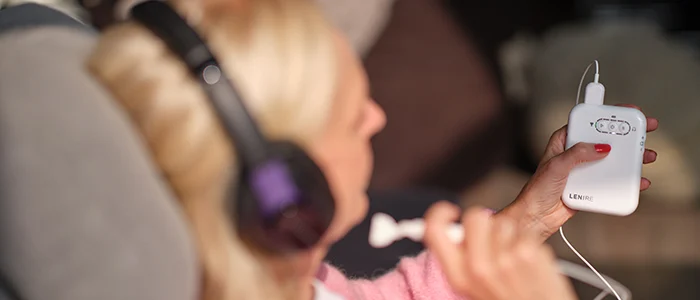
Image Credits – Website @Lenire
Lenire combines sound therapy with electrical stimulation delivered through a small device that rests on the tongue. Users wear headphones that play carefully selected tones layered with background noise while the device delivers mild electrical pulses. A handheld controller manages the treatment settings, which are adjusted according to the person’s hearing profile and sensitivity.
The electrical sensation is generally described as mild. Lim has compared it to the fizzing feeling of popping candy in the mouth, although individual experiences can differ. The treatment is designed to be used at a controlled intensity rather than deliver painful shocks.
In the major clinical trial described in the supplied research, 326 people with tinnitus were instructed to use the device for approximately one hour daily over 12 weeks. Participants received instructions on operating the system, and its settings were configured to suit their individual needs. Researchers then assessed changes in tinnitus symptoms during treatment and for up to a year afterward.
The theory behind the method is that repeated exposure to paired sensory signals may help change the brain’s response to tinnitus. Sound activates the auditory system, while tongue stimulation engages additional neural pathways. Researchers hope this combined input encourages the brain to give less attention to the activity associated with phantom noise.
What Clinical Research Has Found So Far

The findings from a large clinical trial published in Science Translational Medicine drew attention because the reported improvements continued well beyond the treatment period for many participants. Researchers enrolled 326 people and evaluated changes in tinnitus symptom severity following a 12-week program.
Among participants who complied with the prescribed treatment schedule, more than 80% reported an improvement in tinnitus severity after 12 weeks. Researchers also found that many participants maintained lower symptom scores during follow-up. Average reductions were approximately 14 points on a tinnitus severity scale ranging from zero to 100, with benefits still evident 12 months after treatment ended.
The research team reported that the results were consistent across the two clinical sites involved in the trial. No serious adverse events were reported in the study. However, the absence of a control group limits how confidently researchers can attribute the improvements to the device itself.
That distinction matters when interpreting health research. Tinnitus symptoms can fluctuate, and expectations about a new treatment may influence how people report their experiences. Without a control group, researchers cannot fully determine how much improvement might have occurred without the treatment or through a placebo effect.
Other studies have also reported benefits. A 2022 study involving 191 people with mostly moderate to severe tinnitus found that 70% of participants using Lenire reported an improvement after 12 weeks. The supplied research also describes a 2025 real-world study involving 212 people seeking help for moderate to severe tinnitus in Alaska, where many participants reported improved symptoms after treatment.
These findings add to the evidence supporting further investigation. They do not establish that every person with tinnitus will benefit, and the results from individual studies should not be treated as a guarantee of success.
Why the Brain Plays a Role in Ringing Ears

Image Credits – Website @Lenire
Tinnitus is often associated with changes in the hearing system, including damage to sensory cells in the inner ear or the auditory nerve. These structures help convert sound into electrical signals that travel to the brain. When the auditory system is damaged or receives less input, the brain may respond by changing its activity.
One explanation is that the brain attempts to compensate for missing sound information. This adjustment can make certain neural pathways more active, potentially contributing to the perception of ringing or buzzing when no external sound is present. The exact mechanisms are still being studied, and different people may experience tinnitus for different reasons.
The brain’s attention systems may also influence how intrusive tinnitus feels. When the sound causes distress, a person may monitor it closely, making it harder to focus on other sounds or activities. Stress and poor sleep can make coping more difficult, even when the loudness of the tinnitus itself has not changed.
Bimodal neuromodulation focuses on the possibility that repeated sensory stimulation can influence these patterns of brain activity. Pairing tongue stimulation with sound may provide a broader set of signals than sound therapy alone. Researchers hope these signals can help the brain respond differently to tinnitus-related activity over time.
This explanation remains a research model rather than a complete account of tinnitus. Scientists are still investigating why some people develop persistent symptoms, why severity differs between individuals, and why certain treatments help some patients more than others.
What Tinnitus Can Mean for Your Everyday Health

Persistent tinnitus can affect much more than a person’s perception of sound. People may struggle to fall asleep, concentrate on work, follow conversations, or relax in quiet surroundings. For some, the constant noise can contribute to anxiety, frustration, and emotional exhaustion.
The experience can also become more difficult when someone fears the sound or feels unable to control it. Attention may repeatedly return to the ringing, leaving less mental space for other activities. Over time, this can affect quality of life even when the tinnitus is not medically dangerous.
Understanding the difference between the sound itself and the distress associated with it can help people find suitable support. Some treatments aim to make tinnitus less noticeable, while others help people change their response to the sound. Hearing care, psychological support, and sound-based approaches may each have a role, depending on the individual’s needs.
Bimodal neuromodulation offers one possible approach by attempting to influence how the nervous system processes sound. The reported improvements in clinical research are encouraging, especially for people whose symptoms remain disruptive. However, treatment decisions should take account of the evidence, potential side effects, cost, and other available options.
What Are the Risks, Costs, and Limitations?
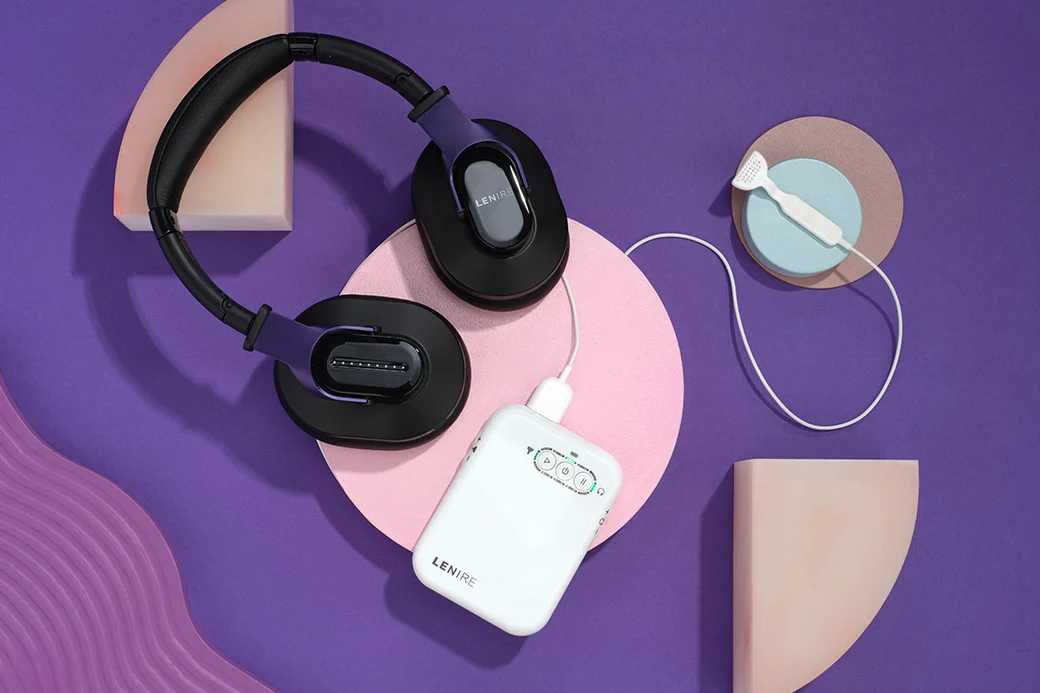
Image Credits – Website @Lenire
Although clinical studies have reported encouraging results, tongue-stimulation treatment is not suitable for everyone. Some participants in studies experienced temporary irritation in the mouth, tooth sensitivity, jaw discomfort, or changes in the sound of their tinnitus. A small number of participants in the supplied real-world study reported that their symptoms worsened.
The treatment also requires a consistent schedule. Using the device for approximately an hour a day over several weeks may be difficult for people managing busy routines or other health needs. Results can vary, and researchers still need to establish which patients are most likely to benefit and how long improvements may last.
Cost is another consideration. One of the supplied reports lists the device at approximately $4,000, although prices and coverage arrangements may change. The report states that private health insurance and Medicare do not cover the treatment, while the Veterans Administration provides coverage in some circumstances. Prospective users should confirm current prices and eligibility with the provider.
Certain medical conditions or implanted devices may also make the treatment unsuitable. The supplied reference lists concerns involving implanted medical devices such as pacemakers and defibrillators, reduced tongue sensitivity, tongue sores or irritation, epilepsy, and certain nerve-pain conditions affecting the head or neck. Anyone considering treatment should check the current eligibility criteria and discuss their medical history with an appropriately qualified professional.
The most important limitation is that symptom reduction does not necessarily mean tinnitus has been cured. The treatment is intended to make the condition less disruptive, and further research is needed to clarify long-term outcomes and the possibility that some people may require additional treatment.
Everyday Strategies That Can Help Manage Tinnitus

While new treatments continue to develop, several established approaches may help you manage tinnitus and protect your hearing. The most appropriate combination depends on your symptoms, hearing health, and the effect tinnitus has on daily life.
A hearing assessment is a useful starting point, particularly if you have difficulty following conversations or suspect that your hearing has changed. For people with hearing loss, hearing aids may make external sounds easier to hear and reduce how noticeable tinnitus feels. Treatable ear conditions can also contribute to symptoms, so identifying the underlying cause may guide care.
Gentle background sound can help some people cope, especially at bedtime. A fan, quiet music, or a sound machine may make tinnitus less prominent in a silent room. The goal is to find a comfortable listening level rather than use loud sounds to overpower the ringing.
Stress-management techniques may also help reduce the emotional impact of tinnitus. Mindfulness, relaxation exercises, and controlled breathing can support a calmer response when the sound becomes intrusive. Cognitive behavioral therapy is another established option that helps people change unhelpful reactions and reduce the distress associated with persistent symptoms.
Protecting your hearing is equally important. Keep personal audio at a reasonable volume, use suitable hearing protection in loud environments, and give your ears breaks from excessive noise. These habits cannot guarantee that tinnitus will disappear, but they can help reduce the risk of additional hearing damage.
Seek prompt medical assessment if tinnitus begins suddenly, particularly when it occurs with sudden hearing loss. New neurological symptoms also require urgent attention. Sudden hearing loss can be time-sensitive, so waiting to see whether it resolves on its own may delay necessary treatment.
Could This Treatment Become Another Option for Tinnitus?
Bimodal neuromodulation reflects growing scientific interest in the relationship between hearing and the brain. Rather than focusing only on the ears, researchers are testing whether carefully paired sensory signals can change the way tinnitus is processed.
The results reported so far suggest that some people may experience meaningful symptom relief, with improvements lasting months after treatment. Yet the evidence has limitations, and the absence of a control group in the major 326-person trial makes it difficult to determine the treatment’s precise effect.
If tinnitus affects your sleep, concentration, or ability to enjoy daily activities, speak with a hearing specialist about available options. Ask whether hearing aids, sound therapy, cognitive behavioral therapy, or emerging treatments could suit your circumstances.
You deserve support that takes the impact of tinnitus seriously. For now, the most practical approach is to explore evidence-based care, protect your hearing, and make treatment decisions based on realistic expectations rather than promises of a cure.