For five years, she had spoken almost entirely in single syllables. At some point in those years, the doctors and caregivers around her had stopped expecting that to change. Advanced Alzheimer’s disease cannot be reversed. Every clinical framework, every treatment protocol, every piece of accumulated medical knowledge about late-stage dementia points in the same direction: once someone reaches a certain threshold of decline, what has been lost stays lost.
Then, in the early hours of a morning, approximately 19 hours after a single experimental dose, an 80-year-old woman with a decade of Alzheimer’s behind her woke up and started talking.
What Her Life Looked Like Before
She was a Japanese-American woman in her eighties, living under continuous family supervision and full-time caregiver support. Her Alzheimer’s diagnosis dated back roughly ten years, and the preceding five had been marked by a level of decline that anyone who has watched a loved one reach that stage would recognize without needing clinical terminology to describe.
She communicated almost entirely in one-syllable sounds. She needed diapers around the clock, including through the night, because she had no reliable bladder control and had not had any for years. Getting from one place to another required physical support. Swallowing had become difficult. Her face, when she was awake, carried what doctors call flat affect, a kind of blankness that family members of late-stage Alzheimer’s patients often describe as the most painful loss of all, harder even than the memory gaps, because it makes the person in front of you feel genuinely unreachable.
She was not borderline. She was not in early decline. By every available measure, she was in advanced Alzheimer’s disease, at a stage where care teams generally focus on comfort rather than recovery.
A Single Dose of an Unusual Substance

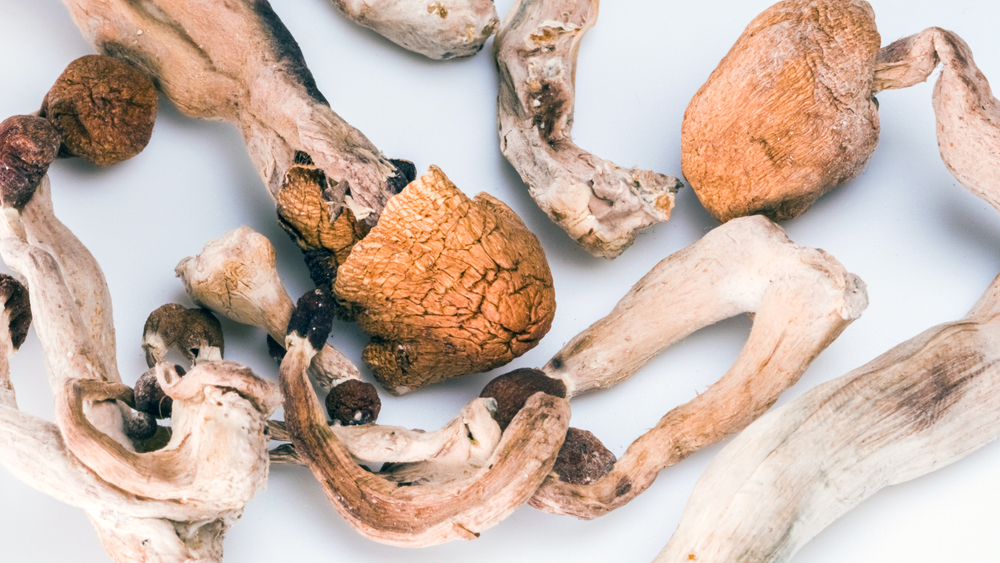
What she was given was five grams of psilocybin-containing mushrooms of the Enigma strain, administered orally in a supervised setting. Psilocybin is the active compound in what are colloquially called magic mushrooms, and it has been the subject of a growing body of serious clinical research over the past decade, primarily in the areas of depression, anxiety, addiction, and PTSD. Its use in late-stage dementia had, until this case, generated almost no published clinical data at all.
Five grams is on the higher end of doses used in research settings. No established dosing guidelines exist for dementia patients, and the researchers who documented this case were explicit that the whole thing was exploratory, observational, and entirely outside any formal trial framework. It was not a clinical experiment in a controlled setting. It was a supervised intervention observed and documented with enough detail that the researchers felt it warranted publication in a peer-reviewed journal.
What Happened in the First Hours

Before anything remarkable occurred, the first phase of her response was deeply unsettling to witness. She ran a suspected fever. She sweated heavily. She became agitated and then entered what the researchers describe as a prolonged, deep sleep-like state that looked, at points, more like unconsciousness than sleep.
That state continued for hours. Then, at approximately 3:30 in the morning, about 19 hours after the dose was administered, she woke up and began speaking in full sentences. She spoke about her own life, her memories, and specific events and people from her past. She kept talking for approximately four hours. The people around her had not heard her speak in full sentences in years.
What Came Back Over the Following Days

What happened next unfolded over days rather than minutes, and it covered a range of functions that had been absent long enough that nobody expected to see them return.
By the end of the first day, she was making eye contact with family members and recognizing them. By day two, she was walking independently. By days two and three, she was dressing herself, showing initiative, and her diapers were consistently dry, including overnight, ending more than five years of chronic urinary incontinence. By days six and seven, she was asking about specific people by name, correctly identifying a vehicle, sustaining eye contact, and laughing in response to things that were actually funny.
A month after the first session, she was still continent and still meaningfully improved compared to where she had been before. A second supervised session was conducted, this time with three grams rather than five. During that second session, she was more talkative throughout. She described emotionally vivid imagery, including a scene involving surfing with her son on a peaceful island. Her face was more expressive. She moved with noticeably greater ease. She laughed spontaneously. At some point during the follow-up period, she told those around her, “It is pleasant to come here.”
No serious adverse effects emerged from either session. No prolonged agitation. No cardiovascular instability. No psychotic symptoms. No delayed complications in the weeks that followed.
Why Psilocybin Might Do This
Psilocybin acts on serotonin receptors in the brain and produces measurable changes in how different regions communicate with one another. Under normal conditions, the brain operates in somewhat segregated networks, each with its own functional territory. Psilocybin disrupts that segregation, increasing integration across regions that do not normally talk to each other directly. In healthy people, this is what produces the altered perception and heightened emotional experience associated with a psychedelic session. In a brain damaged by years of neurodegeneration, the researchers suggest it may have done something more specific: temporarily reactivated functional capacity that still existed, biologically, but had become disconnected or suppressed.
The restoration of bladder control is the detail that the researchers flag as particularly significant. Urinary continence is not a simple reflex. It requires coordinated function across multiple brain networks, including the regions responsible for body awareness and executive control. Regaining it after five-plus years of chronic incontinence suggests the improvements were not superficial or isolated.
What the Researchers Are Careful to Say
Anyone reading this and immediately thinking of a family member with Alzheimer’s deserves a clear statement of what this case does and does not mean, and the researchers provide one.
Psilocybin did not reverse Alzheimer’s disease in this patient. Her underlying neurodegeneration remained. Her improvements were transient, and the authors do not specify in their published account exactly how long they lasted. The entire report is a single case, which means no causal conclusions can be drawn, and the possibility of spontaneous fluctuation, something that does occasionally happen in neurodegenerative disease, cannot be entirely ruled out.
Formal biomarker testing to confirm the Alzheimer’s diagnosis was not available in this real-world setting. Alternative explanations for some of the cognitive changes cannot be fully excluded. There was no brain imaging, no standardized cognitive testing, no control group. The authors state clearly that their findings should not be interpreted as a reversal of Alzheimer’s pathology, and they are equally clear that every mechanistic explanation they offer remains speculative until properly tested.
What they do say is something more measured and arguably more interesting. They suggest that residual functional capacity may persist in advanced neurodegeneration and may become transiently accessible under specific neuromodulatory conditions, meaning that abilities which appear to be gone might not be entirely gone, but simply unreachable by ordinary means. Psilocybin, in their framework, may have provided a temporary route of access.
What Comes After One Case Like This

One documented case in one patient is not a treatment. It is, as the researchers put it, an observation intended to generate hypotheses for future controlled investigation. What it creates is an obligation to look more carefully, and to do so with the tools that a single observational case cannot provide: brain imaging before and after, standardized cognitive assessment, electrophysiology, biomarker confirmation of diagnosis, a proper control group, and a sufficient sample size to separate signal from noise.
Psilocybin already has an established evidence base in psychiatry that has developed substantially over the past decade. Research at major institutions has documented its effectiveness in treatment-resistant depression, end-of-life anxiety in cancer patients, and addiction. Its mechanism of action on brain network dynamics is well enough understood to make the dementia hypothesis scientifically plausible rather than merely hopeful.
If the underlying idea is correct, and some functional capacity that caregivers and clinicians assume is permanently lost in late-stage Alzheimer’s is actually still present but cut off from expression, the implications for millions of patients and their families would be profound. Not as a cure. Not as a reversal of disease. But as a possible window, however brief, back toward the person who seems to have retreated beyond reach.
For one 80-year-old woman with a decade of decline behind her, it opened for a few weeks. For the researchers who documented what happened when it did, that is enough to ask the question properly.
Source: Lago, M., Cerveira, M., & Simonet, J. X. (2026). Transient multidomain functional improvement in advanced Alzheimer’s disease following high-dose psilocybin-containing mushroom administration: a case report. Frontiers in Neuroscience, 20. https://doi.org/10.3389/fnins.2026.1813281