Something quiet is spreading across Europe, and it demands almost nothing of you. No equipment, no subscription, no fitness level required. Just a chair, a willingness to sit still, and a view of the sky as it shifts from grey to dark.
It has a name that sounds almost quaint: dusking. And if the idea seems too simple to be worth examining, that is precisely what makes it worth examining. Behind a practice that looks, from the outside, like doing nothing, lies a set of arguments about attention, creativity, and the cost of a culture that refuses to let the light fade.
Before going further, know only that it is old, Dutch in origin, and has been quietly gathering followers across the Netherlands, Ireland, Germany, and now the United Kingdom. What it does to those who try it is best understood once you know where it came from.
An Old Habit That Nearly Vanished
Dusking was not invented by anyone alive today. In the Netherlands, farming families once gathered at kitchen windows each evening to observe the end of the working day. Before electric light made darkness a matter of personal choice, watching night arrive was a natural pause between labor and rest. This communal ritual marked the transition from doing to being. Families would sit together, observe the day grow dark, then light a candle and sit down to dinner.
Newspaper records trace the custom back to the 18th century. By the mid-20th century, it had all but vanished. A growing supply of electric lamps made it easy to push straight past dusk into an artificially extended afternoon. Articles from the 1960s and 70s were already noting the habit’s disappearance. Some even published instructions on how to practice it, a detail that speaks to how quickly something once ordinary can become foreign.
One Writer’s Unlikely Revival
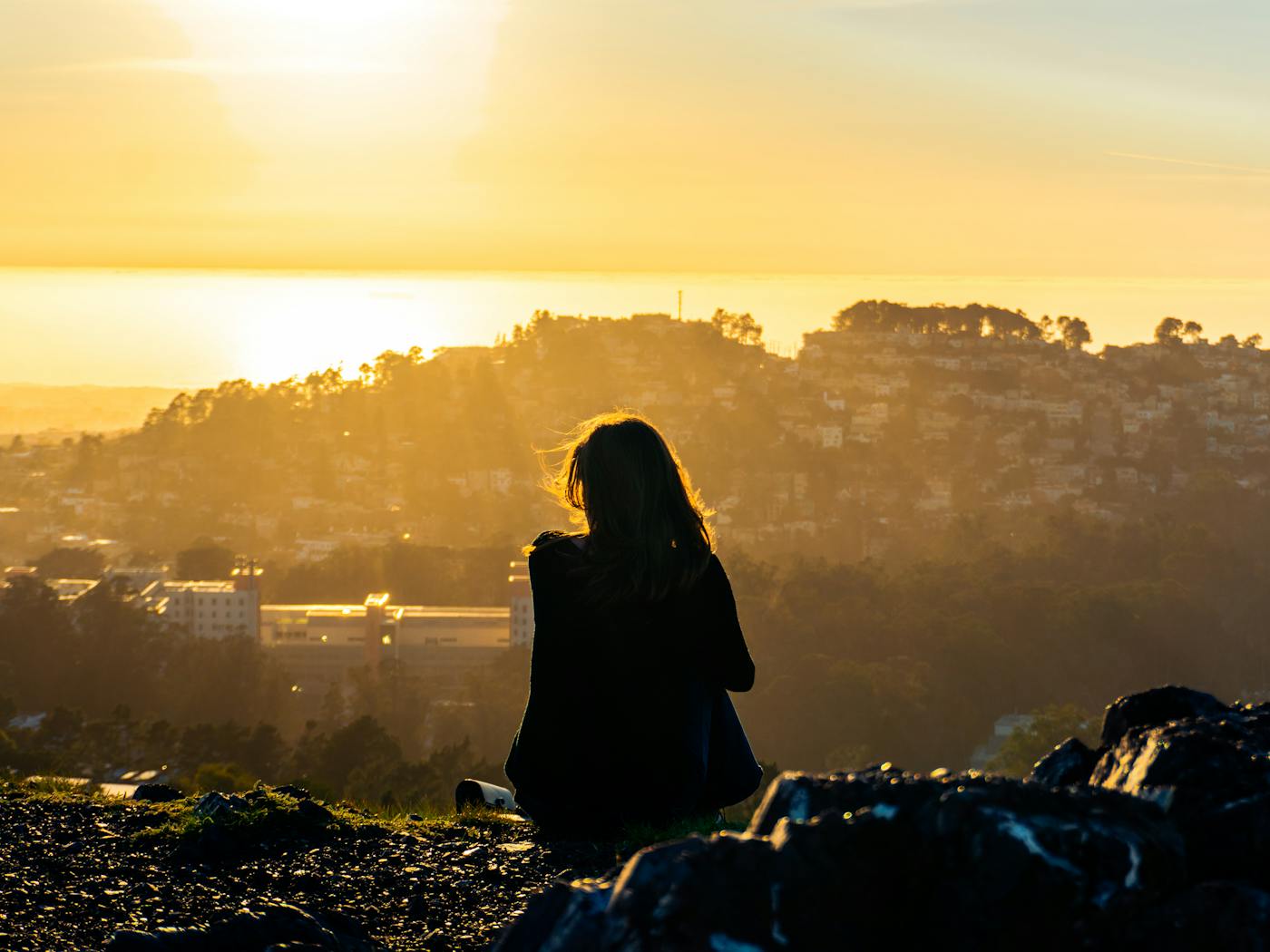
Marjolijn van Heemstra had never heard of dusking until an elderly woman described it to her during a night walk in Amsterdam. Van Heemstra, a Dutch poet and writer who regularly organises guided walks through dark forests, was puzzled when her companion mentioned having spent a lifetime “dusking.” When the woman explained, describing how she, her parents, and her three sisters would sit at the window after sunset and watch night settle over the farm before lighting the lamps for dinner, something in van Heemstra shifted.
She went home and began asking around. What she found was a pattern of half-remembered family rituals, mostly among older Dutch people who associated the practice with their grandparents. She wrote about it, began hosting guided sessions, and watched interest grow faster than she had expected.
Within a few years, 150 people gathered by Amsterdam’s Amstel River to watch nightfall together. Four hundred took a twilight break at a music festival. A theatre in Eindhoven now holds regular sessions, and four regional partners across the Netherlands are helping expand the custom further, bringing it into schools and community spaces. Teenagers, initially resistant, came around.
Van Heemstra has since taken the practice to Ireland, Germany, and the United Kingdom, where the North York Moors National Park hosted the country’s first official dusk event during its annual Dark Skies Festival. Her instructions to participants are precise in a way that feels counterintuitive for something apparently passive. “Noticing twilight requires a persistent kind of attention. It’s like a shy, rare animal. You have to take your time. Stay focused,” she tells those who gather for her sessions.
What Dusking Actually Is
Dusking is the practice of watching daylight fade with full, sustained attention. No phone, no lamp, no background task. A person fixes their gaze on something outside a tree, a rooftop, a stretch of open field, and stays with it until night has finished the job.
Dusk is not the same as watching a sunset. Sunsets are spectacles. They reward the viewer with color and drama and provide something worth photographing. Dusking asks for something less glamorous and considerably more patient. As daylight drains away, edges soften, outlines blur, and what seemed solid and separate begins to merge. Objects that were distinct at noon become suggestions by nightfall. A tree you could have described in careful detail an hour earlier slowly dissolves into the surrounding dark. Sitting through that process, without reaching for a light switch or a phone, is the entire practice.
What Happens to the Mind
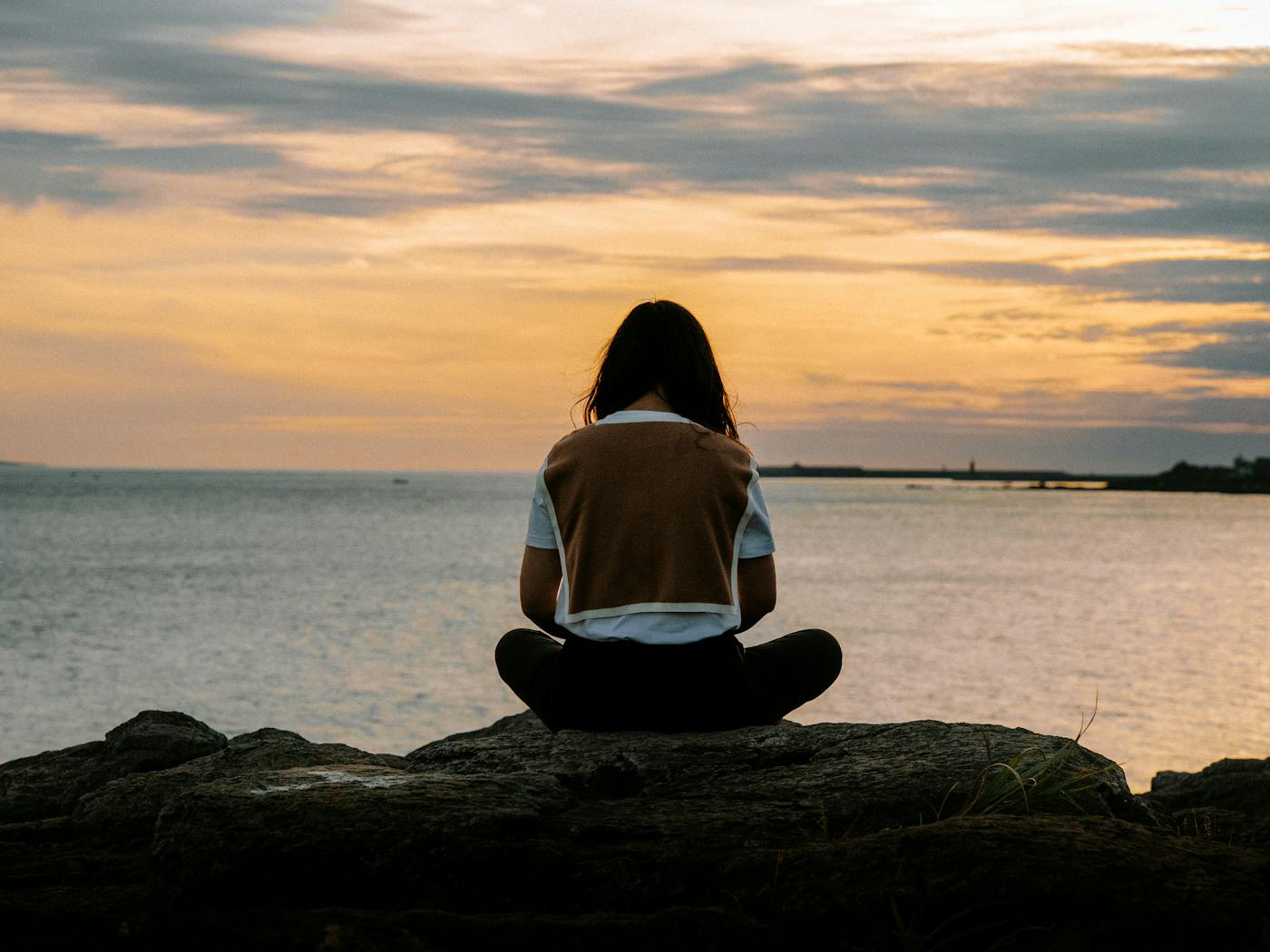
Sitting in fading light does something unexpected to perception. As sharp edges soften and familiar forms blur, imagination begins to fill in what the eye can no longer confirm. A hedge becomes ambiguous. A distant figure might be a person or a fence post. Shadows shift from defining things to merely suggesting them.
Austrian poet Rainer Maria Rilke wrote that fire limits the world to the circle it lights up, but darkness embraces everything, shapes and shadows, creatures and people, nations, just as they are. Dusking creates something close to that experience, a slow expansion of the perceived world as the hard borders of daylight dissolve.
Van Heemstra draws a clear line between dusking and conventional meditation. Where many mindfulness practices ask people to close their eyes and turn inward, dusking is relentlessly outward-facing. Attention is directed at the world rather than away from it. She describes it as a conversation with surroundings rather than a retreat from them, which makes it better suited to people who find eyes-closed meditation difficult or unsatisfying.
Among those van Heemstra spoke to during her research was a woman who read interior design magazines exclusively at dusk. Once the light dropped below the point where she could see images clearly, her imagination took over and populated the rooms in the photographs with shapes and presences entirely of her own invention. Blurred perception, it turns out, can be generative. Writers and artists have long known that rigid clarity can work against creative thinking, and dusking offers a structured way to spend time in something more ambiguous, more open, and less resolved.
A Counter-Cultural Choice
Van Heemstra is direct about what dusking represents beyond its personal effects. Sitting through an hour without producing, earning, or consuming anything is, she argues, a genuinely radical act in societies built around the assumption that every moment should generate some kind of return.
Processes, she observes, are largely invisible in modern life. Few people watch wheat grow, and fewer still understand the journey water takes from its source to their tap. Dusking makes one process unavoidable, the daily rotation of the planet away from the sun, and sitting through it, attending to it with full awareness, does something to a person’s sense of scale and continuity. Day and night, experienced this way, cease to be opposing states and reveal themselves as parts of a single, slow, ongoing movement.
She pushes back on the tendency to import rituals from other cultures when local traditions offer something equally suited to the place and the season. Yoga, Japanese forest bathing, both have found enormous audiences in northern Europe, but dusking, a practice shaped by the particular quality of northern light and long grey evenings, has been waiting to be rediscovered.
A Tradition With Many Names
Dusking is Dutch in origin, but the impulse behind it is older and wider. Japan’s yūyake song accompanies twilight. Bali’s matahari terbenam marks sunset as a moment of contemplation. Sweden’s kvällsro describes the peaceful calm that settles with evening. Across latitudes and centuries, the hour between day and night has been treated as something worth acknowledging rather than fast-forwarding through.
What separates dusking from ordinary sunset-watching, van Heemstra argues, is what it asks of the observer. Sunsets require a horizon, favor spectacle, and draw the eye toward light and color. Dusking is more demanding and more subtle. It asks a person to stay focused on a single point as that point gradually disappears, which requires a different quality of attention entirely, closer to patience than to admiration.
Night Skies Are Disappearing, and the Costs Go Far Beyond the Stars

Artificial light has made dusk optional, and the cost is still being calculated. Average night skies across the world grew 9.6 percent brighter every year between 2011 and 2022, according to research published in the journal Science. Only one in ten people in the western hemisphere now experiences genuinely dark skies free of artificial light.
Human health bears part of that cost. A 2023 review by University College London found that artificial light suppresses melatonin and disrupts circadian rhythms, with documented links to sleep disorders, mood conditions, obesity, and cardiovascular disease. Wildlife suffers more acutely. LED street lighting reduced the night-time activity of moths, among the most important nocturnal pollinators, by up to 85 percent in one recent study. Migrating birds, hatchling sea turtles, nocturnal mammals, and even the spring development of trees have all been found to suffer measurable harm. “People miss darkness, even if they don’t know it,” van Heemstra says. “On my night walks, people are amazed at how calm they feel.”
Awareness is growing. Since 2001, 250 locations across 22 countries have been certified as dark sky places. The North York Moors holds one of only 25 gold-tier dark sky reserve designations worldwide. Research into visitors to dark sky festivals has found that those who attend are more likely to change their lighting habits at home, raise the issue with neighbours, and monitor levels in their streets in the months that follow.
Anyone With a Chair and a View Can Start Tonight
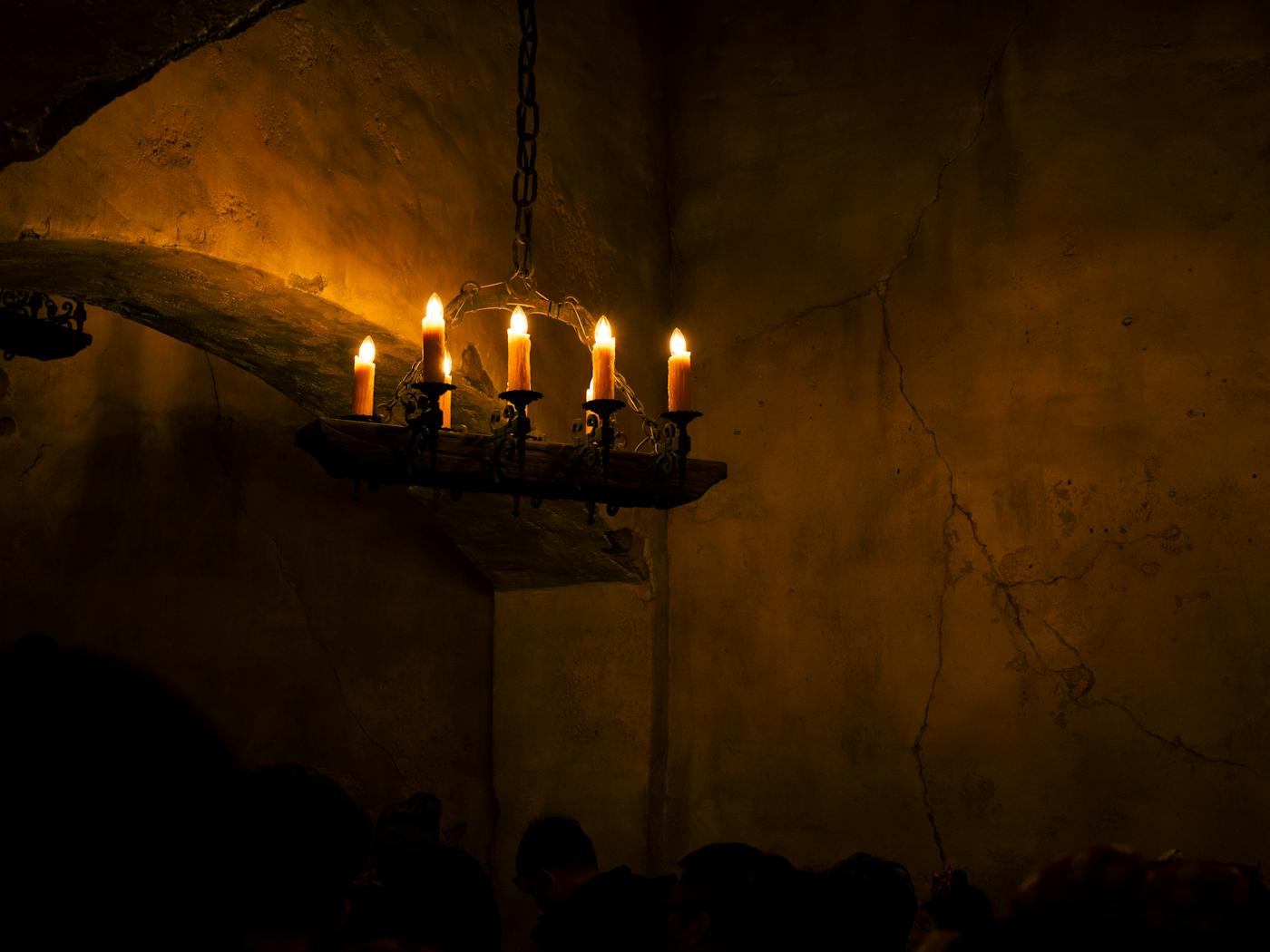
Getting started requires no preparation worth mentioning. Find a chair and a view. Choose a fixed point, a tree works particularly well, because it rises clearly against the sky and then gradually surrenders to it. Resist the impulse to look around. Stay with one thing and let it go dark.
Van Heemstra reflects on the strangeness of how something once so embedded in daily life could slip away without most people noticing. “It’s strange that something so common can be forgotten,” she has said. “What else have we forgotten?”
Dusking can happen in a city, from an apartment window, in a garden, or on a hillside. Guided group sessions carry a particular quality of shared silence that solo practice cannot quite replicate, but solitude has its own rewards. Both are accessible, both are free, and neither requires anything the average person does not already have. Dusk arrives tonight, as it does every night, with or without an audience. Dusking is simply the decision to be present when it does.