
A deadly fungus has revealed a disturbing survival trick. Researchers say Candida auris can disappear from the skin’s surface and settle inside hair follicles, where it may remain for more than a month.
The discovery could help explain why this drug-resistant superbug is so difficult to eliminate. It also comes as reported U.S. cases continue to rise.
Your skin wins almost every one of these fights. A fungus lands on you, the skin sheds it, your immune system clears the rest, and you never find out it happened.
Candida auris does not lose that fight.
At the University of California, San Francisco, dermatology researcher Dean Merrill kept going back to the same patch of mouse skin to check on a colony that should have been long gone. A close relative of the fungus, the ordinary yeast behind most human yeast infections, had faded out within days. This one had not.
A month on, it was still alive. And his team could no longer find it anywhere on the surface.
The Fungus Was Still There, Even When Scientists Could Not Find It
The discovery began with a result that did not make sense.
University of California, San Francisco dermatology researcher Dean Merrill repeatedly examined the same patch of mouse skin after exposing it to Candida auris. The fungus should have disappeared from the surface.
Instead, it kept turning up.
A month later, researchers could still find evidence that C. auris was alive. Yet they could no longer detect it sitting on top of the skin.
The answer was hiding underneath.
The team found that the fungus had moved into hair follicles, creating a protected environment where it could persist for more than 30 days.
That behavior stood out sharply when compared with Candida albicans, a much more common yeast responsible for many human yeast infections. C. albicans cleared from the skin much faster.
The researchers also found that C. auris attached to human hair around 30 times more readily than C. albicans.
“Candida auris colonizes skin way better than most other fungi, setting it up to invade once the immune system is weakened,” Merrill said in the university announcement.
Hair Follicles Give Candida Auris A Hidden Base

Hair follicles are more than tiny openings where hair grows.
They are part of a complicated biological environment containing skin cells, immune activity and structures that constantly renew themselves. The new research suggests C. auris can exploit that environment rather than simply remaining exposed on the skin.
That could be one reason colonization can last so long.
The Fungus Has An Unusual Relationship With Chitin

The researchers focused on chitin, a tough material found in fungal cell walls. Chitin is also present in the shells of crabs and other organisms.
The immune system recognizes chitin as a signal that something foreign is present.
Researchers found that C. auris exposed more chitin on its outer surface under skin-like conditions. When the scientists engineered strains to display even more chitin, those strains established stronger infections.
Suzanne Noble, a UCSF microbiology professor involved in the research, described the result in stark terms.
“C. auris actively uses its chitin to turn the skin into a perfect nest,” Noble said.
The finding suggests the fungus may be using a feature that normally alerts the immune system to create conditions that help it survive.
The Immune Response May Be Helping The Fungus Stay Put

This may be the most unsettling part of the discovery.
Healthy skin normally responds to fungal threats by activating an immune signal called interleukin-17A, or IL-17A. That response helps strengthen the skin’s defenses and activate antimicrobial protection.
C. auris appears to provoke a different response.
Instead of producing the same protective pattern, exposed chitin triggered interferon-gamma. Researchers found that this response suppressed antimicrobial and barrier-defense programs that would normally help the skin clear the fungus.
The shift also slowed the renewal of cells around the hair follicle.
That creates a potential advantage for the fungus: the environment becomes quieter while the organism remains protected below the skin’s surface.
Researchers still describe this immune mechanism as a proposed explanation rather than a settled fact in humans. The experiments provide evidence for the connection, but more work is needed to determine how closely the process mirrors what happens in infected patients.
U.S. Cases Have Been Rising Fast
The discovery arrives as Candida auris continues spreading through healthcare settings in the United States.
CDC surveillance recorded:
- 2,882 clinical cases in 2022
- 4,428 clinical cases in 2023
- 6,197 clinical cases in 2024
The source article reports that more than 3,000 cases had already been recorded across 23 states by the middle of July 2026. A later tally through July 25 put the figure at 3,437 clinical cases across 27 states.
Those numbers are different snapshots taken at different points in time, but they point in the same direction.
The organism was first identified in Japan in 2009. It is now classified by the CDC as an urgent antimicrobial resistance threat.
That classification reflects a major problem with C. auris: treating an infection can be difficult because the fungus is resistant to commonly used antifungal drugs.
Hospitals Are Where The Biggest Risk Lies

Candida auris is primarily a healthcare-associated threat.
It can spread through contaminated surfaces and equipment, including bedrails, doorknobs and shared medical devices. The organism can also survive on surfaces for unusually long periods compared with many other fungi.
That makes infection control especially important in hospitals and long-term care facilities.
The people at greatest risk are generally those who are already medically vulnerable.
According to the source material, nearly 90% of clinical infections recorded between 2022 and 2024 involved people aged 45 and older. Patients with breathing tubes, feeding tubes, IV lines or urinary catheters face particular risks because those devices can provide pathways for a colonizing organism to enter the body.
Colonization Can Happen Without Symptoms
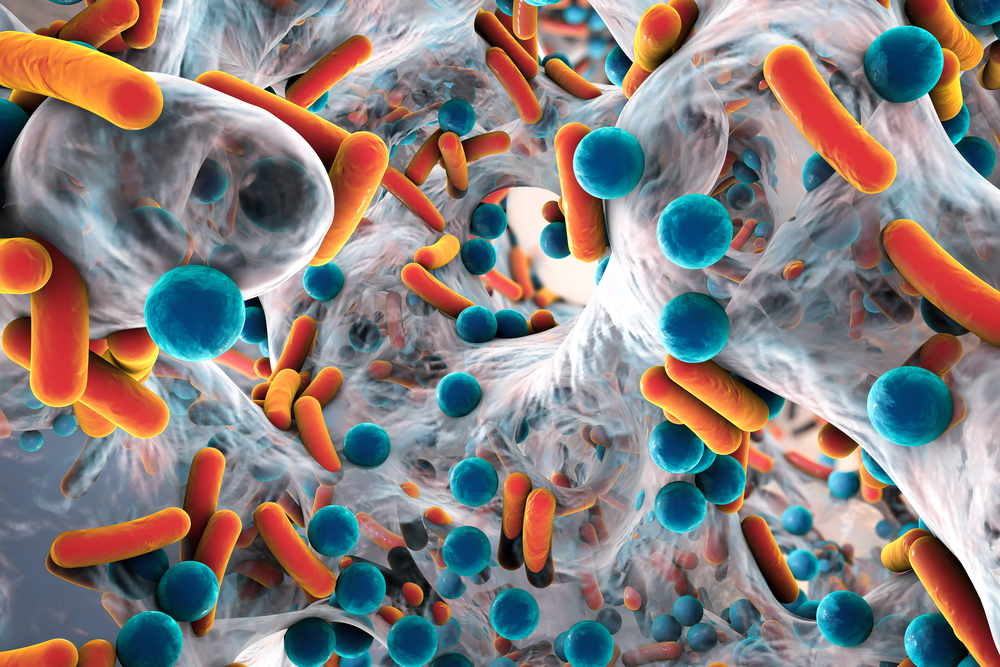
One reason C. auris can be difficult to detect is that a person may carry it without feeling sick.
The fungus can colonize the skin without immediately causing symptoms. The situation becomes more dangerous when it reaches vulnerable tissue or enters the bloodstream, particularly in patients who are already seriously ill.
Reported mortality among people with serious infections varies substantially by patient population and infection type.
The source article cites estimates ranging from 30% to 72%. UCSF estimates that C. auris contributes to roughly 3,000 deaths each year in American hospitals and long-term care facilities.
Those figures describe high-risk patients with serious infections. They do not mean that a healthy person faces the same level of danger from ordinary daily exposure.
More Than 90% Of U.S. Samples Resist A Common Drug

Drug resistance adds another layer to the problem.
More than 90% of U.S. C. auris samples are reported to resist fluconazole, an antifungal medication commonly used to treat fungal infections.
Some strains have resistance to all three major classes of antifungal drugs.
That leaves doctors with fewer options when an infection becomes severe.
It also explains why researchers are interested in understanding what happens before the fungus reaches the bloodstream. If scientists can learn how C. auris survives on the skin, they may eventually be able to interrupt that process earlier.
Ari Molofsky, a UCSF immunologist involved in the work, said the research could help connect harmless-looking colonization with more serious disease.
“Understanding how it survives on the skin may help explain how it eventually causes serious infections,” Molofsky said.
The New Study Has Important Limits

The findings are striking, but the research does not prove that Candida auris behaves identically in every human patient.
The persistence experiments were conducted on mouse skin. The hair-binding measurements and chitin experiments also came from the same research team.
The proposed immune mechanism needs additional investigation.
Researchers showed that exposed chitin was associated with a shift toward interferon-gamma and that this shift tracked with persistence. Establishing exactly how that process operates on human skin, particularly in critically ill hospital patients, remains an open question.
That distinction matters.
The study offers a possible explanation for an important biological behavior. It does not yet provide a treatment that can eliminate C. auris from human hair follicles.
Scientists Now Have A New Place To Look
The most useful part of the discovery may be the new target it gives researchers.
The fungus that seemed to vanish from the skin had not actually disappeared. It had moved into a tiny structure where it could survive for an extended period.
That creates several possible research directions.
Researchers could investigate whether the skin’s immune response can be shifted back toward the protective IL-17 pathway. They could also study whether blocking the fungal chitin response would make the follicle less hospitable.
Neither approach is a treatment available to patients based on this study alone.
But identifying the mechanism gives scientists something concrete to investigate.
For now, the practical defense remains much less complicated. C. auris spreads primarily in healthcare environments, making hand hygiene and infection-control precautions central to preventing transmission.
The researchers are now returning to the same tiny biological hiding place that started the investigation: the mouth of a hair follicle.
The next breakthrough may depend on figuring out how to make that hiding place impossible for the fungus to call home.




pornip
Friday 16th of October 2026
Its Amazing
555329
Thursday 15th of October 2026
Hi,how are you
pornip
Sunday 11th of October 2026
That was amazing
pornip
Sunday 27th of September 2026
The content is really great
555329
Thursday 24th of September 2026
I AM BACK AGAIN