Someone had to walk into a shrinking Brazilian rainforest, find a tree that grows nowhere else on Earth, and collect its leaves before this discovery could ever make headlines. Researchers studying the plant have now found compounds that showed antiviral activity against SARS-CoV-2 in laboratory experiments, with one molecule appearing to interact strongly with a key part of the virus.
The unusual part is not simply that a rainforest plant showed activity against the virus. The compounds appeared to interfere with three different targets that SARS-CoV-2 relies on to infect cells and reproduce. Researchers say that multi-target activity could make it harder for the virus to develop resistance, although the finding is still firmly in the laboratory stage and has not been tested in humans.
The Rare Tree Behind The Discovery
The plant is Copaifera lucens Dwyer, a species endemic to Brazil and native to the country’s Atlantic Forest. It is classified as a medicinal plant, which helped draw researchers’ attention to its chemistry in the first place.
The research team from the Ribeirão Preto School of Pharmaceutical Sciences at the University of São Paulo studied compounds extracted from the tree’s leaves. Researchers from Delta University of Science and Technology and Tanta University in Egypt collaborated on the virology work.
The compounds belong to a group called galloylquinic acids. Scientists isolated and characterised these substances before testing their effects against SARS-CoV-2 under laboratory conditions.
The findings were published in Scientific Reports. The work was funded by FAPESP, the research foundation of São Paulo state, adding another layer of institutional support to a study that began with a relatively obscure tree growing in a threatened ecosystem.
The Compounds Targeted Three Parts Of The Virus
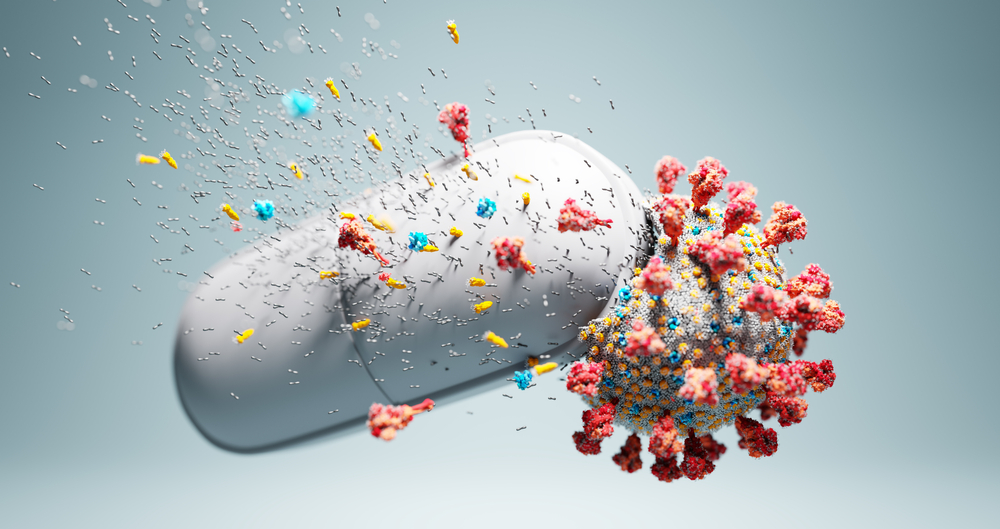
The biggest reason the findings have attracted attention is the way the compounds appeared to work. Rather than focusing on a single viral target, the researchers identified interactions involving three different components of SARS-CoV-2.
One target was the receptor-binding domain of the spike protein. This part of the virus plays a key role in attaching to cells, making it an obvious target for researchers looking for ways to interfere with infection.
The compounds also interacted with papain-like protease, an enzyme SARS-CoV-2 needs to process its proteins. The third target was RNA polymerase, the machinery the virus uses to copy its genetic material and continue producing new viral components.
Jairo Kenupp Bastos, the pharmacist and University of São Paulo professor who coordinated the study, said the multi-target mechanism could reduce the likelihood of resistance developing. “An important aspect revealed by this information is the multi-target mechanism of the compound, which reduces the likelihood of resistance developing,” Bastos said.
One Molecule Stood Out In The Testing
Among the compounds investigated, 3,4,5-tri-galloylquinic acid attracted particular attention because of its interaction with the spike protein’s receptor-binding domain.
The researchers described the molecule as showing strong binding affinity with that part of the virus. Molecular modelling was used to examine how the compounds could fit against the viral targets, giving the team a closer look at the possible mechanisms involved.
But the modelling was only one part of the research. The scientists also conducted laboratory experiments designed to determine whether the compounds could reduce infectious virus and interfere with viral activity.
That combination gave the researchers more information than a simple computer prediction. It allowed them to compare the compounds’ predicted molecular interactions with what happened when the substances were actually tested in laboratory systems.
Researchers Counted How Much Virus Survived
The testing involved several different stages. The researchers first conducted cytotoxicity assays to determine whether the tested concentrations caused damage to human cells.
They then used plaque reduction assays to measure infectious virus following treatment. These experiments provide a way to determine how much viable virus remains after exposure to a candidate antiviral compound.
The team also examined viral protein production and used molecular modelling to investigate the interactions between the plant compounds and the three viral targets. The researchers reported additional anti-inflammatory and immunomodulatory effects associated with the compounds.
Mohamed Abdelsalam of Delta University of Science and Technology described the combination of techniques as important for understanding both the biological effects and molecular behaviour of the substances. “This integrated approach allowed us to understand how the compounds work and how they act at the molecular level,” Abdelsalam said.
The researchers’ findings therefore point toward more than one possible mechanism, but they do not establish that the compounds will produce the same effects inside a human body.
This Is Still A Laboratory Discovery
There is one fact that should remain front and centre whenever the research is discussed: no human has taken the compound as a COVID-19 treatment.
The research has not reached human clinical trials. It has also not established a safe human dose or shown that the compound can prevent or treat COVID-19 in patients.
The funding foundation’s announcement makes clear that further stages are still required, including in vivo studies and clinical trials. In vivo research generally means testing in living organisms before researchers can determine whether a candidate is suitable for human testing.
That gap can be enormous. A compound may show strong activity against a virus in cells and still fail because it cannot reach the necessary concentration in the body, breaks down too quickly, produces harmful effects, or behaves differently once it encounters the complexity of a living organism.
Why A Three-Target Approach Is Interesting
Targeting several parts of a virus could offer a potential advantage because viral resistance can develop when mutations allow a virus to evade a treatment aimed at one specific feature.
The researchers’ results suggest the galloylquinic acids may interact with three separate components involved in the viral life cycle. That does not prove resistance would be impossible, but it provides a reason to investigate the compounds further.
The potential significance becomes clearer when considering how dependent SARS-CoV-2 is on its molecular machinery. The virus needs to attach to cells, process proteins and copy its genetic material. Interfering with several of those processes could theoretically create multiple obstacles at once.
That is why Bastos described the multi-target mechanism as an important aspect of the findings. The idea is scientifically interesting, but it remains a hypothesis that needs to survive much more testing before it can have any relevance to patients.
There Is No Plant Remedy To Buy
The discovery should not be confused with evidence that drinking Copaifera lucens tea or taking a plant extract would treat COVID-19.
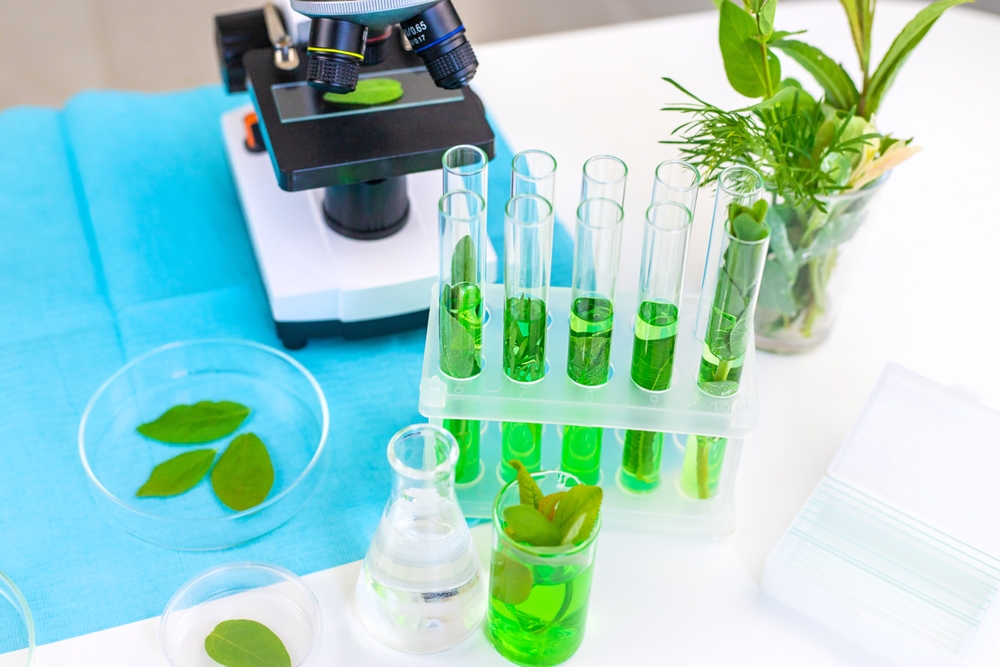
The researchers tested purified compounds that had been extracted, isolated and characterised in a laboratory. The concentration that produces an effect in an experiment cannot simply be translated into a safe or effective amount for a person.
There is also no evidence from this study establishing that consuming the leaves would reproduce the antiviral activity observed in the laboratory. The research is investigating molecules as potential drug candidates, not validating a home treatment.
That distinction matters because promising laboratory discoveries often receive attention long before they reach clinical testing. A compound can be scientifically interesting without being ready for use outside the laboratory.
The Forest Is Running Out Of Time
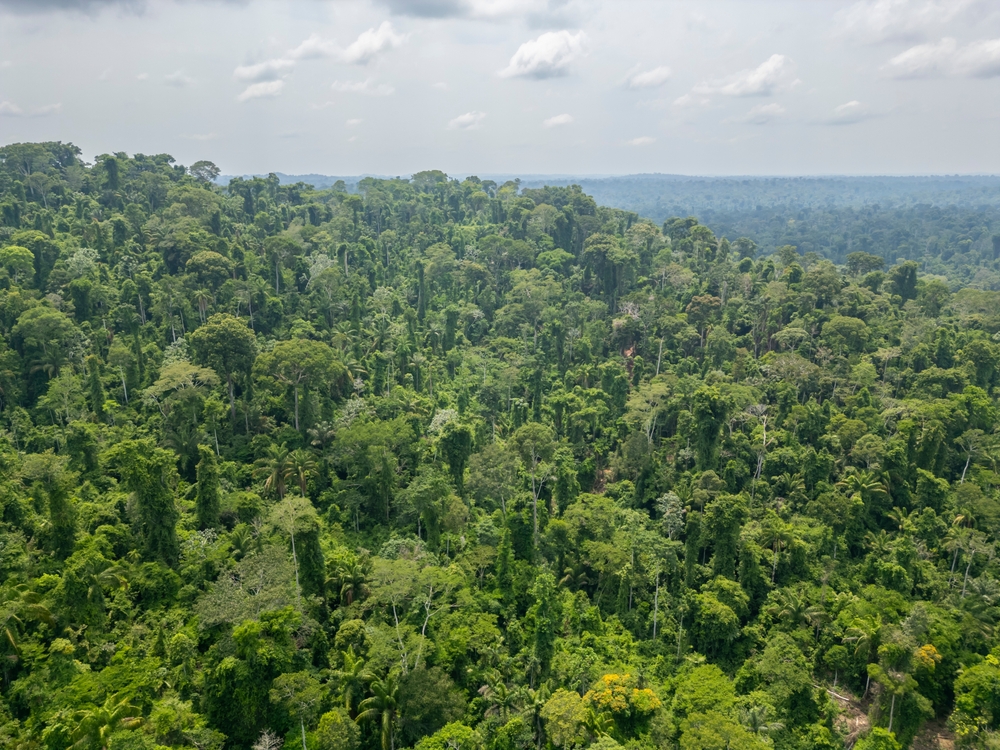
The discovery also draws attention to the ecosystem where the tree grows. The Atlantic Forest has lost most of its original coverage, with only around 24% remaining according to analysis cited in reporting on the ecosystem.
Between 2010 and 2020, the forest was still losing mature vegetation at an estimated rate of roughly 18,629 hectares per year. That represents an enormous amount of habitat disappearing while scientists are still discovering what many of its species can produce.
The Atlantic Forest is estimated to contain around 20,000 vascular plant species. Around 8,000 are considered endemic, meaning they occur naturally nowhere else on Earth.
For researchers studying natural compounds, that creates a practical problem. Every species that disappears can take its unique chemistry with it, potentially removing molecules that nobody has even had the opportunity to investigate.
What Happens Before This Could Become A Drug
The researchers still have several major questions to answer before the compounds could move anywhere near a treatment.
- Animal testing: Researchers need to determine whether the antiviral effects observed in laboratory systems also occur in living organisms.
- Safety testing: The compounds must be assessed for toxicity and other harmful effects at potentially useful concentrations.
- Pharmacology: Scientists need to understand how the body absorbs, distributes, metabolises and eliminates the compounds.
- Clinical trials: Human studies would be required to establish whether the compounds are safe and effective in patients.
- Drug development: Even successful clinical results would be followed by further work before an actual medicine could reach widespread use.
Every stage represents another opportunity for a promising compound to fail. That is why describing the Brazilian tree as the source of a new COVID drug would go far beyond what the research currently shows.
What scientists have is an early lead with an unusual mechanism and a reason to keep investigating it.
A Leaf Started The Whole Investigation
The striking part of the story is how small the discovery looked at the beginning. It started with leaves collected from a rare Brazilian tree. Researchers then extracted the plant’s compounds, isolated individual molecules and tested them against SARS-CoV-2 using several laboratory methods.
One group of compounds showed antiviral activity, while one molecule stood out for its interaction with the virus’s spike protein. The broader findings suggested that several viral targets could be affected at once.
Nobody knows yet whether the discovery will make it through animal studies, clinical trials and the long process required to create a medicine. Most early drug candidates never make that journey.
For now, the important finding is much narrower. A rare tree growing in one of the world’s threatened forests contains compounds that can interfere with SARS-CoV-2 in laboratory experiments, and scientists now have a reason to find out how far that chemistry can go.
Sources:
- El-Morsi, R. M., Al-Madboly, L. A., Bastos, J. K., Aboukhatwa, S. M., Nasr, S. A., Ghareeb, D. A., Ramadan, H. A., Kushkevych, I., & El-Salam, M. a. A. (2026). Bioactive galloylquinic acids from Copaifera lucens as dual inhibitors of SARS-CoV-2 Spike and RdRp proteins. Scientific Reports, 16(1), 4521. https://doi.org/10.1038/s41598-025-25217-8
- Fapesp. (n.d.). Study confirms effectiveness of medicinal plant against SARS-CoV-2 virus. AGÊNCIA FAPESP. https://agencia.fapesp.br/57908