Science has a long history of being confidently wrong. For most of the 20th century, the medical establishment held a view of autism that was not just incorrect but actively harmful to the families it affected. Overturning that view took decades of careful research, two landmark studies, and a gradual shift in how geneticists understood the relationship between DNA and brain development.
Now, after years of incremental progress, researchers say they are closer than ever to mapping the genetic architecture of autism. New findings are emerging from twin studies, large-scale DNA databases, and clinical trials that were unthinkable even a generation ago. Yet the more clearly scientists see the biology, the more contested the question of what to do with that knowledge becomes.
How a Discredited Theory Set Science Back Decades
Few moments in the history of psychiatry carry as much shame as the “refrigerator mother” theory. In the 1940s, Austrian psychiatrist Leo Kanner proposed that autism arose from early childhood trauma caused by mothers who were emotionally cold and rejecting toward their children. For nearly three decades, that idea shaped clinical practice, left families carrying unearned guilt, and steered research away from where the real answers lay.
Daniel Geschwind, a professor of neuroscience and genetics at the University of California, Los Angeles, has described the theory as “deeply damaging and wrong.” It was not until 1977 that a pair of psychiatrists published a twin study demonstrating that autism frequently appeared in both identical twins, offering the first solid evidence of a genetic component. That single study changed everything.
Research built on that foundation has since produced striking numbers. When one identical twin receives an autism diagnosis, the likelihood of the other twin sharing that diagnosis can exceed 90%. Among same-sex fraternal twins, the figure sits at around 34%, compared to a general population rate of roughly 2.8%. Genetics, the data made clear, was not a minor factor. It was central to the story.
Two Very Different Types of Genetic Causes
Understanding what “genetic cause” means in the context of autism requires separating two distinct mechanisms that operate very differently from one another.
Between any two people, roughly 0.1% of DNA differs. Those tiny differences, spread across billions of base pairs, can range from entirely inconsequential to life-altering in their effects. Thomas Bourgeron, a neuroscience professor at the Institut Pasteur in Paris, puts it plainly. “Sometimes these variations have no effect at all. Sometimes they have a little effect, and sometimes they have a super strong effect.”
At one end sit rare, powerful mutations in a single gene. Scientists have now identified more than 100 genes where such mutations can occur, and they account for up to 20% of all autism cases. Bourgeron was among the first to identify autism-related gene mutations back in 2003, finding that they affected proteins involved in synaptogenesis, the process through which neurons in the brain form connections with one another.
Some of these mutations arrive through random chance during embryonic development, appearing in neither parent’s DNA. Geschwind calls these de novo variants, describing them as arriving like a bolt of lightning, unexpected and rare. In other cases, a parent carries the same mutation without being autistic themselves, with the mutation only reaching a threshold of impact in the child when it combines with other inherited gene variants.
What these single-gene cases can mean for the individuals involved is serious. Bourgeron has said clearly that the autism arising from major mutations bears little resemblance to popular portrayals of the condition. Without stating it bluntly, his research makes clear that the most severe cases can involve profound intellectual disability, significant motor impairment, and conditions such as epileptic encephalopathy that affect quality of life in lasting ways.
When Thousands of Small Signals Add Up
For most autistic people, the genetic picture looks entirely different. Rather than a single dominant mutation, their neurodiversity arises from the combined effect of hundreds or even thousands of relatively common gene variants, each contributing so little on its own that no single one would register as significant.
Many of these variants exist throughout the broader population, carried by neurotypical and neurodivergent people alike. Bourgeron has observed that one or both parents of an autistic child often carry a share of these variants and may display mild autistic traits, a preference for structure, difficulty reading emotional cues, and a heightened sensitivity to patterns, without those traits reaching the level that would warrant a diagnosis.
Identifying these subtle signals required creative research methods. In the early 2000s, Simon Baron-Cohen at the University of Cambridge developed a test called Reading the Mind in the Eyes, designed to measure how well people can read emotions from photographs showing only a person’s eyes. Autistic individuals, Bourgeron has explained, tend to gather more information from the mouth region of a face, while neurotypical individuals gather more from the eyes.
By partnering with the DNA testing company 23andMe, Bourgeron and Baron-Cohen were able to gather data from more than 88,000 people, cross-referencing their performance on the emotion recognition test with their genetic profiles. From that dataset, researchers identified clusters of gene variants associated with poorer emotion recognition, many of which appear frequently in autistic people.
Interestingly, those same common variants often correlate with stronger analytical thinking, pattern recognition, and higher performance in mathematical, spatial, or artistic domains, as well as greater educational attainment. Geschwind has suggested that this may explain why these variants have persisted across human history, carried forward because of the advantages they confer, even as they occasionally combine into profiles associated with autism.
Environment Adds Another Layer
Genetics alone does not close the case. Even among identical twins, where the DNA is virtually identical, one twin can be autistic while the other is not, roughly 10% of the time. Researchers accept that environmental factors play a role, though identifying them precisely has proven difficult, and the search has at times generated more misinformation than clarity.
According to the US National Institutes of Health, potential non-genetic contributors include prenatal exposure to air pollution and certain pesticides, extreme prematurity, and oxygen deprivation during birth. Historically, attempts to identify environmental causes have been exploited to promote debunked theories, most notably the claim linking vaccines to autism, a claim that has been repeatedly and thoroughly discredited but continues to circulate.
Current US political attention on autism research carries its own complications. Health Secretary Robert F Kennedy Jr has announced a large-scale effort to identify autism’s causes, a plan that has drawn concern from the Autism Society of America, which has described it as potentially misleading and unrealistic.
Where in the Brain and When

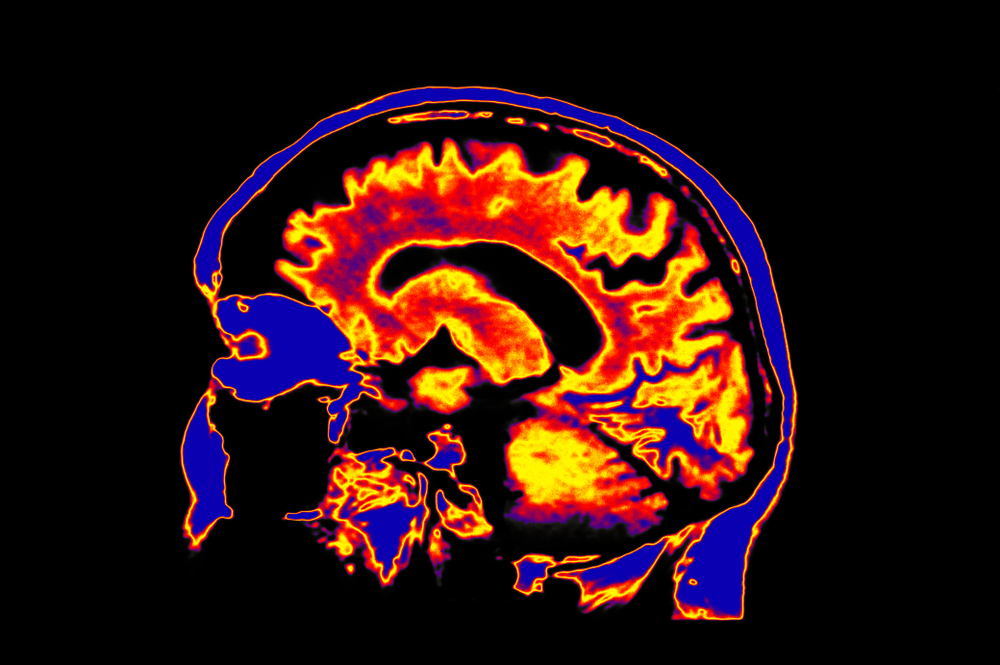
Many of the genes associated with autism become active during a specific window of foetal development, when the cortex, the outer layer of the brain responsible for memory, reasoning, and problem-solving, is being formed. Geschwind has placed the peak of this period between 12 and 24 weeks of pregnancy.
“You can think of these mutations as disrupting the normal patterns of development, knocking development off of its normal track so to speak and maybe onto another tributary, instead of the normal, neurotypical pattern of development,” Geschwind has said.
That framing matters. Autism, on this account, is not a case of brain development failing entirely but of it taking a different path during a narrow and consequential window. Genetic insights from this period have also helped families understand future reproductive risks and connect with support communities built around specific gene mutations.
A Community Divided on What Science Should Do Next
Here is where the story stops being purely scientific and becomes something more contested. Autism covers a vast range of human experience, from people requiring round-the-clock care throughout their lives to those who consider autism a core part of who they are and actively resist framing it as a disorder.
Sue Fletcher-Watson, professor of developmental psychology at the University of Edinburgh, has been among the most vocal academic voices raising concerns about the direction of genetic research. “Autism isn’t a biological phenomenon that has to be tested for, and where you get a categorical outcome or prognosis. It isn’t something, like cancer, that is universally agreed to be bad and for which everyone wants a cure. In my opinion, it never will be.”
Fletcher-Watson has also warned that genetic researchers have done little to address fears within the autistic community about how this data might eventually be used. Concerns centre on the possibility of prenatal testing leading to selective termination, a fear given weight by the existing precedent of chromosomal screening for Down’s syndrome and similar conditions, where termination rates following a positive screen approach 100% in some countries. An activist began counting what they called an Autistic Genocide Clock in 2005, arguing that such a test would represent a threat to the existence of autistic people as a group. Two decades later, those fears have not eased.
The Case for Pressing On
Other researchers push back against what they see as a conflation of the autistic spectrum’s full range into a single argument against research.
Joseph Buxbaum, a psychiatry professor at the Icahn School of Medicine at Mount Sinai and founder of the Autism Sequencing Consortium, has made clear where his focus lies. When critics question the value of autism genetic research, his response centres on autistic people who are non-verbal, carry significant intellectual disabilities, and will never live independently. For that group, research that could lead to treatment carries a very different weight.
In 2021, the Lancet Commission formally introduced the term “profound autism” to better describe people at this end of the spectrum, those who are unable to advocate for themselves and require sustained, intensive support. Since then, clinical trials have begun targeting specific gene mutations.
One approach involves boosting the activity of the unaffected copy of a gene when a de novo mutation has knocked out only one of the two copies a person carries. Research from Geschwind’s lab has suggested this could at least partially reduce the degree of disability. Bourgeron has been running a clinical trial using lithium to boost a version of the Shank3 gene in children known to carry Shank3 mutations. Further ahead, Geschwind has raised the possibility of CRISPR gene editing being used to deliver gene therapy to unborn babies still in the womb.
Most concretely, the FDA has approved a clinical trial by Jaguar Gene Therapy involving children with Shank3 mutations. Buxbaum has pointed out that this trial is only possible because of 15 years of prior research into how children with these mutations develop, work that is now providing a baseline against which outcomes can be measured.
Science and Society, Still Negotiating

Fletcher-Watson has raised a pointed concern about how these trials are framed. Her position is that single-gene cases are often being presented as autism research when they more accurately describe treatments for intellectual disability, a condition that carries less funding and advocacy weight than autism does. She would prefer to see them characterised accordingly.
Where she and the researchers pursuing trials find more agreement is on the potential of genetic science to address conditions that frequently accompany autism, including epilepsy, sleep disturbances, obsessive-compulsive disorder, and gastrointestinal problems.
Bourgeron has said he sees inclusion and science as parallel obligations rather than competing priorities. Genetic research, in his view, needs to serve the specific needs of each individual rather than arriving at a one-size-fits-all answer for a condition that refuses to be defined that way.
Autism’s genetic roots are now mapped in far greater detail than anyone could have predicted when Leo Kanner’s refrigerator mother theory still held sway. What scientists do with that map, and who gets to decide, remains very much an open question.