Microplastics have become one of the quietest concerns in modern drinking water: too small for most people to see, yet widespread enough to raise serious questions about long-term exposure. In Virginia, 18-year-old high school student Mia Heller turned that concern into a working invention. After learning about water contamination issues in her community, she developed a compact filter designed to remove microplastics without relying on the disposable membranes used in many filtration systems.
A Local Water Problem Sparked A Practical Idea
For Mia Heller, the problem of microplastics in drinking water was not just something she read about in science articles. It became personal after she learned about water quality concerns in her own community in Warrenton, Virginia, where testing had found contamination from PFAS and microplastics. According to Smithsonian Magazine, the issue was made more frustrating by the fact that public funding was not being provided to filter the water. As Heller put it, “It was up to people to provide their own filtration.”
Her family responded by installing an advanced filtration system at home. But that solution came with its own problem: constant upkeep. Heller noticed how often her mother had to replace the system’s membrane filters, the thin barriers used to trap contaminants. For many households, that kind of maintenance can be expensive, inconvenient, and easy to fall behind on.
That everyday frustration became the starting point for Heller’s invention. Instead of simply accepting that clean drinking water required costly filters and repeated replacements, she began looking for a different approach. Her goal was specific: create a filtration system that could remove microplastics without relying on solid membranes.
Why Microplastics In Drinking Water Are Hard To Ignore
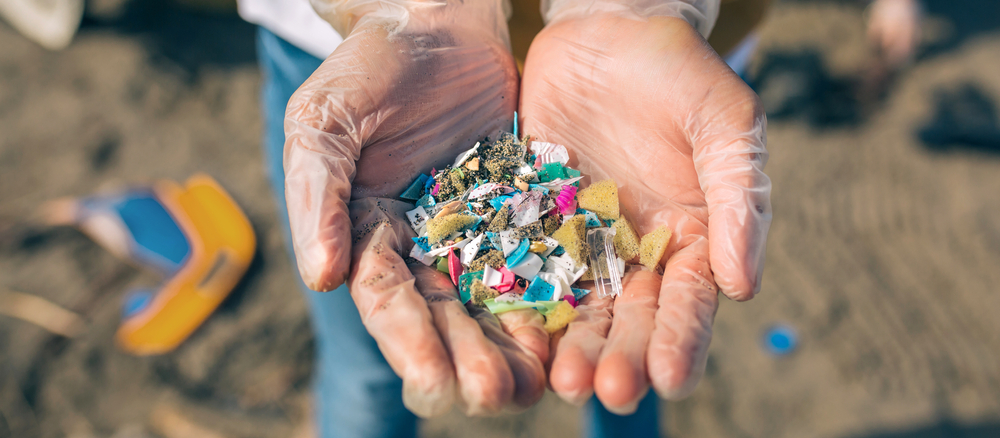
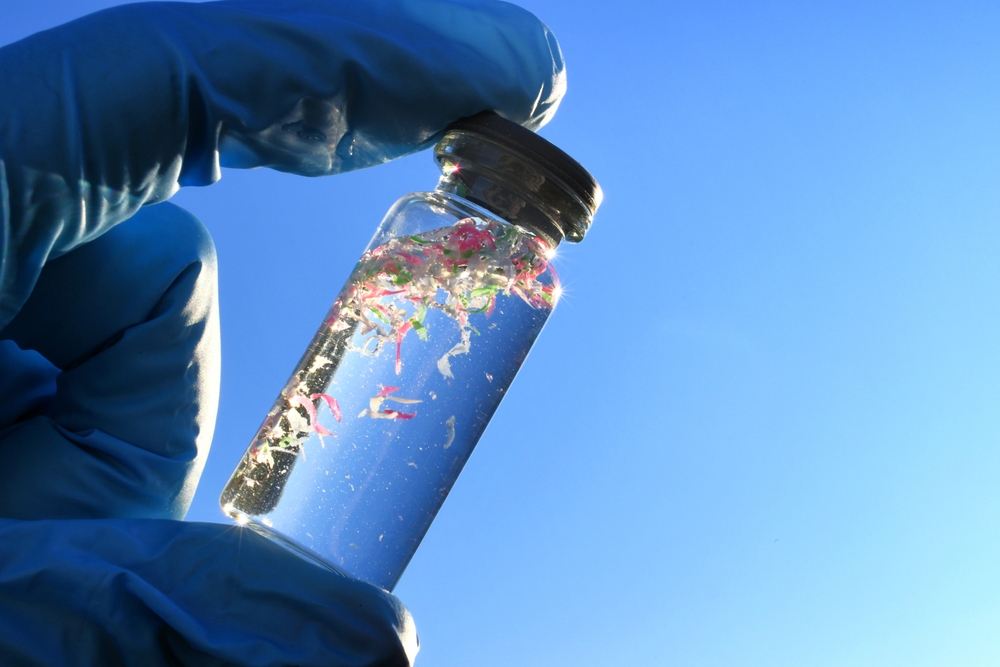
Microplastics are not a distant pollution problem floating somewhere in the ocean. They are small plastic particles, often formed when larger plastic products break down, and they are now being found in places that directly affect daily life, including drinking water, food, air, soil, animals, and the human body.
According to the Environmental Protection Agency definition cited by Smithsonian Magazine, microplastics can range from about 1 nanometer to 5 millimeters in size. That means some are visible as tiny fragments, while others are so small that people would never know they were there without testing. This is part of what makes them difficult to manage: they do not behave like ordinary litter that can simply be picked up and thrown away.
Scientists are still studying what these particles may mean for long-term health. That uncertainty matters. Matthew J. Campen, a toxicologist at the University of New Mexico, told Smithsonian that “there are still a lot of questions” about whether plastics are directly harming human health. He also noted that evidence points to possible concerns involving cardiovascular and neurological disease, though the links are not yet conclusive.
How Her Filter Removes Microplastics Without A Membrane
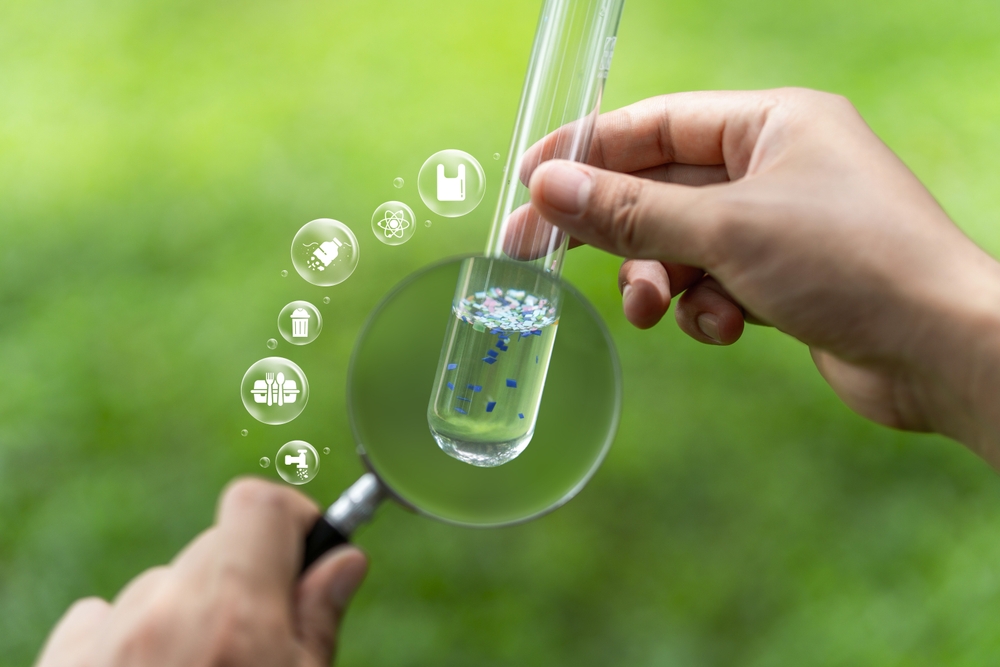
Most home water filters work by pushing water through a physical barrier, often a membrane, that traps unwanted particles. Heller’s idea took a different route. Instead of depending on a solid filter that can clog, wear out, or require frequent replacement, her prototype uses ferrofluid, a magnetic oil that can bind to microplastic particles as water moves through the system.
The design works in a closed loop. Contaminated water enters one part of the device, while the ferrofluid is stored in another. In the smaller core module, the magnetic oil interacts with the water and attaches to the microplastics. A magnetic field then pulls those microplastic-bound particles out of the water. The ferrofluid is recovered and reused rather than discarded after each cycle.
That self-recycling feature matters because it addresses one of the biggest drawbacks of many filtration systems: ongoing maintenance. Heller’s earlier version could remove microplastics, but it still required repeated attention because the ferrofluid did not recycle itself. She kept experimenting until the filtration and recovery process worked together in a more practical way.
Her current prototype is roughly the size of a standard bag of flour and includes three modules. One holds about a liter of contaminated water, another stores the ferrofluid, and the third carries out the key separation process. In her tests, the device removed 95.52 percent of microplastics from water and recycled 87.15 percent of the ferrofluid.
Those numbers are promising, especially for a student-built prototype. But the larger value of the design is not only the removal rate. It is the attempt to make water filtration less wasteful, less dependent on disposable parts, and easier to maintain over time. As Heller described it, the result is “an affordable, low-waste filtration system without the use of a solid membrane.”
Her Invention Is Promising, But It Still Needs Real-World Testing
Heller’s results are impressive, but the filter is still a student-built prototype, not a finished product ready for every kitchen sink. That distinction matters. A device can perform well in controlled testing and still need more research before it can be safely, affordably, and reliably used in homes.
One major question is what happens to the microplastics after they are pulled out of the water. Matthew J. Campen, a toxicologist at the University of New Mexico, told Smithsonian Magazine that the captured particles need to be discarded or destroyed in a way that removes them completely. He also noted that the system should not leave behind another pollutant residue that creates a new problem while solving the first one.
Scale is another challenge. Heller has said that ferrofluid is currently expensive to produce in large amounts, which makes her system more realistic for individual home use than for large municipal treatment plants. She sees it as something that could fit under a typical kitchen sink, rather than as a replacement for public water infrastructure.
That does not make the invention less meaningful. It makes the next steps clearer. Heller wants to professionally confirm the results she found at home, and she has said she would eventually like to bring the system to market. For now, the filter is best understood as a strong proof of concept: a creative, low-waste idea that could become more practical with further testing, engineering support, and investment.
A Student Invention With A Bigger Message
Heller’s filter is still at the prototype stage, but its message is already clear: clean water problems need practical, accessible solutions, not just awareness. Her design removed 95.52 percent of microplastics in her own tests, reused most of its ferrofluid, and avoided the solid membranes that often make filtration systems expensive to maintain. Those results still need professional confirmation, but they show what can happen when a young researcher looks at a real household problem and asks how it could be solved differently.
The bigger takeaway is not that one invention will fix microplastic pollution on its own. It will not. Cleaner water will require stronger pollution prevention, better public infrastructure, responsible plastic use, and continued research into how microplastics affect human health. But Heller’s work is a reminder that solutions do not always begin in large laboratories or government offices. Sometimes, they begin with a student noticing a problem at home, refusing to accept the current options as good enough, and building something better.