A teenager with no formal programming background has developed an artificial intelligence system that could one day change how autism and ADHD are identified. What began as a high school research project has grown into an award-winning proof of concept that uses something as ordinary as a photograph of the eye to detect patterns linked to neurodevelopmental conditions.
Seventeen-year-old Edward Kang’s invention, called RetinaMind, has drawn attention from scientists, educators, and healthcare professionals after demonstrating an accuracy rate of about 89 percent in distinguishing between autism spectrum disorder (ASD), attention-deficit/hyperactivity disorder (ADHD), and neurotypical development. While experts stress that the technology is still in its early stages and requires extensive clinical validation, the project highlights how artificial intelligence could support earlier screening for conditions that often take years to diagnose.
A High School Research Project Became an Award-Winning Innovation
Edward Kang, a senior at Bergen County Academies in Hackensack, New Jersey, did not set out to reinvent autism screening. His journey began in 2023 while searching through scientific papers for a school project.
One study immediately caught his attention. Researchers at the Chinese University of Hong Kong had demonstrated that subtle retinal differences could be associated with autism.
“I thought it was fascinating and really unintuitive that you can use something like the eye to understand what’s happening in the brain,” Kang explained.
Rather than stopping at understanding the published research, he challenged himself to improve it.
That decision eventually led to RetinaMind, an AI-powered system capable of analyzing retinal photographs and identifying patterns associated with both autism and ADHD. The project impressed judges at the 2026 Regeneron Science Talent Search, where Kang earned second place along with a $175,000 prize.
According to Maya Ajmera, president and CEO of Society for Science, the project stood out because it combined sophisticated artificial intelligence with biological research instead of relying on computer science alone.
“Edward’s project stood out for combining A.I. with lab-based biology, which gave it both computational sophistication and biological depth,” Ajmera said.
The recognition places Kang among the country’s most promising young scientists, but the broader significance lies in the healthcare challenge he chose to tackle.
Why Earlier Autism and ADHD Detection Matters
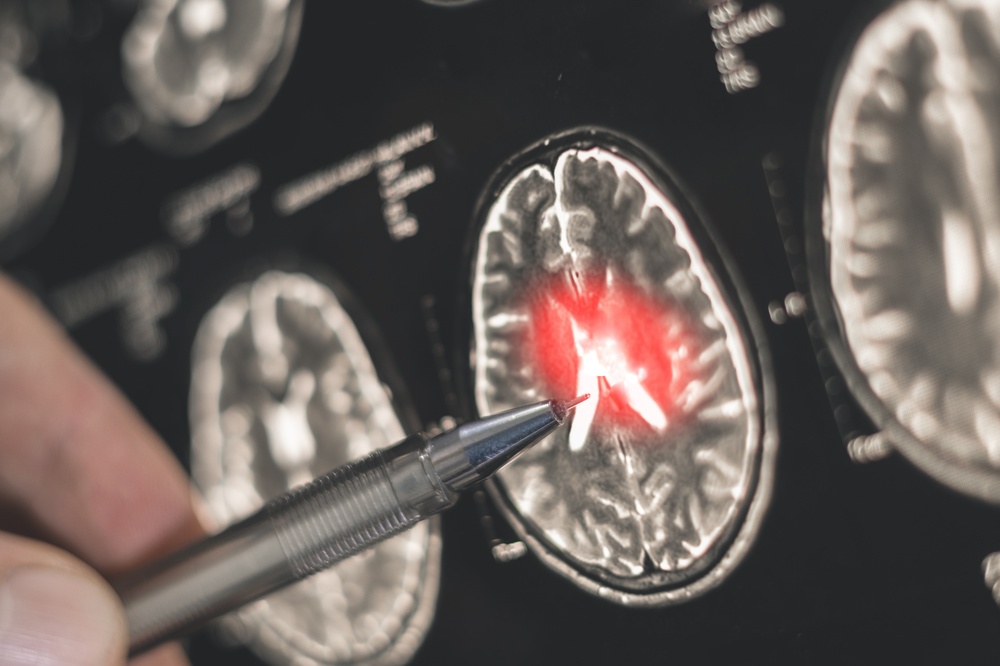
Autism spectrum disorder and ADHD are among the most common neurodevelopmental conditions affecting children.
The Centers for Disease Control and Prevention estimates that autism affects roughly one in 31 children in the United States, while ADHD impacts nearly seven million American children. Although awareness has increased substantially over the past decade, obtaining a diagnosis often remains a lengthy and complicated process.
Unlike many medical conditions that can be confirmed through blood tests or imaging studies, autism and ADHD are diagnosed through developmental assessments, behavioral observations, interviews with caregivers, and standardized psychological evaluations.
These evaluations are thorough because clinicians are assessing how a child communicates, learns, behaves, interacts socially, and responds to different situations over time.
Paul Lipkin, a neurodevelopmental pediatrician at the Kennedy Krieger Institute and professor of pediatrics at Johns Hopkins Medicine, explains that both autism and ADHD are behavioral phenotypes rooted in brain development.
“They are neurologically based conditions that are described by development of skills or by unusual or problematic behaviors,” Lipkin said.
This process is essential for making an accurate diagnosis, but it also contributes to long waiting periods in many communities.
Families frequently spend months, and sometimes much longer, waiting for specialist appointments. During that time, parents may notice developmental concerns without having clear answers about what their child is experiencing.
Early intervention has consistently been associated with improved long-term developmental outcomes, particularly for children with autism. Earlier access to speech therapy, occupational therapy, behavioral interventions, educational support, and family guidance can help children develop communication, social, and adaptive skills during important stages of brain development.
That is why researchers continue searching for faster and more objective screening tools that could identify children who may benefit from a comprehensive clinical evaluation.
RetinaMind was designed with that goal in mind.
“My hope is that RetinaMind will enable earlier diagnoses for neurodevelopmental disorders than currently possible, unlocking earlier treatment and, therefore, a higher quality of life for the millions of patients of autism and ADHD around the world,” Kang said.
Looking to the Eye for Clues About the Brain
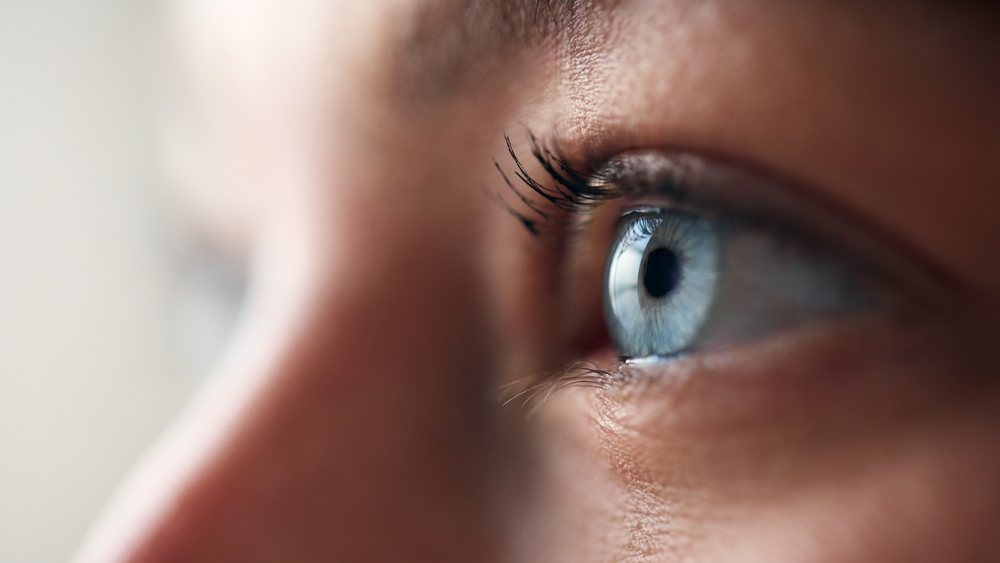
At first glance, the idea sounds surprising. How could a picture of the retina reveal anything about conditions that primarily affect brain development?
The answer lies in biology.
The retina is technically part of the central nervous system. During fetal development, retinal tissue and brain tissue develop from the same embryonic structures. Because of this close relationship, scientists have long suspected that changes occurring in brain development might also leave subtle signatures within the eye.
Previous research has identified small structural differences in the retinas of some people with autism and ADHD.
These include slight variations in the thickness of retinal nerve fiber layers, differences within the macula, and other microscopic structural features.
The challenge is that these changes are far too subtle for the human eye to detect consistently.
A trained ophthalmologist cannot simply examine a retinal photograph and determine whether someone has autism or ADHD.
Artificial intelligence, however, excels at recognizing complex visual patterns that humans may never consciously notice.
Machine learning systems can examine thousands of images simultaneously, identifying combinations of tiny features that collectively point toward meaningful differences.
That capability became the foundation of RetinaMind.
Teaching Artificial Intelligence to Recognize Hidden Patterns
One of the most remarkable aspects of Kang’s project is that he taught himself the programming skills needed to build it.
“I don’t really come from a programming background,” he admitted.
He relied on online tutorials and virtual courses while learning machine learning from the ground up.
His first version was intentionally simple.
Using a convolutional neural network, or CNN, Kang recreated the type of deep-learning model described in the original research paper that inspired him.
Convolutional neural networks have become one of the most widely used forms of artificial intelligence for image recognition because they excel at identifying shapes, textures, edges, and spatial relationships inside photographs.
Initially, the model focused on distinguishing between autism and neurotypical development.
That was only the beginning.
Kang believed a clinically useful screening tool should do more than simply recognize one condition.
Instead, it should distinguish among multiple neurodevelopmental disorders that often share overlapping characteristics.
He expanded the system to recognize ADHD as well, creating a model capable of classifying three possible outcomes instead of only two.
Improving accuracy became his next challenge.
Rather than depending on one AI model, Kang implemented an approach known as ensemble learning.
Instead of asking a single algorithm to interpret each retinal image, several different models analyze the same photograph independently.
Each model reaches its own conclusion before their predictions are combined into a final consensus.
“You feed them the same retinal image and ask them to predict autism or ADHD, and then you take their predictions and combine them,” Kang explained.
This voting approach helps reduce errors that may occur when one individual model makes an incorrect prediction.
The combined decision tends to be more reliable because it reflects agreement across multiple systems rather than relying on one computational opinion.
That strategy helped RetinaMind reach an overall diagnostic accuracy of approximately 89 percent.
Seeing Autism Care Up Close Changed His Perspective
As Kang’s technical skills developed, another experience transformed how he thought about autism research.
During his senior year, he volunteered at the Rutgers Center for Autism Research, Education and Services (RUCARES), part of the Rutgers Brain Health Institute.
The internship allowed him to observe clinicians working directly with children and families affected by autism.
Instead of seeing autism only through datasets and scientific papers, he witnessed the day-to-day reality of diagnosis, treatment, and individualized care.
“My volunteer internship at RUCARES continues to be a special honor,” Kang said. “Since last fall, I have had the opportunity to actually see the autism treatment practices I had only read about in articles before.”
Watching specialists personalize therapies for each child influenced the direction of his research.
“Getting to see first-hand how personalized treatments can be gave me direction for my research project,” he said, “helping me realize that future diagnostic tools for autism should aim to not only identify the disorder, but also distinguish between various subtypes of patients that could guide treatment.”
The internship also reinforced his interest in neuroscience.
“More than anything, though, I have had the privilege of connecting and conversing with professionals in the field, who have warmly shared their knowledge and excitement for their work. RUCARES has fueled and validated my love for neuroscience.”
According to Craig W. Strohmeier, a licensed psychologist and behavior analyst at the RUCARES Severe Behavior Program, students gain valuable experience by observing clinicians collect data, review treatment plans, and participate in applied research projects.
Those experiences gave Kang a broader appreciation for the role technology should play in healthcare.
Rather than replacing clinicians, better tools should help them deliver more personalized care.
What RetinaMind Could Mean for the Future
Artificial intelligence is becoming part of many areas of healthcare, from reading medical scans to identifying disease risks that might otherwise go unnoticed.
RetinaMind represents another example of how machine learning could eventually support clinicians by finding meaningful patterns hidden within ordinary medical images.
For families affected by autism and ADHD, earlier recognition can open the door to earlier interventions, educational planning, and support services during critical stages of development.
Much more research must happen before retinal AI screening becomes part of routine clinical practice. Larger studies, independent validation, and regulatory review will all be necessary before technologies like RetinaMind can move beyond research settings.
Even so, Kang’s work demonstrates how curiosity, persistence, and interdisciplinary thinking can lead to remarkable innovation.
A project that started with a teenager reading scientific papers has grown into research that combines artificial intelligence, genetics, neuroscience, and ophthalmology in ways that even experienced scientists find promising.
As Kang prepares to attend the Massachusetts Institute of Technology, RetinaMind stands as more than an award-winning science project. It offers a glimpse of how future healthcare may combine advanced technology with human expertise to identify developmental conditions earlier, understand them more deeply, and ultimately help children receive the support they need when it can make the greatest difference.
Source:
- Waseem, R. (2026, May 11). This High Schooler Developed an A.I. Tool to Diagnose Autism and ADHD Using the Retina. Smithsonian Magazine. https://www.smithsonianmag.com/innovation/this-high-schooler-developed-an-ai-tool-to-diagnose-autism-and-adhd-using-the-retina-180988694/