
For millions of people, chronic pain can feel like a signal that never gets the message to stop. Scientists may now have a better idea of what keeps some pain going, after finding a surprising control system deep inside the brain.
The discovery came from an experiment that produced almost the opposite result researchers expected. When scientists switched off a small group of brain cells in mice, their pain responses decreased instead of increasing, pointing researchers toward a previously overlooked mechanism.
The Brain Region Had A Surprising Second Job
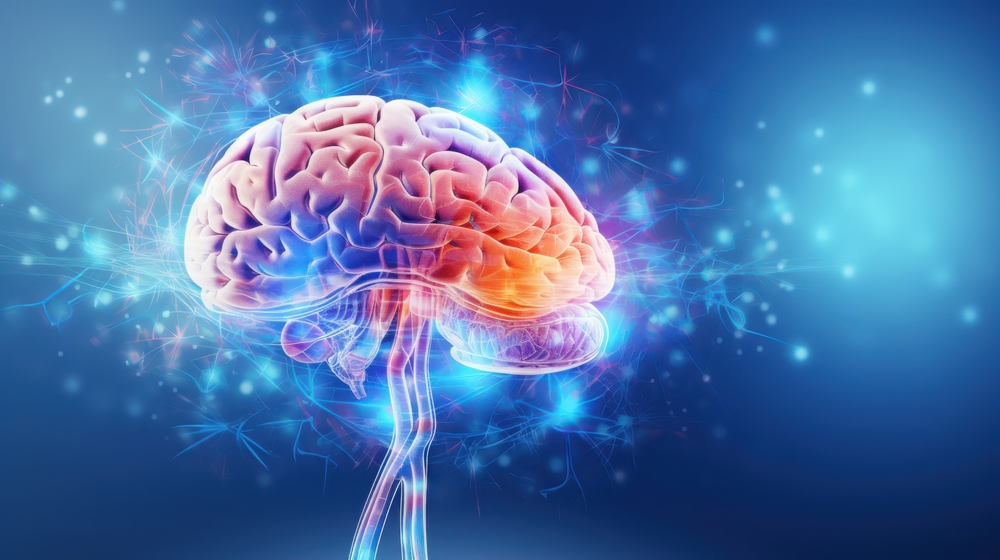
Deep near the base of the brain sits a small cluster of nerve cells called the locus coeruleus. It is involved in alertness and the body’s response to stress, but it has also been known for decades as part of the brain’s natural pain-control system.
Pain signals travel through the nervous system toward the brain. Under normal circumstances, the locus coeruleus can help dampen those signals before they become overwhelming, which made the researchers’ unexpected results especially difficult to explain.
After nerve injuries, however, researchers had noticed that the same brain region could behave differently. Instead of helping suppress pain, it appeared to contribute to heightened sensitivity, suggesting that the system could change roles after an injury.
The Washington University School of Medicine team used optogenetics, a technique that allows researchers to control selected neurons using light. They expected that switching off the locus coeruleus would remove some of the brain’s natural pain relief and make the animals more sensitive.
The mice produced the opposite result. Silencing the neurons reduced their responses to painful stimuli, and the effect was also seen in animals with long-term nerve injuries.
“The locus coeruleus is a well-known natural pain relief system, so we were not expecting that inhibiting it would provide analgesia,” neuroscientist Jordan McCall said.
That unexpected result pushed the researchers toward a different question: what was preventing these cells from performing their normal pain-suppressing function?
Scientists Traced The Problem To One Receptor
The next clue involved mu opioid receptors. These receptors are found throughout the nervous system and are activated by substances including the body’s natural endorphins, while opioid medications such as morphine and oxycodone also act on them.
The researchers found a small population of these receptors directly on cells within the locus coeruleus. Their experiments suggested that these receptors act as a crucial gate controlling how those neurons influence pain sensitivity.
When researchers removed the receptors from those neurons in mice, the animals became more sensitive to touch and heat. Restoring the receptors reversed that hypersensitivity, suggesting that the receptor system can influence pain processing in both directions.
The findings suggest that the locus coeruleus is not simply a permanent painkiller. Its effect appears to depend partly on whether the relevant opioid receptors are functioning properly.
That distinction could be important for understanding chronic pain. After certain nerve injuries, changes can occur throughout the nervous system, altering how ordinary sensations are processed and sometimes making harmless touch or mild heat feel painful.
The new research offers one possible explanation for how a change deep in the brain could contribute to that process. Instead of focusing only on the damaged nerve, researchers can now investigate what happens to the brain’s own systems for controlling pain.
The Researchers Reversed Chronic Pain In Mice
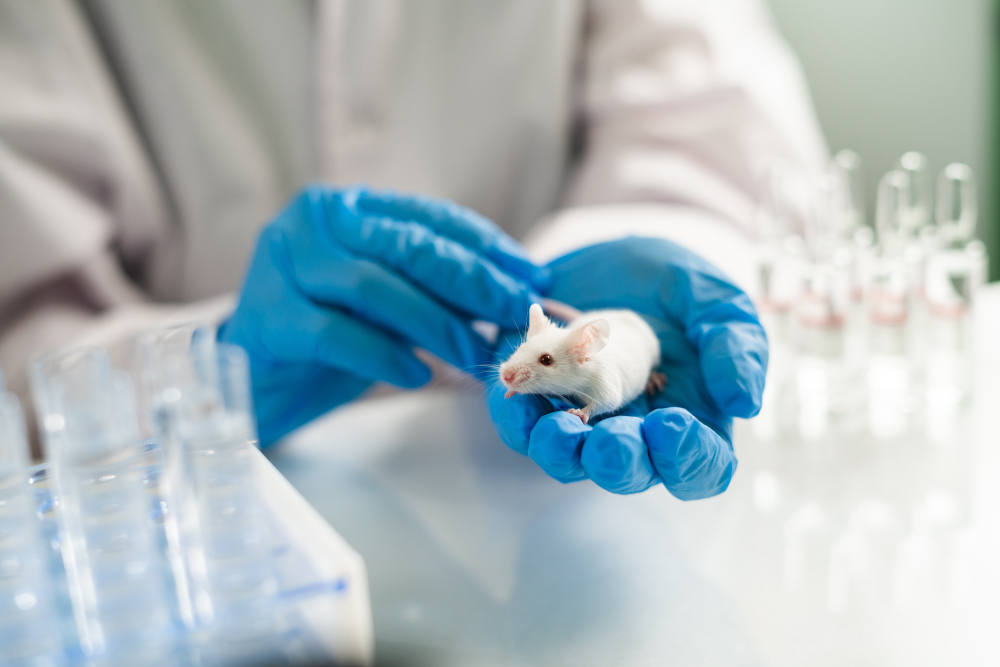
The most striking experiment happened after the animals had already developed persistent nerve-related sensitivity. Researchers cut a nerve in mice and waited eight weeks, by which point the animals consistently showed hypersensitivity to touch and heat.
The researchers then delivered the human gene responsible for producing the mu opioid receptor into the locus coeruleus. The goal was to restore receptors that had been lost from the relevant neurons and see whether the established sensitivity could be changed.
The animals’ hypersensitivity subsequently reversed. Researchers did not administer morphine or another conventional opioid during this rescue experiment; instead, they restored the receptor itself.
Several details make the result particularly notable:
- The pain state was established: Researchers waited eight weeks after the nerve injury before attempting the intervention.
- The target was specific: The experiment focused on mu opioid receptors in neurons within the locus coeruleus.
- No opioid drug was used: The rescue involved restoring the receptor rather than administering a conventional opioid medication.
- Hypersensitivity reversed: The treated mice became less sensitive to touch and heat.
- Gene delivery was involved: The approach is fundamentally different from taking a standard pain medication.
The findings suggest that restoring the brain’s own opioid signaling could potentially change an established pain state, although that possibility still needs to be tested far beyond animal experiments.
Why Chronic Pain Is So Difficult To Treat

Chronic pain affects a large portion of the population. According to CDC data cited in coverage of the research, 24.3% of American adults reported chronic pain during the previous three months in 2023, while 8.5% reported pain that frequently limited their life or work.
Chronic pain can result from many different conditions, including nerve damage, arthritis, back problems and other injuries or diseases. The nervous system can also change after an injury, meaning pain can sometimes continue even after the original damage has stopped.
That makes chronic pain particularly difficult to treat because there may be several biological processes contributing to the experience at the same time.
Opioid medications can reduce pain by activating opioid receptors throughout the nervous system. However, those receptors are found in many parts of the body and brain, so opioid drugs can affect numerous systems at once.
Long-term opioid use can lead to tolerance and carries risks including dependence and addiction. McCall pointed to this challenge when explaining why the team’s findings could eventually lead researchers toward more targeted approaches.
“The pain is difficult to treat, and traditional opioid medications bind to receptors throughout the entire body and brain, often leading to side effects, tolerance and addiction risk,” McCall said.
The new research takes a different direction by examining whether opioid signaling could be restored within a much smaller brain circuit instead of broadly activating receptors throughout the body.
This Is Still A Mouse Experiment

The findings are intriguing, but they are nowhere near a treatment that patients can receive. The experiments involved mice with surgically induced nerve injuries, and researchers measured behavioral responses to touch and heat rather than asking human participants to describe their pain.
Human pain is also far more complicated than a laboratory measurement. Different forms of chronic pain can involve different biological mechanisms, so an intervention that works for nerve-injury pain in mice may not work for arthritis, migraine or other conditions.
Gene delivery creates another major challenge. Getting a therapeutic gene into a very specific group of neurons inside the human brain would require a highly controlled delivery system, while researchers would also need to establish safety and durability.
The researchers acknowledge that gap. “While we are several steps away from trials in humans,” McCall said, the team is investigating ways to maintain opioid receptor function in these neurons or develop pharmacological approaches that could replace the missing opioid-mediated inhibition.
That means the eventual treatment may not necessarily involve permanently altering someone’s genes. Researchers could instead discover a drug capable of producing a similar effect through the same pathway.
A More Targeted Approach To Pain

The discovery could eventually lead researchers toward two strategies. One would focus on maintaining the function of mu opioid receptors within the locus coeruleus, while another would look for medications capable of reproducing their effect without requiring gene delivery.
A drug that could selectively act on this pathway would be especially interesting because current opioid medications activate receptors in many locations. A treatment designed around a specific brain circuit could theoretically offer a more targeted approach, although that remains a research goal rather than an established medical option.
The biggest question is whether humans use the same mechanism. Animal studies can reveal biological processes that are difficult to investigate directly in people, but promising findings in mice do not automatically translate into safe or effective human treatments.
Researchers will therefore need to determine whether the same receptor changes occur in people with chronic pain and whether safely modifying the pathway can reduce symptoms. They will also need to establish which forms of chronic pain might respond.
The Pain Switch Still Needs A Human Test
The study changes how researchers can think about persistent nerve pain by showing that the brain’s own pain-control system may become part of the problem after an injury. In mice, restoring a specific opioid receptor pathway reversed established hypersensitivity weeks after nerve damage.
That is a significant research clue, but it is not yet a human therapy. For now, the most important next step is determining whether this hidden control system exists in people and whether scientists can influence it safely.