
Picture a house at eight o’clock in the evening. Four kids, ranging from toddler to teenager, and a mother who has just come through a full day of work and parenting. In most homes, that hour looks like television, phones, a last-minute errand run, or the slow drift toward sleep that happens when everyone is simply too tired to do anything else intentionally. In Becca Pike’s house, it has looked different for the past decade, and the difference is quiet enough that you might almost miss it.
Pike, a mother of four and business coach, recently shared a nightly routine on Instagram that she has held to for ten years, through toddlerhood and teenage years, through chaos and calm, with a consistency that most family habits never survive. What she described struck a nerve with parents across the country, not because it was complicated or expensive or required any particular expertise, but because it was so deliberately, almost stubbornly simple.
The Routine, and How It Started
Pike’s house runs on a hard lights-out rule of 8 p.m. That rule, however, carries one exception. If you are reading, you get to stay up until nine. No negotiations, no screen time as a reward, no special privileges tied to behavior or grades. Just one straightforward offer: a book buys you an extra hour.
She started the tradition with her eldest child when that child was seven years old. That same child is now seventeen. What began as a single-child experiment eventually extended to all four of her kids, and it held even through the years when the younger ones could not yet read a word. Pre-reading children participated anyway, sitting with picture books and turning pages, absorbing the ritual if not yet the text. The routine did not wait for literacy. It built toward it.
Over time, Pike says, the results became visible in ways she had not fully anticipated. Her children grew into calm, book-loving kids who sleep well and who, perhaps most surprisingly in an age engineered for constant stimulation, can sit comfortably with boredom. That last quality, easy to undervalue until you notice how rare it has become, may be the most significant outcome of all.
What the Routine Replaced

It helps to understand what Pike was consciously stepping away from when she built this habit into her evenings. She describes the alternative plainly: nights that ended with the television blaring, or with everyone running errands until they simply passed out from exhaustion. Neither of those patterns is unusual. Both are recognizable to most families navigating modern schedules. What they share is an absence of intentional transition, a way of ending the day that offers the body and mind no real signal that the day is actually over. Pike’s framing of what the reading hour does instead is worth taking seriously.
That is not a clinical claim, but it points toward something real. Evening routines that involve bright screens, unresolved tasks, and ambient noise keep the nervous system in a low-grade state of alertness that makes genuine rest harder to reach. An hour of silent reading in a dim room, with a consistent start and end time, does the opposite. It tells the body, repeatedly and reliably, that the day has a shape and that shape includes an ending.
Why It Works for Children and Adults Equally
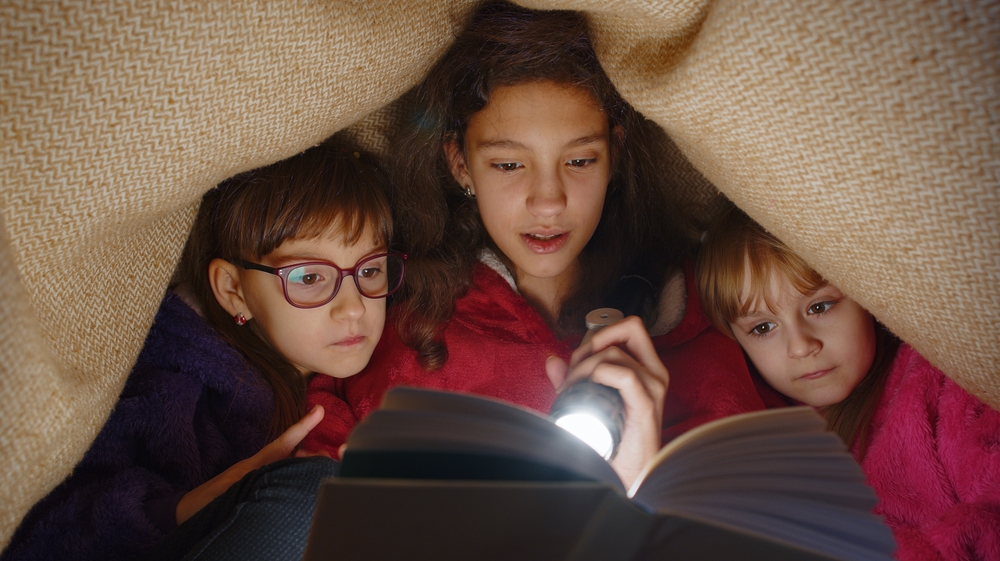
One of the more thoughtful elements of Pike’s approach is that she participates herself. She does not send the children off to read while she catches up on emails or scrolls through her phone. She reads alongside them. That distinction matters more than it might initially seem.
Children absorb behavior from the adults around them far more effectively than they absorb instructions. A parent who tells a child that reading is valuable while visibly preferring a screen sends a message that undercuts the lesson. A parent who sits down with a book at the same time, in the same room, communicates something different entirely. The habit becomes something the family does rather than something the children are told to do, and that shift in framing changes how children relate to it over time.
There is also something genuinely generous in the structure Pike has set up. Children get to stay up later, which feels like freedom and autonomy, a real reward with real appeal. Parents still maintain the boundary, because reading is the condition, and sleep follows regardless. Both parties get what they actually need: children get a sense of agency, and parents get a household that winds down predictably and peacefully. Reading, in this setup, stops being a chore imposed from above and becomes something closer to a cozy privilege, a way of earning a little more of the day for yourself.
What Boredom and Stillness Actually Do for Children

Child development research has been consistent on the value of unstructured, unstimulated time for children. Boredom, real boredom, the kind that arrives when there is nothing to react to and no device to fill the gap, has been linked to stronger creative thinking, better problem-solving, and greater emotional resilience. Children who learn to sit with their own minds develop capacities that children raised on constant stimulation often find harder to access.
Modern life works against this in almost every direction. Screens are engineered to prevent boredom from arriving at all, filling every gap before a child has a chance to notice the gap exists. Schedules are packed. Evenings are loud. The opportunity for a child to simply be somewhere quiet with their own thoughts has become genuinely difficult to protect.
Pike’s reading hour does not eliminate stimulation; reading is its own form of engagement, but it replaces reactive, screen-driven stimulation with something slower, more self-directed, and more compatible with the kind of rest that growing bodies and minds actually need. Done consistently, over years rather than weeks, that replacement adds up to something measurable in how children carry themselves through the world.
A Gift the Whole Family Gives Itself

Ten years is long enough to know whether something works. Children grow, schedules shift, and family life moves through phases that would disrupt most habits before they have a chance to take root. That the reading hour has survived all of that in Pike’s household is its own form of evidence.
What it points toward is not a parenting technique so much as a philosophy: the end of the day deserves the same intentionality as the beginning. In a world built around urgency and stimulation, an hour of collective quiet does not come naturally. It has to be chosen, protected, and returned to even on the nights when it would be easier not to bother.
Pike’s children have grown up knowing how to be still, how to be present with a book, and how to end a day gently. Those are not small things to carry into adulthood. And none of it required anything more than a household rule, a stack of books, and a parent willing to sit down and read alongside them.