
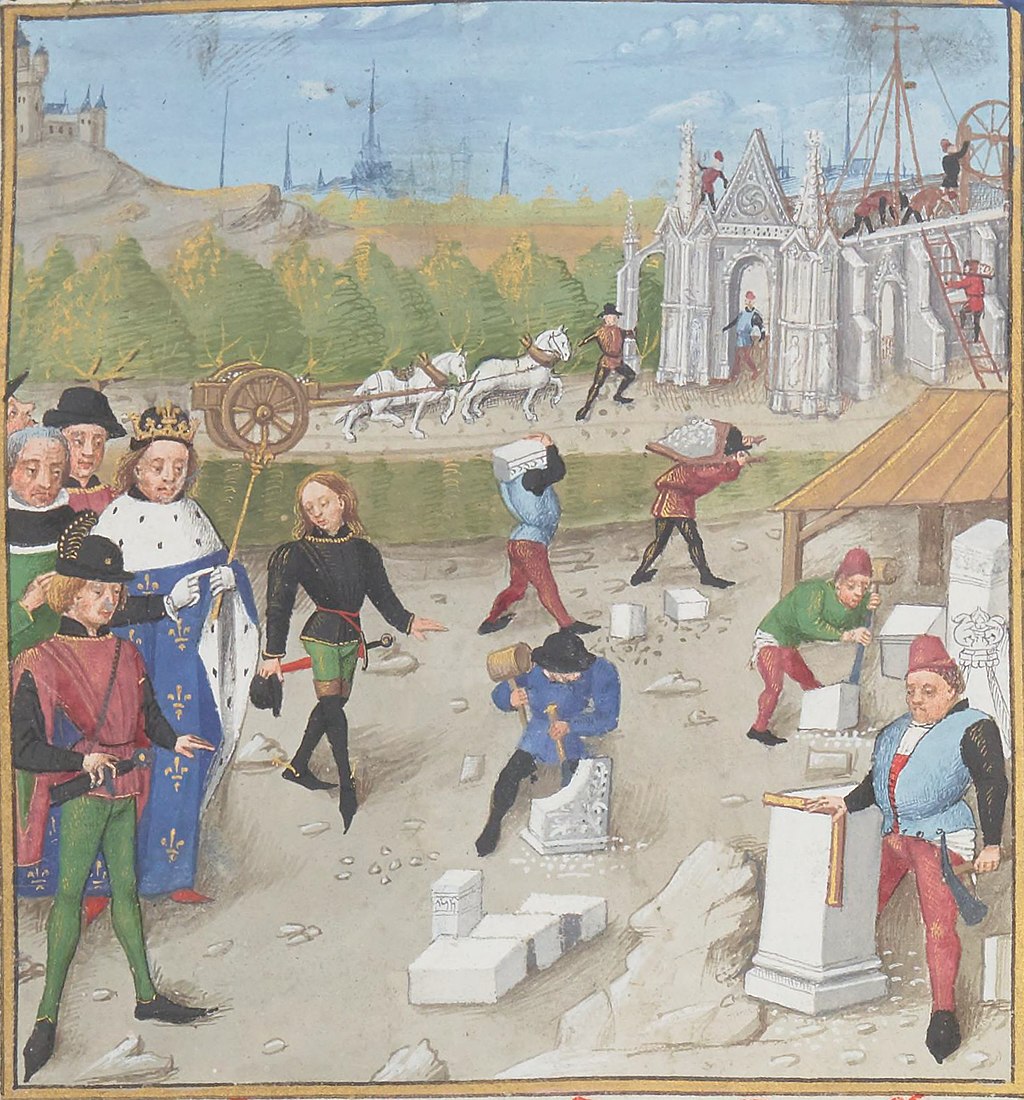
Here’s something you probably didn’t expect to envy about the Middle Ages: time off. Yes, life in the 13th or 14th century came with its fair share of hardships—disease, war, poor hygiene—but it also came with something many modern Americans sorely lack: rest.
While we like to believe we’ve evolved past the back-breaking labor of medieval times, the numbers tell a different story. In fact, when it comes to vacation days and the rhythm of daily life, the medieval peasant may have lived a more balanced existence than today’s desk-bound workforce.
For all the discomforts of medieval life—plague, poor hygiene, and the constant threat of war—peasants in the Middle Ages might have had one advantage over today’s American worker: more time off.

How Many Hours Did Medieval Peasants Work?
The idea that medieval peasants worked less than modern Americans might sound far-fetched, but historical estimates suggest it’s not that far off. Economist Juliet Schor, in her 1992 book The Overworked American, estimated that a 13th-century English peasant worked about 1,620 hours per year. That’s based on roughly 135 full workdays annually.
A broader analysis shows the range of hours could vary:
- 1,440 hours/year: Late 14th-century “casual laborers” during periods of high wages
- 1,980 hours/year: Average estimate for a typical peasant who also performed winter chores
- 2,309 hours/year: Farmer-miners combining agricultural and mining work
While the lower estimates don’t always factor in winter tasks like pruning trees or slaughtering livestock, the consensus is that peasants did work hard—but not relentlessly. And crucially, their days were long but not strictly managed. Work followed the sun, with multiple breaks, and the tempo was considerably more relaxed than today’s office grind.
By comparison, the average American worker in 2023 logged 1,805 hours, according to OECD data. That number has hovered around 1,800 for decades. Though it’s lower than some peasant estimates, it doesn’t account for the pace or rigidity of work.
The Real Shocker: Time Off
This is where the gap widens.
Medieval peasants had Sundays off, of course, but they also took time off for:
- Numerous feast days: Between 38 and 90 days off per year, depending on location and period
- Seasonal rest: After harvests and during midwinter, work often slowed or stopped entirely
- Celebrations: Weddings, births, wakes, and local festivals
- Ales: Events like lamb-ale or scot-ale offered not just leisure but mandated revelry
In total, the average peasant worked around 180 days per year. That means about 185 days off annually.
Contrast that with the modern American worker:
- 260 work days per year, after subtracting weekends, federal holidays, and vacation.
- That leaves 105 days off, including weekends and holidays.
Even by conservative estimates, medieval peasants had significantly more days off than today’s U.S. workers.
Why the Workweek Isn’t What It Was Supposed to Be
The modern 40-hour workweek was once hailed as a victory—a retreat from 19th-century factory conditions. But that milestone has quietly eroded.
- Many Americans now exceed 40 hours per week
- Gig and part-time workers rarely enjoy paid time off
- Seniority no longer guarantees vacation accrual as job-hopping becomes the norm
Add to that a culture of overwork, where checking email on vacation is common, and the work-life balance becomes even more skewed. The U.S. also remains the only advanced economy without a national vacation policy.
Burnout Doesn’t Mean Better Results
Ironically, the pressure to stay constantly productive may backfire. Research consistently shows that:
- Productivity increases after time off
- Longer vacations lead to better mental health and stronger family relationships
- Chronic overwork is linked to depression, heart disease, and even early death
Yet the narrative that more work equals more success remains culturally embedded, even as European countries with generous vacation laws show stronger per-hour productivity rates.
So, Who Really Had It Better?
In raw hours, modern Americans may edge out the medieval peasant by a small margin. But when it comes to actual days off, peasants win hands down.
It’s worth remembering: no one is suggesting we bring back feudalism. But maybe it’s time we reconsider what centuries of progress were supposed to deliver. More wealth? Sure. But also more leisure.
Because if medieval peasants got more holidays than you do—and they didn’t even have email—something’s gone off track.
What Can We Learn From the Medieval Peasant?
The comparison may be tongue-in-cheek, but there are real takeaways:
- Rest isn’t a luxury. The medieval calendar baked in regular, extended breaks from labor. Today, we need to treat rest as essential, not optional.
- Work-life rhythm matters. Peasants worked hard during peak seasons and slowed down when nature allowed. Embracing seasonal pacing or strategic downtime can reduce burnout.
- Holidays build community. Many feast days were communal events, reminding us that rest and social bonding often go hand-in-hand.
- More hours don’t equal more output. Like Germany today, the medieval model shows that fewer days worked doesn’t necessarily mean less productivity.
- Mental health begins with boundaries. Disconnecting from work—truly—during days off can have ripple effects on emotional well-being, relationships, and even physical health.
- Make leisure intentional. Medieval festivals weren’t accidental; they were planned and expected. Likewise, modern workers can benefit from scheduling real breaks in advance.
- Embrace non-work identities. Peasants weren’t defined solely by labor; their roles included community members, celebrants, and caretakers. Remembering who we are outside our jobs matters.
- Avoid hustle for hustle’s sake. Peasants worked with purpose tied to seasons and survival. The modern obsession with constant motion often lacks the same grounding.
- Protect unstructured time. The slower medieval tempo allowed room for meals, rest, and even naps. Downtime fosters creativity and long-term focus.
- Push for policy, not just personal fixes. Individual choices matter, but broader structural changes like paid vacation laws are what really shift the balance.
The lesson isn’t to idealize medieval life. It’s to question the grind. Because if people without electricity, modern medicine, or indoor plumbing managed to carve out more downtime, maybe we should, too.. It’s to question the grind. Because if people without electricity, modern medicine, or indoor plumbing managed to carve out more downtime, maybe we should, too.
This article is co-published with Social Sweethearts GmbH



,_f.74v_-_BL_Add_MS_42130.jpg)
