A sugar found in everyday foods has become the focus of an unexpected cancer research finding. Scientists studying ovarian cancer found that fructose may help cancer cells spread after chemotherapy, at least in laboratory models and mice.
The finding may sound alarming if you regularly drink sweetened beverages, but there is an important distinction. The research has not been confirmed in humans, and it does not suggest that eating fruit causes cancer to spread.
The Cancer Cells Chemotherapy Leaves Behind
Ovarian cancer is commonly treated with platinum-based chemotherapy, which can destroy many cancer cells and shrink tumors. However, the disease frequently returns, leaving researchers searching for ways to understand what happens to cancer cells that survive treatment.
Some of those surviving cells enter a state called senescence, where they stop dividing. That might seem like a positive development because cells that cannot multiply have less ability to form a growing tumor.
The problem is that senescent cancer cells can remain biologically active. They can release molecules that communicate with neighboring cells, potentially changing how those cells behave.
“Senescence is a common outcome for cancer cells after chemotherapy treatment,” postdoctoral fellow Aidan Cole explained. “While these cells no longer divide to grow the tumor, they still communicate with other cells.”
Why Researchers Focused On These Survivors
Katherine Aird, the professor who led the research, described the behavior as a biological paradox. “It’s this unique paradox in biology where the lack of growth and proliferation in a cancer is actually a bad thing,” Aird said.
The research team collected substances released by chemotherapy-surviving cancer cells and exposed other cancer cells to them. They then used CRISPR screening and large-scale analysis to identify which molecules appeared to influence the behavior of those neighboring cells.
Fructose Became The Unexpected Signal
The researchers found that fructose stood out among the molecules they examined. Rather than simply observing inflammatory proteins from senescent cells, they identified a nutrient that appeared to influence how nearby cancer cells behaved.
“Our study is among the first to show that a nutrient, in this case fructose, can act as one of those signals,” Cole said. The discovery was unexpected because researchers had initially suspected that better-known inflammatory signals might be responsible.
“What we found wasn’t an effect of well-described inflammation produced by senescent cells,” Cole explained. “It was completely unexpected.”
Gregory David, a cell and molecular biologist at NYU Langone who was not involved in the research, also described the finding as surprising. He said the observation that inflammatory proteins did not appear to be the main driver in this context was “really a shocking discovery for me.”
The researchers then traced how fructose appeared to affect neighboring cancer cells. Their experiments pointed toward cholesterol production inside those cells.
How Fructose Could Affect Cancer Cell Movement
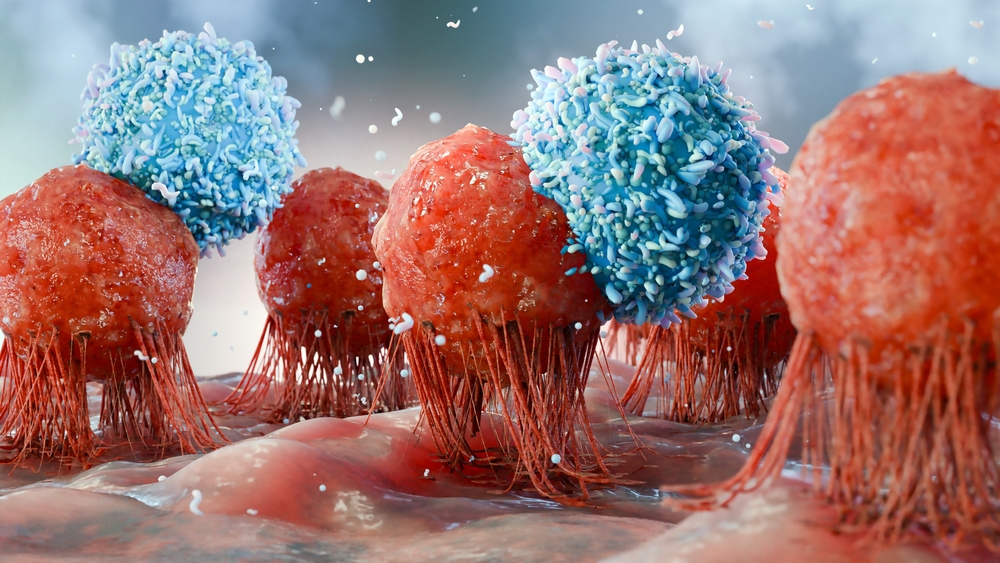
The proposed mechanism involves the cell membrane, where cholesterol contributes to the structure and function of cells. Researchers found that fructose could suppress cholesterol production in neighboring cancer cells.
That change appeared to weaken the connections holding cancer cells together. Aird described fructose as something cancer cells can process “in a way that makes them more capable of spreading by decreasing the cellular glue that holds cancers together.”
For ovarian cancer, the ability of cancer cells to separate and move is especially important because the disease commonly spreads through the abdominal cavity. The research suggests that signals released by chemotherapy-surviving cells may contribute to this process.
Cole said the researchers demonstrated the effect “in a preclinical model rather than just a dish.” That distinction matters because cancer behavior observed in isolated cells does not always behave the same way inside a living organism.
What Happened When Mice Ate More Fructose?
The researchers next investigated whether fructose coming from outside the body could influence cancer spread. They gave mice a high-fructose diet without chemotherapy and observed increased cancer spread, although the overall tumor size did not change substantially.
“When we give mice the high fructose diet, we do not observe big differences in the total amount of tumor,” Aird said. “Instead, the high fructose seems to increase the likelihood of spread without changes in the tumor growth.”
The researchers also found that reducing the activity of enzymes involved in fructose metabolism prevented the increase in spread. This provided another clue that the way cells process fructose could be involved in the mechanism.
However, these experiments were conducted in mice rather than people. The findings therefore cannot establish that drinking sugary beverages causes ovarian cancer to spread in humans.
Why The Distinction Matters
The study offers evidence for a possible biological pathway, but it does not provide proof that the same pathway operates in cancer patients. The researchers themselves acknowledge that their findings have not yet been confirmed in people.
That means the research should be viewed as an early finding that needs further investigation. It is not evidence that someone with cancer should make major dietary or medication changes without medical guidance.
A Soda And A Piece Of Fruit Are Not The Same
The word “fructose” can make the findings sound more relevant to every food containing fruit sugar than they actually are. The researchers specifically point toward high concentrations of fructose, while whole fruit contains fructose alongside fiber and other components that influence digestion.
Aird said the findings “would suggest that only high concentrations of fructose would increase cancer spread.” The source specifically contrasts those concentrations with the smaller amounts found naturally in foods such as fruit.
“When people eat fruit or other natural foods, the fructose is only in a small amount, and other components of those foods slow digestion to limit a sugar spike,” Aird said. That distinction means there is no basis in this study for treating an apple or peach as equivalent to a sugar-sweetened beverage.

For everyday nutrition, readers can focus on practical habits rather than eliminating every food that contains fructose. Useful steps include:
- Choose whole fruit: Fruit provides fructose alongside fiber and other nutrients, making it different from consuming concentrated added sugars.
- Reduce sugary drinks: Sodas and other sweetened beverages can provide large amounts of sugar in a short period.
- Check added sugars: Packaged foods and drinks may contain substantial amounts of added sugar even when the product does not taste extremely sweet.
- Build meals around whole foods: Vegetables, fruit, whole grains, legumes and other minimally processed foods can make it easier to reduce added sugar.
- Keep new research in perspective: Preclinical findings can identify important questions without immediately becoming dietary rules for humans.
The Cholesterol Question Needs More Research
The cholesterol connection raises another question because millions of people take statins to lower cholesterol. Since the study found that reduced cholesterol production may affect how cancer cells stick together, researchers are now interested in whether cholesterol-lowering drugs could interact with this pathway.
Aird raised the possibility of studying that question in patients with ovarian cancer, particularly because ovarian cancer is most common among postmenopausal women, some of whom already take statins. Her team is conducting additional experiments to investigate the potential connection.
The current research does not show that statins increase cancer spread, nor does it show that stopping a statin would reduce cancer spread. Anyone who has been prescribed a statin should continue discussing that medication with their healthcare professional rather than changing treatment because of a mouse study.
The Same Mechanism Could Appear In Other Cancers
The research team also found evidence that other chemotherapy treatments can cause several cancer cell types to release fructose. That raises the possibility that a similar mechanism could occur in cancers beyond ovarian cancer.
Aird specifically identified pancreatic, colon and liver cancers as areas that may deserve further study. She has also emphasized that researchers cannot yet say the mechanism is universal across cancer types.
“We can’t call it universal yet, but we think the effects are not just limited to ovarian cancer,” Aird said. More research will be needed to determine whether the pathway appears in other cancers and whether it has meaningful consequences in humans.
What This Means For Your Everyday Diet
For most readers, this research does not call for fear of fruit or drastic dietary changes. The clearest distinction from the study is between concentrated fructose exposure in the experimental models and the smaller amounts of fructose naturally present in whole foods.
Reducing sugary drinks and heavily sweetened foods is a practical way to limit added sugar, while whole fruit can remain part of a balanced eating pattern. The cancer research itself needs human evidence before anyone can know how much the findings should influence dietary recommendations.
For now, the study gives scientists a new question to investigate: could fructose metabolism help explain how some cancer cells become more capable of spreading after treatment? Answering that question in human studies will determine whether this surprising laboratory finding eventually changes cancer care.