
When doctors reviewed the X-ray images from a 65-year-old woman’s knee examination, they encountered something they had never seen before. Scattered throughout her joint were hundreds of tiny metallic objects that gleamed like golden threads woven through bone and tissue. The radiological images looked more like abstract art than medical scans.
The medical team faced a diagnostic puzzle that would challenge their assumptions about traditional medicine and alternative treatments. What they discovered inside this patient’s body would reveal a practice that millions of people undergo without understanding the long-term consequences.
Hidden within this case lies a cautionary tale about the intersection of chronic pain, desperation for relief, and medical treatments that promise healing but lack scientific validation. The golden threads told a story that extended far beyond one patient’s knee pain.
Mysterious X-ray Discovery Baffles Medical Team

Medical professionals at a South Korean hospital encountered an unusual case when a 65-year-old woman arrived seeking treatment for severe knee pain that had become unbearable. Her medical history included a long struggle with osteoarthritis, a degenerative joint condition that gradually destroys cartilage and causes chronic pain.
The woman’s symptoms had progressively worsened despite years of conventional treatment attempts. Her mobility had become severely limited, and the constant pain was affecting her quality of life in ways that extended beyond physical discomfort.
When radiologists examined her X-ray images, they discovered something extraordinary. Hundreds of tiny metallic objects appeared throughout her knee joint, creating a pattern unlike anything documented in standard medical literature.
The metallic fragments were clearly visible on the imaging studies, scattered through the soft tissues surrounding her knee joint. Each piece appeared as a thin, thread-like structure that seemed to have been deliberately placed rather than accidentally introduced.
The case was significant enough to warrant publication in the New England Journal of Medicine, highlighting its importance as both a diagnostic challenge and an educational opportunity for the medical community.
Patient’s Journey from Conventional to Alternative Medicine
The woman’s struggle with osteoarthritis had begun years earlier, following a typical progression from initial joint stiffness to chronic pain that interfered with daily activities. Like millions of arthritis sufferers worldwide, she had initially sought relief through conventional medical approaches.
Her treatment history included multiple courses of painkillers and nonsteroidal anti-inflammatory drugs, which provided temporary relief but came with significant side effects. The medications helped manage her pain initially, but their effectiveness diminished over time.
Medical professionals had also administered steroid injections directly into her knee joints, a common treatment for severe arthritis pain. These injections can provide weeks or months of relief by reducing inflammation within the joint space.
However, none of these conventional treatments provided lasting relief for her condition. The chronic nature of osteoarthritis meant that her joint deterioration continued despite medical intervention.
Eventually, the medications began causing severe stomach pain, forcing her to discontinue their use entirely. This left her without any conventional pain management options and desperate for alternative solutions.
Desperate Search for Pain Relief Leads to Acupuncture
Faced with limited options from conventional medicine, the woman decided to explore alternative treatments that promised pain relief without the side effects she had experienced with medications. This decision reflects a common pattern among chronic pain patients who feel abandoned by traditional medical approaches.
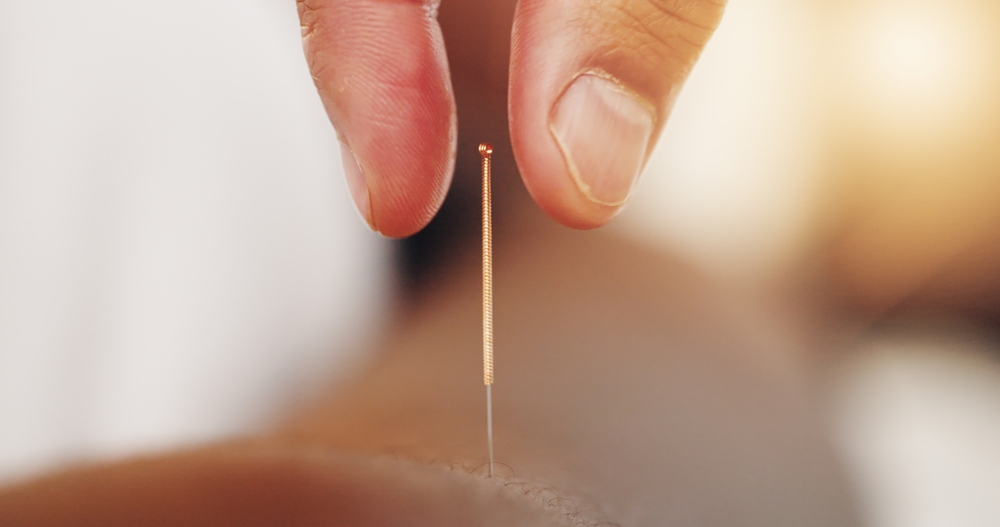
She began receiving weekly acupuncture treatments, an ancient practice that involves inserting thin needles into specific points on the body. Acupuncture has gained acceptance in many Western medical systems as a complementary treatment for certain pain conditions.
When her pain became particularly severe, she increased the frequency of her acupuncture sessions to multiple times per week. The temporary relief she experienced encouraged her to continue pursuing this alternative approach.
“She then started to get bad stomach pain from the medications, so she had stopped them altogether,” medical records documented about her transition away from conventional treatments.
Her acupuncture practitioner eventually recommended a specialized technique that involved leaving gold threads in her tissues rather than simply inserting and removing needles during treatment sessions.
X-ray Imaging Reveals Shocking Joint Deterioration
When the woman’s pain became unbearable, she sought medical attention at a hospital where doctors ordered comprehensive X-ray examinations of her affected joints. These imaging studies revealed the extent of damage that had occurred during her years of struggling with arthritis.
The radiological examination showed that the shinbone in the inner part of her knee joint had become thickened and hardened, indicating advanced degenerative changes. This type of bone remodeling occurs when joints experience chronic inflammation and mechanical stress.
Doctors also identified bony growths called spurs on the inner portions of both her shinbone and thigh bone near the knee joint. These spurs develop as the body attempts to stabilize damaged joints by creating additional bone tissue.
The overall pattern of joint deterioration suggested that her osteoarthritis had progressed significantly since her last medical evaluation. The imaging studies painted a picture of advanced joint disease that would be challenging to treat effectively.
Most strikingly, the X-rays revealed hundreds of metallic fragments scattered throughout the soft tissues around her knee joint, creating the golden thread pattern that initially puzzled the medical team.
Gold-Thread Acupuncture Explained as Treatment Method

The mystery of the metallic objects was solved when doctors learned about the specific type of acupuncture treatment the woman had been receiving. Gold-thread acupuncture involves inserting short, sterile golden threads into tissues and leaving them in place permanently.
“These short, sterile golden threads were purposefully left in the tissue to provide continued stimulation,” the medical team explained about the treatment technique.
The theory behind this practice suggests that the permanent presence of gold threads provides ongoing therapeutic stimulation to acupuncture points, supposedly offering longer-lasting benefits than traditional needle insertion and removal.
Gold-thread acupuncture is commonly practiced throughout Asia as a treatment for both osteoarthritis and rheumatoid arthritis. Practitioners claim that the noble metal properties of gold enhance the therapeutic effects of acupuncture.
The threads are typically made from pure gold wire that has been sterilized for medical use. Each thread measures only a few millimeters in length, making them small enough to remain embedded in soft tissues without causing obvious external signs.
Medical Evidence Questions Treatment Effectiveness
Despite its popularity in certain regions, gold-thread acupuncture lacks scientific evidence supporting its effectiveness for treating arthritis or other conditions. No rigorous clinical trials have demonstrated benefits from this practice compared to conventional treatments or even traditional acupuncture.
The absence of evidence becomes particularly concerning when patients choose this alternative treatment instead of proven medical interventions. Arthritis treatments work best when initiated early in the disease process, before irreversible joint damage occurs.
Medical literature contains case studies documenting patients whose arthritis progressed significantly while they pursued gold-thread acupuncture instead of conventional treatments. These cases suggest that delay in appropriate medical care can lead to worse long-term outcomes.
The placebo effect may explain any temporary relief patients experience from gold-thread acupuncture, as the ritual of treatment and expectation of improvement can produce genuine pain reduction even without therapeutic mechanisms.
Serious Health Risks Associated with Thread Migration

Gold threads embedded in tissues can migrate from their original placement sites over time, potentially causing serious complications in distant parts of the body. This migration occurs because tissues naturally move and remodel, carrying embedded objects along with them.
One documented case involved a 75-year-old South Korean woman who had received gold-thread acupuncture in her back. Over 10 years, the threads migrated to her lower right leg, where they caused cellulitis, a dangerous deep skin infection.
Thread migration can damage blood vessels, nerves, and other vital structures as the metallic objects move through tissues. The sharp ends of gold threads can puncture delicate anatomical structures during migration.
Fragments of gold threads can break off from the original pieces, creating multiple smaller objects that become more difficult to track and remove if complications develop. These fragments may continue migrating independently.
The unpredictable nature of thread migration means that patients may experience complications years or even decades after the original treatment, making it difficult to connect symptoms with their underlying cause.
Healthcare Provider Awareness Becomes Critical
Medical professionals need education about gold-thread acupuncture and its potential complications to provide appropriate care for patients who have undergone this treatment. Recognition of the characteristic X-ray appearance helps with accurate diagnosis.
The obvious visibility of gold threads on radiological imaging does provide one advantage: their locations can be tracked over time to monitor for migration or complications. This tracking capability helps healthcare providers anticipate potential problems.
Documentation of gold-thread acupuncture in medical records becomes essential for future healthcare providers who may encounter these patients. Proper documentation helps prevent dangerous interactions with medical procedures.
Patient education about evidence-based treatments remains crucial for preventing reliance on unproven alternative therapies. Healthcare providers must communicate effectively about treatment options while respecting patient autonomy.
Professional organizations need to develop guidelines for managing patients with embedded gold threads, including protocols for imaging interpretation and surgical considerations.
Lessons for Patients Seeking Pain Relief

Chronic pain patients face difficult decisions when conventional treatments fail to provide adequate relief or cause intolerable side effects. However, choosing unproven alternatives can lead to worse outcomes than continuing with conventional approaches.
Understanding the risks and benefits of both conventional and alternative approaches enables informed decision-making. All medical treatments carry risks, but proven therapies have well-documented risk-benefit profiles.
Critical evaluation of treatment claims becomes essential when facing aggressive marketing of alternative therapies. Patients should be skeptical of treatments that promise miraculous results or claim to work for numerous unrelated conditions.
The case of the golden threads serves as a reminder that desperation for pain relief can lead to choices that ultimately cause more harm than benefit. While the search for effective treatments continues, patients and healthcare providers must balance hope with scientific evidence to achieve the best possible outcomes.