A medicine commonly used to treat intestinal worm infections has caught researchers’ attention for an unexpected reason. When combined with a targeted lung cancer drug, it helped slow the growth of tumors that had stopped responding to treatment in a study involving mice.
The findings, published in PLOS ONE, raise an intriguing possibility for researchers investigating drug resistance. However, the combination has not been proven effective in humans, and much more testing is needed before it could become a treatment option.
Why Lung Cancer Can Stop Responding to Treatment
Targeted therapies have changed the treatment landscape for certain types of non-small cell lung cancer. These medicines work by interfering with specific molecular signals that cancer cells use to grow and divide. By blocking those signals, treatment can slow the disease while targeting a particular weakness in the cancer.
One example is gefitinib, a targeted drug used in certain cases of lung cancer associated with changes in a protein called the epidermal growth factor receptor, or EGFR. This protein helps regulate signals involved in cell growth and division. Certain genetic changes can keep these signals active, allowing cells to multiply in ways that contribute to cancer.
Gefitinib works by blocking EGFR signaling. In susceptible tumors, this can help control cancer growth. However, the response may not last indefinitely because cancer cells can adapt and develop mechanisms that allow them to survive despite treatment.
Drug resistance is a major challenge in cancer care. When a targeted medicine loses effectiveness, doctors may need to consider alternative treatments based on the patient’s condition, the tumor’s biology, and the therapies already used. Each situation is different, and the available options depend on several medical factors.
Researchers are therefore looking for ways to overcome resistance or extend the usefulness of existing medicines. One approach involves combining drugs that affect different cellular processes. Instead of relying on a single treatment mechanism, researchers investigate whether targeting multiple weaknesses could make resistant cancer cells less able to survive.
How a Common Deworming Medicine Became Part of the Study

The research team investigated whether mebendazole, a medicine used to treat certain intestinal worm infections, could help make gefitinib-resistant lung cancer cells more vulnerable. The study involved researchers at RAK Medical and Health Sciences University in the United Arab Emirates, working with collaborators in India and the United Kingdom.
Mebendazole interferes with microtubules, structures inside cells that help maintain their internal organization and support cell division. These structures are essential for several cellular processes, including the movement of materials within cells and the machinery involved in multiplication.
The researchers wanted to know whether disrupting microtubules while blocking EGFR signaling could place additional pressure on cancer cells that had developed resistance to gefitinib. Their approach relied on the possibility that the two medicines might interfere with different processes that resistant cells need to keep growing.
“Our idea was to attack the cancer from two directions simultaneously,” researcher Shakta Mani Satyam told ScienceAlert.
Gefitinib targets the growth signals that help drive the cancer, while mebendazole disrupts parts of the internal machinery involved in cell division. The researchers proposed that combining these effects could make it harder for resistant cells to continue multiplying.
The idea is particularly interesting because it investigates an existing medicine rather than starting with a completely new compound. However, a drug’s established use against one condition does not automatically mean it will be safe or effective for another. Its potential cancer-related effects must be tested separately, including the doses required and the risks associated with combining it with other treatments.
What Researchers Discovered in Laboratory Experiments
The first stage of the study examined human lung cancer cells that had become resistant to gefitinib. Researchers compared the effects of each medicine separately with the results produced by the combination.
After 72 hours, gefitinib alone left approximately 93% of the cancer cells viable compared with the untreated control. A low concentration of mebendazole alone reduced viability to around 80%. When researchers combined the two medicines, cell viability fell to approximately 38%.
These measurements suggest that the combination had a substantially greater effect on the tested cells than gefitinib alone. The result also showed a stronger reduction in cell viability than the low concentration of mebendazole produced on its own.
The researchers additionally tested a fivefold higher concentration of mebendazole by itself. This reduced cell viability to approximately 30%, a result comparable to the effect observed with the combination using a lower concentration of mebendazole.
That comparison raises an important question about the findings. The combination produced a substantial reduction in viable cancer cells, but the experiment did not formally establish whether the two drugs worked synergistically. More research is needed to determine whether combining them produces a distinct benefit beyond the individual effects of the medicines.
The laboratory results also cannot establish how the treatment would behave inside a human body. Conditions in a laboratory dish differ from those in a patient, where drug absorption, metabolism, healthy tissues, and the tumor’s surrounding environment can influence treatment outcomes.
Why the Combination May Increase Stress Inside Cancer Cells
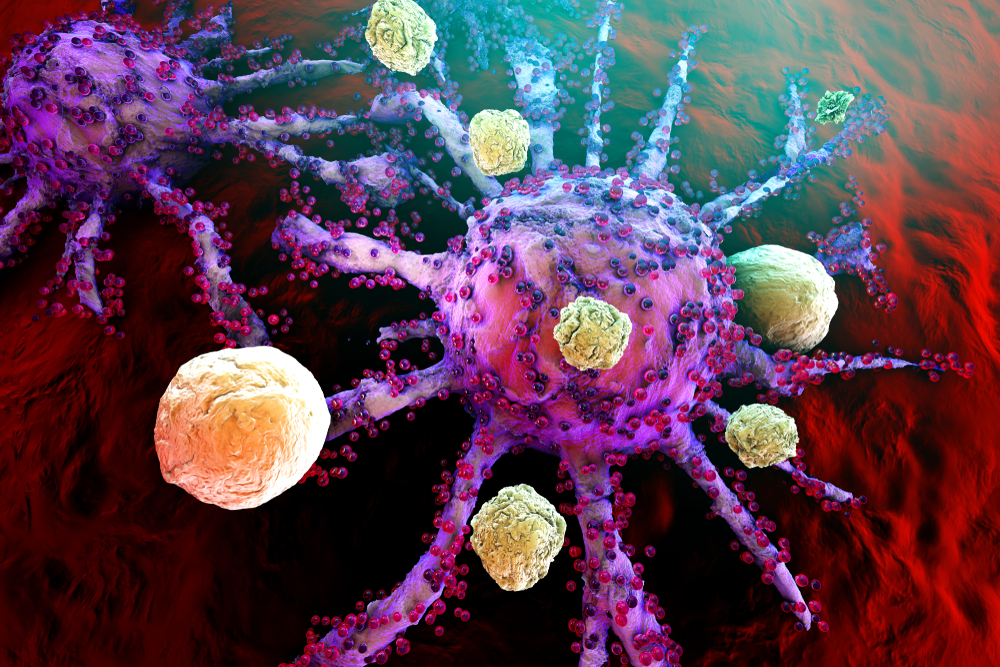
The researchers also examined DNA damage in the treated cancer cells. Every dividing cell must copy its DNA before producing new cells, and this process requires several cellular systems to work together. Disruptions can create replication stress, which can interfere with the cell’s ability to continue dividing safely.
The experiments detected DNA damage, including breaks affecting one or both DNA strands. The combination produced changes consistent with increased stress during DNA replication, supporting the researchers’ proposed explanation for its effects on the resistant cells.
The team believes that blocking growth signaling while disrupting microtubules could make it harder for cancer cells to maintain the processes required for continued multiplication. If resistant cells already depend on mechanisms that help them tolerate cellular stress, adding another disruption could potentially reduce their ability to survive.
However, the exact mechanism remains uncertain. The researchers did not directly track the proposed failure of the DNA-copying machinery, so they could not conclusively establish how the combination caused the observed damage.
They also could not determine whether mebendazole restored the cancer cells’ sensitivity to gefitinib or simply added another source of damage. As Satyam explained to ScienceAlert, the findings suggest that the combination may do more than simply add another source of damage, but the team cannot yet conclude that it fully restores sensitivity to gefitinib.
Understanding this distinction will be important in future research. If the combination genuinely changes how resistant cells respond to targeted treatment, that could guide further investigation into drug resistance. If the effect mainly results from additional cellular damage, researchers will need to establish how much benefit the pairing offers compared with other possible approaches.
What Happened When the Medicines Were Tested in Mice

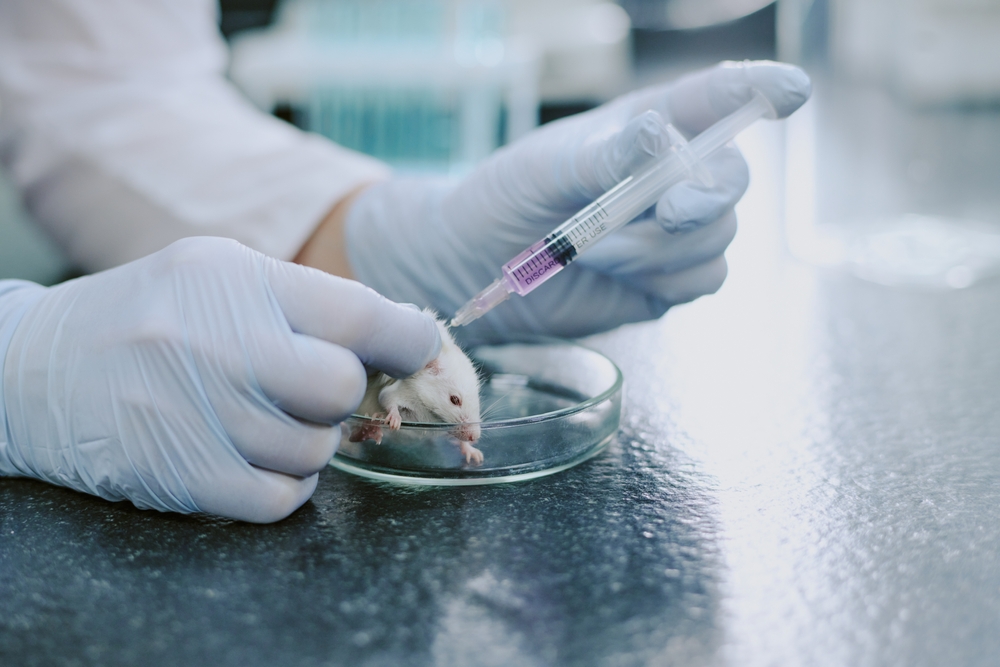
After the laboratory experiments, researchers studied mice carrying tumors grown from the resistant human lung cancer cells. The animals were divided into treatment groups receiving no treatment, mebendazole alone, gefitinib alone, or both medicines.
The experiment continued for 40 days, allowing the researchers to compare how quickly tumors grew under the different conditions. The most striking result involved the median time required for a tumor to double in size.
In untreated mice, tumors doubled in a median of 6.2 days. Mebendazole alone extended that period to 10.3 days, while gefitinib alone extended it to 15.5 days. In mice receiving both medicines, the median tumor-doubling time reached 25 days.
The difference suggests that the combination slowed tumor growth more effectively than either drug alone in this particular model. It also provides a reason for researchers to investigate the pairing in additional experiments.
However, the tumors were not eliminated. The researchers measured a delay in growth rather than a complete response, and the results do not establish whether the treatment would extend survival in people.
The study also involved a specific resistant cancer cell line rather than a broad range of tumor types. Cancer can develop resistance through different mechanisms, meaning that a combination effective in one model may have little effect in another. The results should therefore be interpreted as an early experimental finding rather than evidence of a treatment ready for clinical use.
The Major Questions Researchers Still Need to Answer

The findings offer a direction for further investigation, but several limitations must be addressed before researchers can determine whether the combination has meaningful clinical potential.
Whether the results apply to other cancers
The study focused on a single human non-small cell lung cancer cell line that had developed resistance to gefitinib. Researchers need to test additional resistant cell lines to establish whether the observed effects can be reproduced in other models.
Patient-derived tumor models could also provide useful information about how the combination might behave in cancers with more varied biological characteristics. These studies would still not replace clinical trials, but they could help researchers decide whether testing in people is justified.
Whether the combination works against newer targeted treatments
The research team has identified resistance to osimertinib, a newer EGFR-targeted medicine, as an important question for future investigation. Testing the combination against other resistance mechanisms could help establish whether its potential extends beyond the particular model used in the current study.
The results from gefitinib-resistant cells cannot automatically be applied to tumors that have stopped responding to different medicines. Each treatment and resistance mechanism requires its own evidence.
Whether effective drug levels are achievable in people
Mebendazole presents a practical challenge because its absorption after oral administration can vary. Researchers must establish whether people could safely achieve the drug exposure needed for an anticancer effect.
A dose that produces an effect in a laboratory experiment or mouse model may not translate directly into a suitable human dose. The body’s handling of a medicine, its distribution into tissues, and its potential interactions with other drugs all influence whether an experimental combination can be used safely.
Whether the combination is safe over time
The study did not establish the long-term safety of combining mebendazole with gefitinib. Researchers need to investigate possible effects on organs and healthy tissues, prolonged exposure, and interactions between the medicines.
The mice did not show sustained body-weight loss in the reported experiments, but body weight alone cannot establish safety. More detailed assessments are necessary to identify adverse effects that might not be reflected in changes in weight.
What the Findings Mean for People Living With Lung Cancer

For people whose lung cancer has stopped responding to a targeted treatment, research into drug resistance is particularly relevant. Discovering ways to improve the effectiveness of existing therapies could eventually expand the options available to some patients.
Nevertheless, this study does not establish that mebendazole can treat lung cancer in humans. The research was conducted using laboratory cells and mice, and the combination has not been proven safe or effective in clinical trials based on the findings described.
Patients should not take mebendazole for cancer outside an appropriately supervised clinical trial. The medicine has an established use against parasitic infections, but using it for an unproven purpose could create risks or interfere with existing treatment.
Anyone interested in emerging drug-repurposing research can discuss clinical trial opportunities with their oncology team. ClinicalTrials.gov also provides a searchable registry of clinical studies, although eligibility and suitability must be assessed for each individual.
It is equally important to continue following the treatment plan developed with the medical team. Decisions about changing therapy depend on the type of cancer, the specific resistance mechanism, previous treatments, and the patient’s overall health. Headlines about early experiments cannot replace that individualized assessment.
The Next Stage Must Establish Whether the Approach Works in People
The researchers’ next priorities include testing additional resistant cancer models, examining patient-derived tumors, investigating resistance to osimertinib, and studying drug exposure and safety. These steps could help clarify whether the combination deserves further development and how its effects might be explained.
Repurposing an existing medicine can be a useful research strategy, but familiarity does not guarantee success. Many treatments that produce encouraging results in cells or animals fail to demonstrate the same benefits in people.
For now, the combination of mebendazole and gefitinib has produced a notable delay in tumor growth in one mouse model of drug-resistant lung cancer. Establishing whether that result translates into a safe and effective treatment will require much more evidence, beginning with further preclinical research and, if justified, carefully designed clinical trials.