
A federal attorney was walking her dog through the park when two men started catcalling her. She had heard comments like these hundreds of times before, and every time, she had done what women are taught to do. Put your head down. Walk faster. Ignore it. Get home.
This time, something in her broke. Adeline Dimond, 54 years old, did not walk faster. She turned around and walked straight toward the two men, screaming, threatening to have her dog rip their throats out. Her dog Fish, a pit bull-Rottweiler mix, backed her up. The men froze. They looked scared. And then they left her alone.
Later, replaying the moment, Dimond wondered whether what she had done was reckless. Confronting two strange men on an empty path could have gone very wrong. She wrote about the whole thing in a 2025 piece with a title that doubles as a question a lot of women have quietly asked themselves: “Should You Out-Crazy Men?”
Her instinct told her the outburst felt good but might have been foolish. What science says about that instinct might change how you walk home tonight.
The Keys-Between-The-Fingers Reflex
Almost every woman knows the drill. You learn it young, and you carry it for the rest of your life without ever being formally taught.
Dimond described it exactly. You wrap your hand around your house keys, positioning them so they poke out between your fingers, ready to gouge an attacker’s eyes if you have to. She learned this trick at sixteen. She is now in her fifties, which means she has walked around armed with that piece of knowledge for 38 years.
Sit with that for a second. Girls get handed a defensive manual before they can drive a car. Meanwhile, nobody sits boys down and teaches them to keep their hands and their comments to themselves. One half of the population trains for self-protection. The other half mostly gets a pass.
That imbalance is the backdrop to a question researchers decided to study directly. When a predator picks a target, what is he actually looking at?
What The Prison Study Actually Found

About a decade ago, a study called “Psychopathy and Victim Selection” ran in the Journal of Interpersonal Violence. The setup was simple and unsettling.
Researchers went into a maximum-security prison in Ontario, Canada, and recruited 47 male inmates, all with convictions for violent offenses. They showed each man a series of short video clips of people walking, filmed from behind, and asked them to rate how easy each person would be to victimize.
The popular retelling of this study says the men watched clips of women and picked out the same few targets every time, choosing them for reasons that had nothing to do with size, hair color, beauty, or clothing. The core finding holds up. But the accurate version matters, because it makes the point harder to dismiss.
The clips showed 12 people, not all of them women. Eight were female, four were male. The inmates rated vulnerability to mugging and assault, and their choices lined up with something specific about how each person moved. Attackers converged on the same targets. What drew them was the walk.
Gait, The Tell That Gives Victims Away
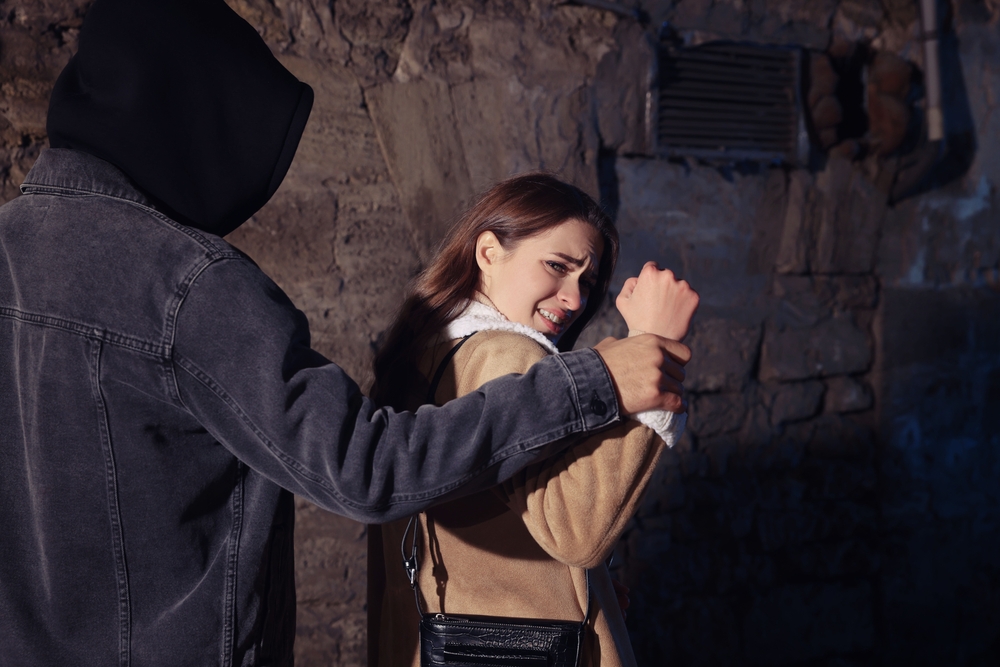
So what does a walkable target look like to someone hunting for one? The vulnerable walk tends to be a little off. Shorter, choppier strides. Movement that does not flow, where the arms and legs seem slightly out of sync with each other. Head down. Sometimes arms wrapped inward, as if the person is trying to take up less room. To a predator, that reads as someone who is not paying attention and would not fight back.
The confident walk is the opposite. Longer, smoother strides. A body that moves as one unit, with purpose. That person looks like she would make noise, put up a fight, become a problem. Predators want ease, not problems, so they pass.
This connection between how you walk and how vulnerable you seem is not new to science. Work going back to the early 1980s found that people with less fluid, less coordinated walks got rated as weaker and more open to attack, regardless of age or sex. Later studies tied slower walking speed and shorter steps to higher vulnerability ratings.
The most quoted authority on this subject is not a scientist at all. Serial killer Ted Bundy once claimed he could spot a victim by the way she walked down the street, by the tilt of her head, by how she carried herself. Cold as it is, the prison study suggests he was onto something real.
Why Some Predators Read The Signal Better Than Others
Not every inmate in the study was equally good at this. The men who scored high on one particular cluster of personality traits, the manipulative and emotionally detached ones often grouped under the social predator label, picked out vulnerable targets more accurately than the rest. They were also the ones most likely to say, out loud, that they were basing their judgment on how the person walked.
Compare that to an earlier version of the same experiment run with college students. Those students showed no clear pattern of consciously noticing gait. The difference comes down to practice. The inmates had real experience selecting victims. The students did not. Experience sharpened the men into readers of body language who knew exactly what they were looking for.
The Repeat-Victim Problem

Here is the part that stings. In the study, the people who showed vulnerable body language were also more likely to report having been victimized before. Predators zeroed in on those same individuals as future targets.
That may help explain why some people get hit again and again. A predator reads external signs of vulnerability, and past harm can leave those signs on the way a person moves through the world.
The researchers raised a hard follow-up question. Does the walk come from the victimization itself, or from how a person sees themselves? Training someone to walk with more confidence does work, but the effect wears off. Old habits creep back once attention drifts. Some researchers suspect that how a person perceives their own vulnerability drives their body language more than their actual history does, which points toward therapy addressing self-perception as a better long-term fix than a walking lesson.
That covers how predators choose. It says nothing yet about what happens when a woman refuses to play the part of easy prey. That is where Dimond’s story stops being a cautionary tale and starts looking like a strategy.
Confidence Helps, But Rage Works Better
A second study in the same journal looked at women who had been attacked and split them into two groups by one variable. Some had taken self-defense training. Some had not.
The untrained women felt fear when they were attacked. Fear made them freeze, shrink, and become easier to overpower, and it left deeper trauma behind. The trained women felt something different. They felt angry. That anger gave them an edge in the moment. Confidence keeps a predator from picking you. Anger, it turns out, does something more useful once he already has.
How Rage Short-Circuits An Attacker’s Brain
Rage works because it does not try to win a physical fight, which most women would lose against a larger attacker. It disrupts his read of the situation.
Think about what makes any animal freeze up. A leopard’s sudden lunge. The hiss of a rattlesnake. Something erratic and unpredictable triggers an old, deep alarm that says danger, back away. Human beings carry that same wiring. When a woman suddenly goes wild, yelling, cursing, lunging, flailing her arms, making sharp unexpected noises, a predator’s brain registers a threat where it expected a victim. For a moment, he feels like the one in danger. The whole equation flips.
To a man who has been taught, one way or another, that women are supposed to be small and polite and quiet, nothing computes less than a woman who is none of those things.
The Eyes As A Weapon
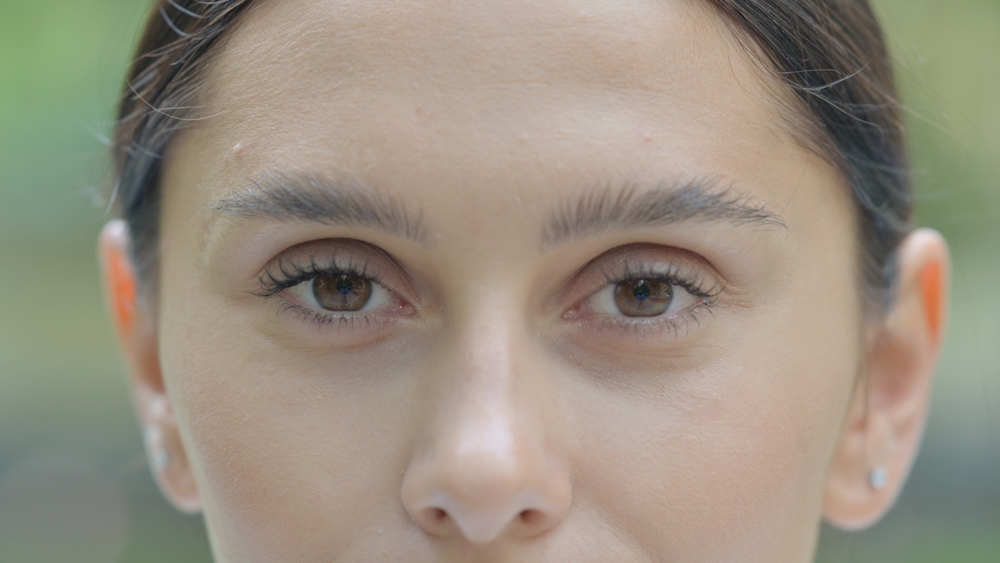
There is one more piece to this, and it sits right in the middle of your face. Humans are the only primates with visible whites around the iris, and those whites do real work in how we read each other. Babies clock them incredibly early. Research found that infants as young as seven months old reacted to the whites of a caregiver’s eyes. Thin and curved, like eyes crinkled in a smile, and the baby relaxed. Wide and wild, and the baby panicked.
Adults respond the same way, usually without knowing it. So crazy eyes is a real signal, not the insult men throw at women to make them feel unstable. Open your eyes wide and intense, and you can push an attacker’s brain to file you under threat. Weaponized, it becomes one more way to look like the last person he should have picked.
Why Women Swallow Their Anger
If anger is this effective, why do so few women reach for it? Writer and activist Soraya Chemaly took this up in her TED Talk, “The Power of Women’s Anger.” Anger, she argues, gets treated as a men’s emotion. Men are allowed it. Women are trained out of it, taught from girlhood that anger makes them ugly, difficult, unlikable, and best kept silent. Chemaly points out what anger is actually for. It flags injustice. It tells you a line has been crossed, that something threatening or insulting is happening and deserves a response.
Here is the twist. Research suggests women do not usually bury their anger because they fear getting hurt. They bury it because they fear being judged. Show rage and you risk the labels: hysterical, crazy, a psycho, a man-hater. So most women fold inward instead. Head down. Keep walking. Keys between the fingers, just in case. Defense, never offense.
Who Benefits When Women Stay Quiet
That silence has a price, and women pay it twice. When a woman swallows her anger and moves along, the man who catcalled her, groped her, or made the sexist crack at work faces zero consequence. He learns the behavior is free. He does it again to the next woman, and the next. Suppression teaches predators that their conduct carries no cost.
It costs the woman internally too. Chemaly and others connect a lifetime of swallowed rage to real physical fallout, the kind of chronic strain that shows up as autoimmune trouble, anxiety, and long-term pain. The anger does not vanish when you refuse to voice it. It turns inward and eats away at you.
Holding Up A Mirror

None of this puts the blame on women. Responsibility for an attack sits with the attacker, every single time. In a fair world, no woman would have to think about her stride before a walk through the park, and no grown man would need to be taught what counts as acceptable behavior. That world is not the one we have.
What we have is a culture that raised women to be soft and sweet and small, then handed predators an easy way to spot them. The research keeps pointing to the same uncomfortable truth. Looking like prey invites predators. Refusing to look like prey, walking with purpose, meeting harassment with a raised voice and wide, wild eyes, throws them off their guard.
Dimond turned around that day and let the men see her rage. She wondered afterward if she had been stupid. Turns out she might have done exactly the right thing.
Source: Book, A., Costello, K., & Camilleri, J. A. (2013). Psychopathy and victim selection. Journal of Interpersonal Violence, 28(11), 2368–2383. https://doi.org/10.1177/0886260512475315