
A tiny creature living in the world’s oceans has an extraordinary ability that scientists are eager to understand. When faced with extreme stress, the jellyfish can reverse its biological development, returning from its adult form to an earlier stage of life. It can then grow into a colony that produces hundreds of new jellyfish, each potentially capable of repeating the same process. This unusual ability has earned it a nickname that sounds almost impossible: the immortal jellyfish.
Now, researchers are investigating the cellular secrets behind this remarkable transformation to understand whether similar biological mechanisms could eventually benefit humans. Their work could provide valuable clues about tissue regeneration, wound healing, and diseases associated with aging. Although human immortality remains firmly in science fiction, scientists believe studying this tiny marine animal could reveal new ways to help the body repair damage and maintain healthier cells as we grow older.
The Tiny Jellyfish That Can Reverse Its Own Aging Process
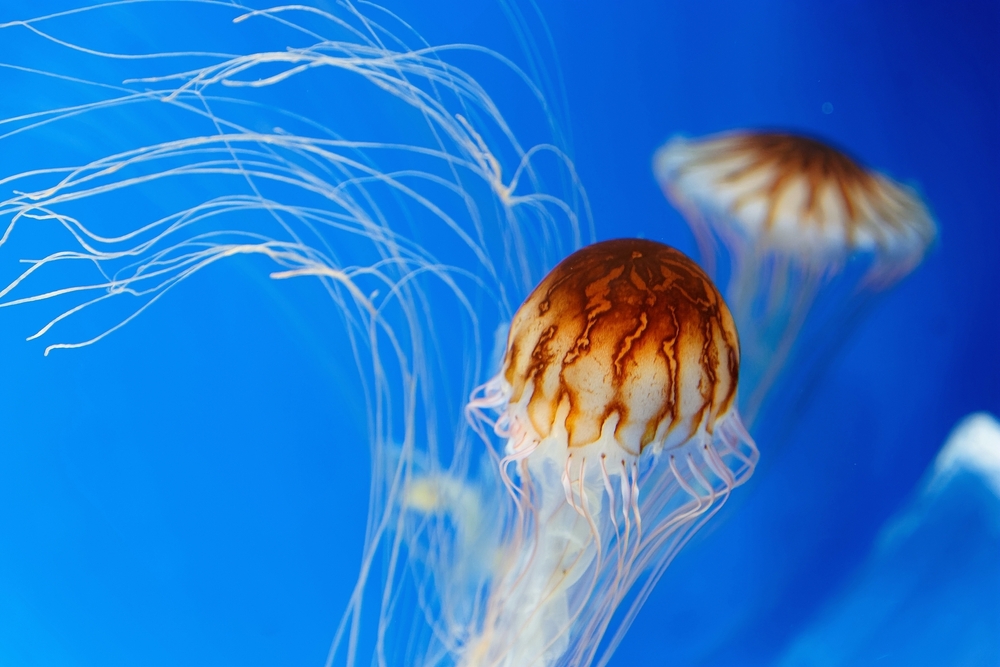
Known scientifically as Turritopsis dohrnii, the immortal jellyfish is a translucent marine animal with an unusual ability to reverse its life cycle. Most jellyfish develop from larvae into stationary polyps before becoming free-swimming adults called medusae. Once they reach adulthood, their development generally continues in one direction, eventually ending with death. However, this particular species can reverse that process when exposed to stressful conditions, returning to an earlier developmental stage instead of following the usual biological path.
When conditions become unfavorable, the adult jellyfish stops its normal activity and sinks toward the bottom of its environment. Its familiar umbrella-shaped body then begins to shrink and transform into a ball-like structure known as a cyst. During this transformation, the animal undergoes significant cellular changes that allow it to return to an immature state. Within one to three days, a structure called a polyp develops, eventually forming a colony capable of producing new jellyfish.
Marine biologist Maria Miglietta of Texas A&M University at Galveston has studied these unusual animals and their ability to repeat the process. She explained the remarkable reproductive potential of this transformation, saying, “From one jellyfish that doesn’t die, then you get this colony that can form hundreds more.” Each newly produced jellyfish can potentially repeat the same rejuvenation process when the right conditions occur, giving the species an unusual capacity to reverse its development.
How Scientists First Discovered The Immortal Jellyfish
The discovery of this remarkable ability happened in 1992 after an Italian scientist studying the jellyfish noticed something unexpected in a laboratory container. The animals had been left without food over a weekend, and the researcher expected to find dead specimens when he returned. Instead, he discovered newly formed polyps in the container. The observation raised questions about what had happened to the adult jellyfish and how they had managed to return to an earlier stage of development.
Biologist Stefano Piraino from Italy’s University of Salento became interested in understanding the mechanism behind this unusual transformation. His research helped reveal that the jellyfish could change the identity of certain mature cells during rejuvenation. This process is known as transdifferentiation, and it allows specialized cells to return to a less specialized state before developing into different types of cells required to form the polyp.
What Makes Its Cellular Transformation So Unusual
In most animals, cells become increasingly specialized as the body develops. Stem cells eventually produce different types of tissue, including muscle cells, nerve cells, and other specialized structures. Once these cells have developed their particular functions, they generally retain their identities rather than returning to an earlier developmental state. The immortal jellyfish appears capable of reversing some of these changes, allowing mature cells to change their functions during its transformation.
Miglietta, who previously worked in Piraino’s laboratory, described the process by explaining, “Adult cells become ‘undifferentiated’ and become something else that is needed to form the polyp.” This ability gives scientists an unusual opportunity to study how mature cells can regain developmental flexibility. Understanding the biological signals behind this transformation could eventually help researchers investigate new approaches to repairing damaged human tissues.
Could The Jellyfish Help Scientists Find Ways To Slow Human Aging?
The possibility of learning from the immortal jellyfish has attracted researchers working in regenerative medicine. As humans age, cells accumulate damage, tissues gradually lose some of their ability to repair themselves, and organs become more vulnerable to certain diseases. Scientists want to understand whether some of the mechanisms used by the jellyfish could provide clues for improving the body’s natural repair processes. The long-term goal involves finding ways to maintain healthier tissues and potentially reverse certain forms of age-related damage.
Michael Koldobskiy, a pediatric oncologist and physician-scientist at Johns Hopkins, believes studying organisms with unusual regenerative abilities could eventually provide valuable medical insights. He described regenerative biology as the possibility of reversing degeneration associated with aging. He also acknowledged that scientists remain far from applying these discoveries directly to human treatments, although understanding how these organisms evolved their unusual abilities could prove useful.
Researchers are particularly interested in whether similar cellular mechanisms could eventually help with conditions involving damaged tissue. Some potential areas of investigation include:
- Wound healing: Understanding cellular rejuvenation could help researchers investigate ways to improve the repair of damaged skin and other tissues.
- Stroke recovery: Scientists may uncover mechanisms that could eventually support research into repairing injured brain tissue.
- Heart damage: Studying regenerative pathways could provide clues for improving tissue recovery after heart attacks.
- Age-related vision loss: Researchers may investigate whether cellular repair mechanisms could help address damage affecting the eyes.
- Neurodegenerative diseases: Understanding how cells maintain their health could offer new research directions for conditions involving progressive nerve cell damage.
These possibilities remain areas of scientific investigation. Researchers have not demonstrated that the jellyfish’s rejuvenation process can be safely reproduced in humans, and developing treatments from these discoveries will require considerably more work.
Scientists Have Found Interesting Clues In Its DNA
Researchers are now examining the genetic makeup of Turritopsis dohrnii to identify the biological mechanisms responsible for its unusual abilities. A 2022 study compared its DNA with that of a related jellyfish species that is not known to rejuvenate. The comparison revealed differences involving genes associated with DNA repair and the maintenance of important cellular structures. These findings have helped scientists identify potential explanations for how the animal maintains its unusual regenerative abilities.
DNA Repair Could Help Explain Its Longevity
DNA naturally accumulates damage over time through different biological processes. Cells have repair mechanisms that identify and correct many of these problems, helping preserve genetic information and maintain normal function. Researchers found that the immortal jellyfish has additional copies of certain genes involved in producing proteins responsible for repairing DNA damage. These genetic differences could contribute to its ability to maintain cellular health during repeated life-cycle reversals.
Another important discovery involved genes responsible for maintaining telomeres. These structures sit at the ends of chromosomes and help protect genetic material from damage. In many human cells, telomeres gradually shorten as cells divide, which can contribute to cellular aging and eventually limit their ability to reproduce. The immortal jellyfish has additional copies of certain genes associated with telomere maintenance, suggesting that its ability to protect these structures could be one part of its unusual biological strategy.
What Researchers Are Learning About Its Genetic Activity
Miglietta has also been studying which genes become active during the jellyfish’s different developmental stages, particularly when the adult transforms into a cyst. Research conducted by her and her colleagues in 2019 and 2021 identified increased activity in genes associated with DNA repair and telomere maintenance. They also observed activity in several genes whose functions remain poorly understood, leaving scientists with additional questions about how the rejuvenation process works.
A preliminary study by Miglietta also identified some overlap between genes activated during the jellyfish’s cyst stage and genes associated with longevity in humans. This finding suggests that certain biological pathways may be shared between the two species, despite their enormous differences. Miglietta is now collaborating with Koldobskiy to investigate these mechanisms further and explore whether related processes could eventually be induced in human cells.
Why Reversing Cellular Aging Is So Difficult In Humans
The possibility of encouraging human cells to become more youthful sounds exciting, but researchers face several significant challenges. Human cells must maintain their specialized functions to keep organs working properly. Changing the identity of a mature cell could potentially help repair damaged tissue, but controlling that transformation safely is complicated. Scientists need to understand which molecular signals activate rejuvenation and how those signals can be controlled without disrupting normal cellular activity.
Research has already identified certain ways to induce rejuvenation-like processes in mammalian cells. However, applying similar techniques to human tissues remains difficult. Researchers hope the immortal jellyfish could reveal additional biological pathways that make cellular rejuvenation more effective or easier to control. Koldobskiy believes the possibilities may eventually extend to individual organs and tissues, even if reversing an entire human life cycle remains unrealistic.
He explained the distinction by saying, “We’re not going to shrink down to an embryo again and restart, but at the organ and tissue level, I think it’s very much a possibility.” This is the central focus of the research: helping scientists understand whether damaged or aging tissues can regain some of their ability to repair themselves. Any future treatment would need to preserve healthy cellular function while reducing the damage associated with aging.
The Immortal Jellyfish Can Still Die
Despite its extraordinary nickname, Turritopsis dohrnii is far from indestructible. Its ability to reverse development under certain conditions does not protect it from every threat, and researchers have observed that some specimens appear unable to rejuvenate. Even among those that successfully complete the transformation, scientists suspect there may be limits to how many times the process can occur before the animals eventually die.
Studying the species over long periods is also difficult because it requires specific environmental conditions to survive in laboratory environments. In the wild, the jellyfish faces ordinary threats that can end its life regardless of its regenerative abilities. Predators can consume it, changes in plankton availability can leave it without sufficient food, and algae can smother its colonies. Researchers also cannot rule out the possibility that the animals eventually die naturally through aging.
Miglietta has suggested that the jellyfish’s resilience could help explain why the species has become widespread across different oceans. It has been found in regions including the Mediterranean, the Caribbean, and Japan. However, its ability to rejuvenate does not mean every individual survives indefinitely. Its unusual biology offers a remarkable example of regeneration, while its vulnerability shows that even extraordinary cellular abilities have limitations.
What This Discovery Could Mean For Your Long-Term Health
Scientists still have many questions to answer before the immortal jellyfish’s cellular secrets can contribute to human medicine. However, the research offers an interesting opportunity to understand how organisms maintain their cells and repair damage. Future discoveries could eventually help researchers develop better approaches to tissue regeneration and age-related diseases, although there is currently no proven way to reproduce the jellyfish’s rejuvenation process in humans.
For now, you can support your body’s natural repair processes through everyday habits that have established health benefits. Regular movement, sufficient sleep, balanced nutrition, and avoiding smoking all contribute to long-term health. These habits cannot reverse aging, but they can help protect your cells and support normal bodily functions as you grow older.
The immortal jellyfish has shown scientists that biological development can be more flexible than previously understood. Its ability to return to an earlier stage of life remains one of nature’s most unusual discoveries, and the genetic mechanisms behind it could open new research directions. For scientists studying human longevity, a creature small enough to fit on a fingertip may hold some of the most fascinating clues about how the body could repair itself.