Ciara Burnside expected the first moments with her newborn son to be like those of any other new mother. Instead, when baby Ralph was placed on her chest, she immediately noticed something was wrong, and within minutes, medical staff had taken him away for urgent treatment.
He wasn’t crying, his hands were bleeding, and patches of skin were missing from his tiny body. Ciara had experienced a normal pregnancy with no warning that anything was wrong, but her son’s first hours revealed a rare inherited condition that would change almost every part of caring for him.
Ralph’s First Moments Left His Mother Shocked
Ciara gave birth to Ralph on March 25, 2026, at 35 weeks and six days of pregnancy. The 30-year-old, who lives in Bedfordshire in the UK, had no reason to expect complications linked to a genetic skin disorder.
When Ralph was placed on her chest, the first thing she noticed was the silence. The midwives rubbed his back to stimulate him, but Ciara soon saw the blood and damaged skin covering parts of his body.
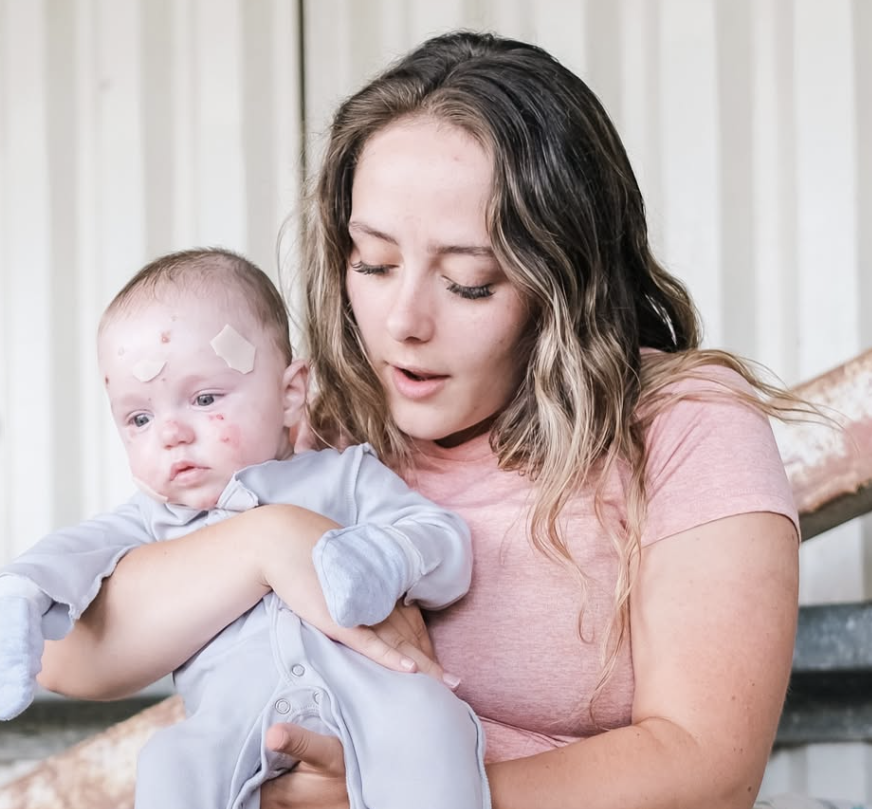
Image Credits – Instagram @ciaraburnsidex
“I quickly realized he was not crying,” Ciara told Newsweek. “The midwives rubbed his back to stimulate him, but then I noticed a lack of skin, blood on his hands, and patches over his body.”
The neonatal team quickly intervened and took Ralph for specialist care. Within hours, blistering had spread across his body, and the newborn was transferred into intensive care.
Doctors Discovered He Had ‘Butterfly Skin’
Ralph spent 16 days in neonatal intensive care while doctors investigated what was causing the severe blistering. A consultant eventually asked Ciara and her fiancé Lewis whether either family had a history of fragile skin or genetic conditions, but neither parent knew of a case.
Skin biopsies showed that Ralph had junctional epidermolysis bullosa, one of several forms of epidermolysis bullosa commonly known as “butterfly skin.” The condition causes extremely fragile skin that can blister or tear after contact, friction or heat.
A specialist team at Great Ormond Street Hospital became involved in Ralph’s treatment. However, it took around two months for genetic testing to identify the precise fault and subtype.
During that waiting period, Ciara said doctors warned the couple that “there is a specific type where he may not survive.” The eventual diagnosis gave them more certainty about what they were dealing with, although it also revealed the extent of the challenges Ralph could face.
Neither Parent Knew They Carried The Gene
The genetic fault identified in Ralph’s case involves COL17A1, a gene responsible for instructions used to produce collagen XVII. That protein helps anchor the outer layer of skin to the layer underneath, and problems with it can allow the layers to separate and form blisters.
Both Ciara and Lewis were silent carriers, meaning they had no symptoms and had no reason to suspect they carried the relevant genetic variants. Junctional EB can be inherited recessively, so a child needs to receive a faulty copy from both parents to be affected.
When both parents carry a relevant variant, each pregnancy has a 25% chance of producing an affected child and a 50% chance of producing a carrier. GeneReviews estimates that around 1 in 270 people carries a variant of this kind without knowing it.
For Ralph’s parents, there had been no family history to alert them before his birth. His diagnosis therefore came as a shock despite the condition having a genetic cause.

Caring For Ralph Has Turned Every Routine Into A Procedure
Ralph is now five months old, but ordinary baby care remains a complicated process. Feeding can take more than an hour when milk has to be delivered slowly by syringe to reduce the risk of injury.
“We have also syringe-fed Ralph, so we sat there for over an hour, slowly dripping the milk into his mouth,” Ciara said.
His daily routine also involves medication, dressings and constant checks for new injuries. He takes medication for acid reflux, receives morphine for pain and is given paracetamol every four to six hours, while regular dressing changes help protect damaged skin and reduce infection risks.
Even basic tasks require extra care because friction can create new wounds. His parents use a flannel or gauze rather than giving him a conventional bath, change his clothes twice a day and need two people for a nappy change.
His Dressings Limit What He Can Do As A Baby
The condition affects more than Ralph’s wounds because protecting his skin can also restrict how he interacts with his surroundings. His fingers are wrapped in dressings, making it difficult for him to grab toys or explore objects with his hands.
“His fingers are wrapped in dressings which means he can’t reach out, hold toys or explore the world the way most babies do,” Ciara said.
His parents also have to watch him closely because seemingly harmless movements can cause significant damage. Even soft mittens can become a problem if Ralph rubs his face.
“Unlike most parents, we can’t really leave him unattended for more than a minute because, even with very soft mittens on, rubbing his face can cause significant damage incredibly quickly,” Ciara said.
That level of vigilance means his parents have to think carefully about movements that other families would never need to consider.
Doctors Have Warned About Hair, Nails And His Feet
Ralph’s parents have also been told that some complications could continue as he grows. His feet were severely damaged at birth, and doctors have warned that he could eventually need a wheelchair because those areas are expected to remain fragile.
The condition can also affect hair, nails and teeth. Medical information on the intermediate form of junctional EB lists hair loss, nail damage and dental enamel problems among possible features.
Ciara said doctors have given the family some reassurance about Ralph’s overall prognosis. “He will likely make it to adulthood because his prognosis is not the most severe, but they’ve told me that there is a chance he will lose his hair and fingernails,” she said.
For his parents, that means preparing for possible long-term complications while focusing on the daily work of keeping his skin protected.
Treatment Options Exist, But There Is Still No Cure

There is currently no cure for epidermolysis bullosa, so treatment focuses heavily on wound care, pain control and preventing complications. Several therapies have been approved in recent years, but they apply to specific forms of EB rather than the condition as a whole.
Vyjuvek, a topical gene therapy approved in 2023, is used for dystrophic EB. Zevaskyn, approved in 2025, is also intended for recessive dystrophic EB, while Filsuvez is licensed for junctional EB in patients aged six months and older.
The distinction is important because Ralph has junctional EB. A treatment approved for one subtype cannot automatically be assumed to work for another.
The Filsuvez evidence also comes with limitations. In the phase 3 EASE trial, the treatment met its primary endpoint in recessive dystrophic EB, where 44% of target wounds closed within 45 days, but it did not meet that endpoint in the junctional group.
Even Leaving Home Can Be Difficult

Heat and friction are constant concerns for Ralph’s family, making everyday trips outside much harder. Ciara said they rarely leave the house because of the heat and the fear that a car seat could damage his skin.
“We rarely leave the house due to the heat and fear of damage from the car seat,” she said.
DEBRA UK, the charity supporting people affected by EB, has provided the family with practical help, including a portable air conditioning unit and sheepskin covers for Ralph’s car seat. The organization has also connected Ciara with other families who understand what living with the condition involves.
Ciara has begun documenting Ralph’s life on TikTok as well. Part of the goal is to raise awareness so other parents may recognize unusual blistering or missing skin and understand that there could be an underlying condition requiring urgent medical attention.
Ralph’s Diagnosis Changed What Holding A Baby Means
The most difficult part of Ralph’s condition may be how it has changed an action that usually comes naturally to a new mother. Ciara cannot simply pick up her son, cuddle him closely or carry him without considering how his fragile skin could react.
The first signs appeared before his parents even knew what they were seeing: blood on his hands, missing skin and patches across his body. Five months later, those symptoms have become a daily reality managed through careful handling, dressings, medication and constant attention.
“We just have to take each day as it comes,” Ciara said.
For this family, holding their baby is no longer a simple instinctive act. Every touch has to be measured, because with Ralph, even love has to be handled gently.
Featured Image Credits from Instagram @ciaraburnsidex