An immune cell can reach a tumor and appear ready to attack, yet sometimes it stops before doing anything. One reason may be sitting directly on the surface of the cancer cell: a coating made of sugars. Every cell in your body carries molecules called glycans on its surface. They help cells recognize one another, communicate, and avoid unnecessary immune attacks. Cancer cells can use some of these same biological signals to protect themselves, and researchers have been studying whether interrupting those signals could give the immune system a better chance of recognizing and attacking a tumor. A team of researchers from MIT and Stanford has now developed an experimental approach designed to interfere with one of those signals, potentially giving immune cells another way to recognize cancer.
The research focuses on a sugar called sialic acid, which can become unusually abundant on the surface of cancer cells. Immune cells carry receptors called Siglecs that recognize sialic acid, and when these receptors interact with the sugars on tumor cells, the immune response can be dampened. The researchers created molecules called antibody-lectin chimeras, or AbLecs, designed to attach to cancer cells while also blocking access to these sugar signals. In laboratory experiments and studies involving specially engineered mice, the molecules helped immune cells attack cancer cells and were associated with fewer lung metastases than treatment with the antibody trastuzumab alone. The findings are promising, but there is an important limitation: no human has yet received an AbLec treatment.
Sugar Is More Than a Sweetener When It Comes to Cells
When you hear the word sugar, you may think about the sugar in a dessert or sweetened drink. The sugars covering your cells are something entirely different. Glycans are complex carbohydrate structures attached to proteins and lipids on cell surfaces. They help the body distinguish between its own cells and outside threats, and they participate in many forms of cell-to-cell communication. These surface sugars are also involved in biological features such as blood-type differences. In healthy tissue, this system helps the immune system recognize what belongs in the body and what may need to be removed.
Cancer cells can alter the glycans displayed on their surfaces. One of the changes researchers have been paying attention to is an increase in sialic acid, a sugar found at the outermost part of many cell-surface glycans. When tumors carry high levels of sialic acid, those sugars can interact with receptors on immune cells known as Siglecs. Instead of encouraging an immune cell to attack, these interactions can send signals that reduce immune activity around the tumor. In simple terms, the cancer cell can appear less threatening to the immune system because of the molecular signals decorating its surface.
Carolyn Bertozzi, whose work on glycans helped establish new ways to study these molecules in living systems, has spent years investigating how cell-surface sugars affect cancer and immunity. Her research helped establish that the sugar structures surrounding cells are not passive decorations. They can influence how cells behave and how the immune system responds to them. That idea has opened another area of cancer research, sometimes described as targeting the glyco-immune checkpoint, where the goal is to interfere with sugar-based signals that help tumors avoid immune attack.
The Immune System Has Another Brake to Release
Cancer immunotherapy has changed treatment for some people by helping the immune system recognize and attack cancer. One widely studied approach involves immune checkpoints such as PD-1 and PD-L1. These molecules can act like brakes on immune activity, and checkpoint inhibitors are designed to interfere with those signals. For some cancers and some patients, releasing this brake can produce lasting responses. But immunotherapy does not work for everyone, and researchers have been looking for additional mechanisms that may explain why certain tumors remain difficult for the immune system to attack.
Siglecs represent one possible additional brake. These receptors are found on several types of immune cells and can recognize sialic acid-containing structures. When a Siglec on an immune cell encounters sialic acid on a tumor cell, the interaction can reduce the immune cell’s activity. This means that even if a cancer treatment has successfully interfered with another immune checkpoint, the tumor may still have additional ways to suppress the immune response. Targeting the sugar-Siglec interaction could therefore complement existing immunotherapy rather than simply replacing it.
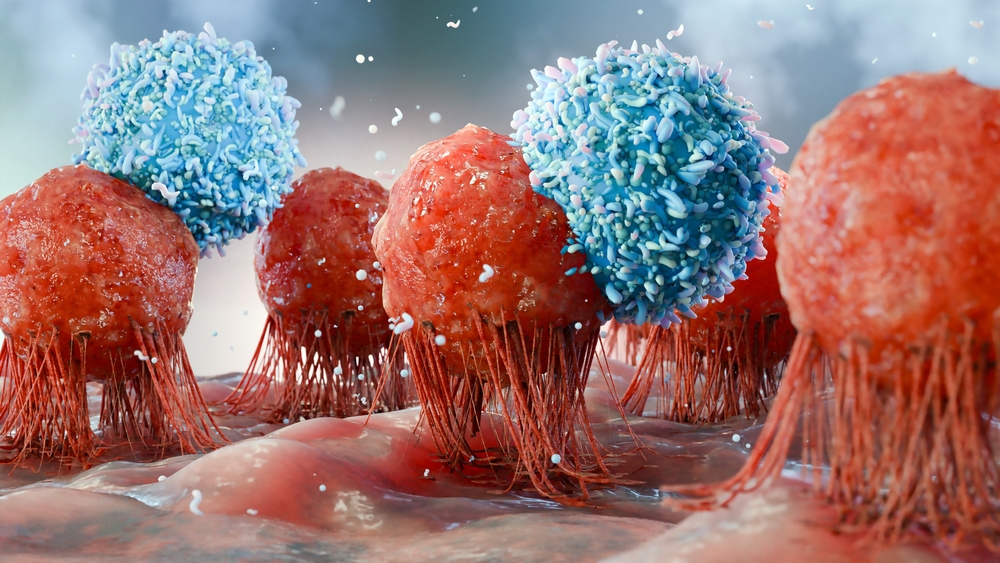
The AbLec approach was designed around this idea. Instead of trying to remove every sugar from a cancer cell, researchers created a molecule that brings two functions together. One part is an antibody that recognizes a particular target on a cancer cell. The other is a lectin, a protein that binds to sugars. The lectin portion can attach to the tumor’s sialic acids and interfere with the interaction between those sugars and Siglecs on immune cells. The result is an experimental treatment designed to make the tumor’s surface less effective at telling nearby immune cells to stand down.
How AbLecs Work
The researchers began with trastuzumab, an antibody already used to treat certain HER2-positive breast cancers. Trastuzumab recognizes the HER2 protein on the surface of cancer cells. The researchers modified the antibody design so that one of its functional components could be replaced with a lectin that recognizes sialic acid. They tested lectin domains associated with Siglec-7 and Siglec-9, creating molecules that could both recognize the tumor and interact with its sugar coating.
That combination is important because lectins alone may not attach strongly enough to a tumor to serve as an effective treatment. The antibody provides the targeting function, bringing the molecule to the cancer cell. Once there, the lectin portion can bind to the sugars covering the tumor. This gives the experimental molecule two jobs at the same time: find the cancer cell and interfere with the sugar-based signal that can suppress immune activity.
The researchers call these molecules AbLecs, short for antibody-lectin chimeras. Their design is also modular. In theory, changing the antibody portion could allow an AbLec to target another type of cancer, while changing the lectin component could alter which sugar-binding or Siglec-related interaction it affects. That flexibility is one reason researchers are interested in the approach. It could potentially be combined with existing immune checkpoint treatments, allowing different immune-suppression pathways to be targeted at the same time rather than relying on a single mechanism.

What Happened in the Laboratory
The initial experiments were performed using human immune cells and cancer cells in laboratory settings. The researchers found that AbLec treatment increased immune-cell activity against cancer cells, including processes such as phagocytosis, in which immune cells engulf and remove unwanted cells. The experimental molecules also increased direct cancer-cell killing in the tested systems. These results suggest that interfering with the tumor’s sialic-acid signals can change how immune cells respond when they encounter cancer.
The team then moved into animal experiments using mice engineered to carry human versions of certain immune receptors and antibody-related components. The researchers used cancer cells capable of forming metastases in the lungs and compared animals treated with AbLec against animals receiving trastuzumab alone. The mice receiving the experimental AbLec had fewer lung metastases than those treated with trastuzumab alone. This provides evidence that blocking the sugar-mediated immune signal may add an effect beyond what the antibody itself can achieve.
At the same time, these results need to be interpreted carefully. A reduction in tumors or metastases in mice does not mean the same treatment will work in people. Laboratory models can help researchers understand how a treatment works and whether it is worth taking into clinical development, but they cannot reproduce every feature of human cancer. Human tumors can differ in their biology, immune environment, treatment history, and ability to adapt. The AbLec findings therefore represent an early research step, not a new cancer treatment that patients can currently receive.
Why This Could Matter for Future Cancer Treatment
One of the most interesting aspects of the research is that the AbLec strategy targets a mechanism that is different from the immune checkpoints addressed by many existing immunotherapies. If a tumor is using several different methods to suppress immune activity, blocking only one pathway may not be enough. A treatment that interferes with the tumor’s sugar-based signals could potentially add another layer of immune activation. The researchers have suggested that AbLecs may work particularly well when paired with established checkpoint inhibitors, although that possibility still needs to be tested.
The approach may also offer a way to think differently about the surface of a cancer cell. Rather than focusing only on proteins expressed by tumors, scientists are increasingly studying the entire molecular environment surrounding those cells. Glycans can influence how immune cells perceive tissue, and changes in these sugar structures may contribute to the ability of tumors to avoid immune attack. Understanding those changes could eventually help researchers identify new treatment targets or explain why some cancers respond differently to the same immunotherapy.
There is also a practical question of how broadly the strategy could eventually be applied. Because AbLecs are designed with separate targeting and sugar-binding components, researchers may be able to modify the molecules for different tumor types. That does not mean a single AbLec will work against every cancer. Each version would need to be tested for its target, effectiveness, safety, dosing, and interaction with the patient’s immune system. Still, the modular design gives researchers a framework they can continue developing as they learn more about the relationship between cancer cells, glycans, and immune receptors.
The Research Is Promising, But Human Testing Comes Next
Perhaps the most important fact to keep in mind is that AbLecs have not yet been tested in people. The current evidence comes from laboratory experiments and animal models. The researchers have formed a company, Valora Therapeutics, to help advance the technology toward clinical development, with the goal of beginning clinical trials in the next few years if the necessary development and safety work progresses as planned.
That process can take time because an experimental cancer therapy has to pass through multiple stages before it can become available to patients. Researchers need to establish how the treatment behaves in the body, determine appropriate doses, evaluate potential side effects, and gather enough evidence to decide whether it is safe to move into larger clinical studies. A treatment that produces encouraging results in mice can still fail during human testing because of safety problems, limited effectiveness, unexpected immune reactions, or other biological differences.
For now, the value of this research is in what it teaches scientists about cancer’s relationship with the immune system. The tumor’s sugar coating may be more than a passive feature of its surface. It can participate in signals that influence whether immune cells attack or hold back. By designing a molecule that can find a tumor and interfere with those signals, researchers have created a new experimental way to approach immune-based cancer treatment. The next major question is whether that strategy can produce meaningful benefits in people while remaining safe.
A New Way to Look at the Cancer Cell
Cancer treatment has often focused on finding the proteins, mutations, or pathways that make a tumor different from healthy tissue. The AbLec research adds another piece to that picture by focusing attention on the sugars covering the cell. These molecules may influence how the immune system sees a tumor and whether an immune cell responds when it encounters one. If future studies confirm that disrupting these sugar-based signals can improve cancer treatment, it could give researchers another tool for patients whose tumors do not respond well to existing immunotherapies.
For now, it is best to view the findings as an early but scientifically interesting development rather than a treatment breakthrough that is ready for patients. The laboratory and mouse results provide a reason to continue studying the approach, but clinical trials will determine whether the same biology can be harnessed safely in humans. Cancer is complex, and no single experimental result can predict what will happen in patients.
The most encouraging part may be the new question this research raises: what if some cancers are not simply hiding from the immune system, but actively using the sugar molecules on their surface to tell immune cells to back away? Researchers now have a way to test that idea more directly. Whether AbLecs ultimately become part of cancer care remains unknown, but understanding this sugar-based immune signal could help shape the next generation of cancer therapies.