Ripon is a small city east of Sacramento, home to around 14,000 people, the kind of place where news travels fast, and neighbors know each other’s children by name. For most of its residents, Weston Elementary School was simply where kids went to learn. Then, over the course of a few years, something began happening at that campus that no one could easily explain, and a question started spreading through the community that would not be easy to put to rest.
By the time families started pressing for answers, eight students and teachers at Weston Elementary had been diagnosed with cancer. All of the affected children were under the age of 10, each with a different type, from brain and kidney to liver and lymphoma. Sitting on the school campus, in plain view of every child who walked through the gates each morning, was a Sprint cell phone tower.
Whether that tower had anything to do with what was happening at Weston Elementary became one of the more contentious questions in recent California community health debates, pitting grieving parents against federal safety standards, corporate assurances against a mother’s instinct, and inconclusive science against a cluster too large to dismiss.
A Timeline That Started With Two Boys
Kyle Prime was 10 years old when he was diagnosed with kidney cancer in 2016. Five months later, his classmate and friend, Mason Ferrulli, received his own diagnosis, a brain tumor. Two more children at Weston Elementary were diagnosed the following year, and the count eventually reached eight students and teachers at the same campus.
Mason’s case was among the most severe. Surgery to remove his tumor ran 14 hours, and the recovery that followed was brutal by any measure. “Fourteen hours to get the tumor out and he had five weeks of inpatient rehabilitation. He had to learn to walk, talk, eat, everything all over again,” his mother, Monica Ferrulli, told CBS News. His cancer later returned, and at the time of reporting he was facing his third diagnosis in two years.
Kyle Prime went into remission, but the road there left lasting marks on his family. His mother, Kellie Prime, watched her son lose his hair and miss the ordinary moments of growing up with his friends, all while managing a fear that no parent should have to carry.
Why Two Mothers Pointed To The Campus Tower

Kellie Prime and Monica Ferrulli spent years pressing for the Sprint tower on Weston Elementary’s campus to come down, and their reasoning, while disputed by scientists, was not without a basis for concern. Radio frequency radiation, the type emitted by cell phone towers, has been classified as a possible carcinogen by the International Agency for Research on Cancer. That classification does not establish a proven link to cancer in humans, but it does mean enough evidence exists to warrant continued study.
For both mothers, the argument was less about certainty than about proximity. Children were being diagnosed with cancer at a rate that seemed impossible to attribute to chance, a cell tower sat directly on school grounds, and kids walked past it every single day. Ferrulli put it plainly. Even accounting for other environmental factors, her position was that a tower with any possible carcinogenic association had no place on a campus full of developing children.
Sprint paid the school district $2,000 per month to host the tower, a detail parents raised publicly and one that colored how they interpreted the district’s initial resistance to removal. For months, Weston Unified declined to act, sending a letter to parents stating that electromagnetic frequencies at the site were far below federal standards and that it had no plans to remove the tower.
What Three Rounds Of Testing Actually Revealed
Testing became a central and contested part of the story. Weston Unified hired engineers to measure radio frequency exposure at the campus, and they concluded that the tower met government and industry standards in all respects and posed no threat to student safety. Sprint’s own network project manager, Dharma Nordell, stated that three independent tests had shown the site operating 100 times below the federal limit, and she was categorical in her view that the tower was not a cause of the cancer cases.
Parents hired their own investigator, electromagnetic radiation specialist Eric Windheim, who found higher RF readings at the campus than either the district or Sprint had reported. His numbers still fell within federal safety limits, but Windheim’s view was that those limits did not adequately protect developing children whose cells are still dividing and whose bodies are still growing. He said he would not send his own children to the school.
What his testing also revealed was that the tower was not simply a standard cell phone transmitter. It broadcast wireless frequencies capable of reaching 30 miles, far beyond the roughly 300 yards of conventional Wi-Fi, a detail that added a layer to the parents’ concerns that standard safety comparisons had not accounted for.
Sprint Shuts The Tower Down But Stands By Its Position
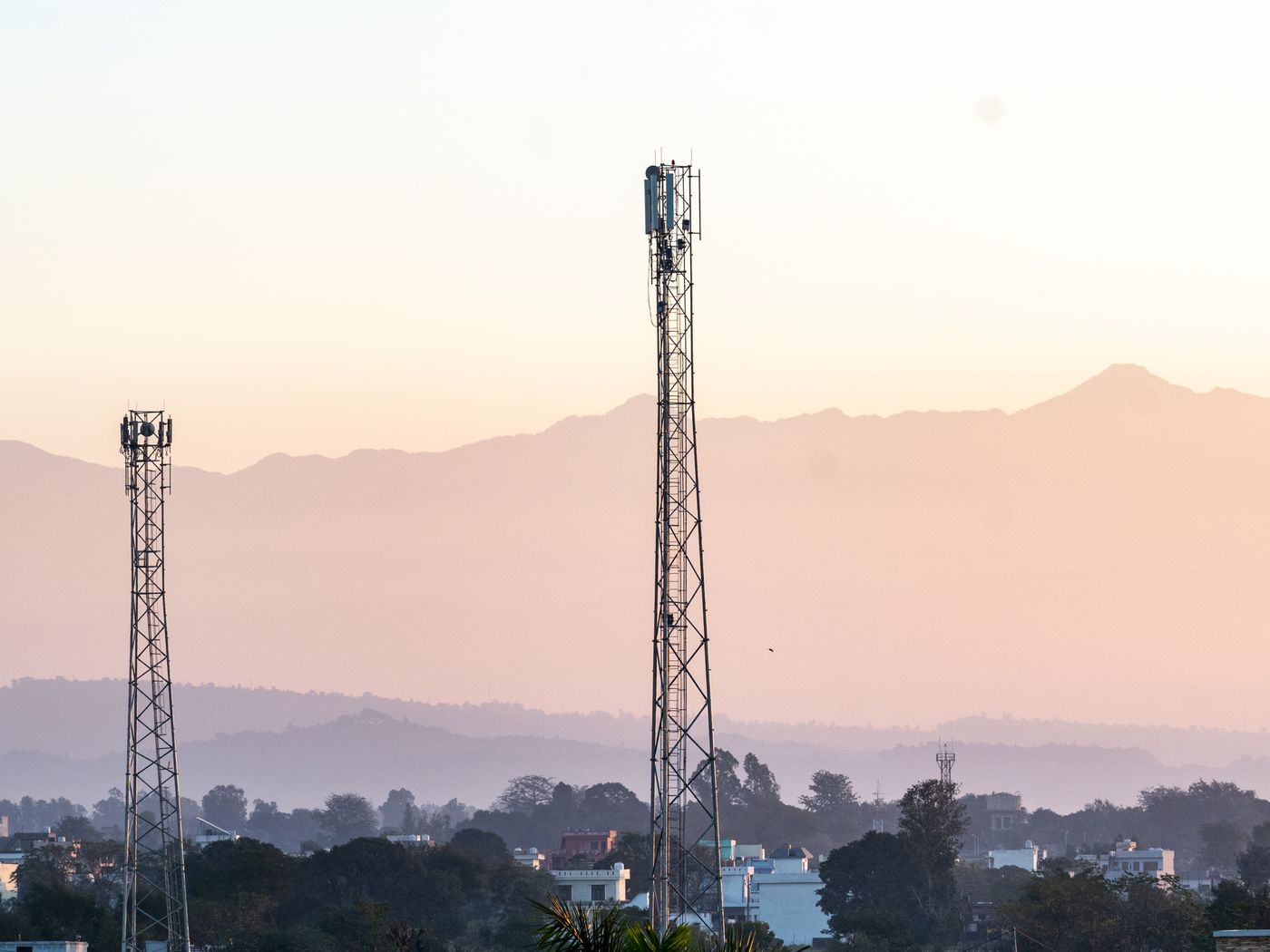
After two years of pressure from families, and following their decision to hire attorneys from The Cochran Firm, the Primes and Ferrullis received assurances in March 2019 that the tower would come down. Sprint shut it off and confirmed it was relocating to a new site, with the company already moving forward on leasing and permitting for a new location.
At a public town hall held shortly after, Assemblyman Heath Flora confirmed the shutdown. Flora, a Ripon resident with two young daughters, told the crowd that the community deserved answers and that his office would work to help deliver them. Sprint maintained throughout that the tower had always been safe and that it was relocating out of respect for community concerns, not out of any acknowledgment of risk. Frank Jerome, Chief Operations Officer for Ripon Unified, confirmed in a statement that Sprint had turned off the tower and was moving forward with deploying a replacement site.
What Medical Experts Say About RF Radiation And Cancer

Removing one tower did not resolve the underlying medical question, and the scientific community was measured in how it addressed the cluster at Weston Elementary. CBS News medical contributor and oncologist Dr. David Agus said that multiple cancer diagnoses at a single school warranted serious investigation, but he was also careful to note that people exposed to radio frequency waves at normal levels have not been found to carry a higher risk of developing cancer.
Agus called for epidemiological data studying cancer rates near towers across larger populations, rather than drawing conclusions from a single cluster. He argued that the right response to the situation in Ripon was more rigorous research, not a premature determination of cause.
At the institutional level, the American Cancer Society stated that very little evidence exists to support the idea that proximity to cell towers increases cancer risk, while also acknowledging that very few human studies have focused specifically on that question. That combination left parents in the uncomfortable position of being told not to worry, based partly on the fact that the worry had not been adequately studied in the first place.
A Deeper Contamination Problem Beneath The Surface
Attorneys Brian Dunn and Marcelis Morris from The Cochran Firm came to Ripon with a broader argument than the tower alone. After months of reviewing records, they told the community that their research pointed to multiple sources of environmental contamination affecting the city, some of which they said had been leaking into local groundwater for decades.
At the center of their environmental argument sat a now-closed Nestlé plant that had manufactured decaffeinated coffee in Ripon and had used trichloroethylene, a known carcinogen, in its production process. Morris told FOX40 that his review had only deepened his alarm. “After reviewing thousands of pages of documents, I can say there’s nothing that has made me less concerned,” he said. “We need to really dig in and find out what is causing all of this cancer to proliferate in the city of Ripon.”
Nestlé issued a statement acknowledging the trichloroethylene issue, saying it had worked with the city and the Regional Water Quality Control Board for more than 30 years to monitor and remediate the contamination. A company spokesperson said cleanup efforts had reduced the spread of impacted groundwater but that more work remained to be done.
Morris and his colleagues argued that when adjusted for population size, cancer rates across Ripon ran substantially higher than the California average of 411 diagnoses per 100,000 residents per year, a figure that already skews toward adults rather than children.
A Community Still Waiting For Answers

With the tower down and a legal and environmental investigation underway, Ripon sat in a state of unresolved uncertainty. Weston Unified told CBS News it had been in contact with the California Department of Health and was waiting for results from soil and water testing at the school. No findings had been made public at the time of reporting.
Mason Ferrulli was back in treatment for his third cancer diagnosis in two years. Kyle Prime remained in remission, returning to the hospital every three months for scans. Kellie Prime, who spent years watching her son face something no child should have to face, gave voice to what drove both families to keep going. “I’ve looked into his eyes and I’ve looked at the fear that he has as a 9-year-old facing something, asking me, ‘Mom am I going to die?'” she told CBS News. “It would push you to fight as well. It would push any parent to fight.”
For the families in Ripon, removing the tower was never the finish line. It was a first step in a search for answers that the science, the soil tests, and the legal proceedings had yet to provide.