Scientists have developed a gene therapy that can help some blind people regain part of their vision, using a technique that turns nerve cells on and off with light. The approach, known as optogenetic therapy, has now been tested in 10 people with advanced retinitis pigmentosa, with researchers reporting improvements in light sensitivity and the ability to complete everyday visual tasks. The findings offer fresh hope for people whose sight has been severely damaged by inherited eye disease, although the treatment still has significant limitations.
The technique works by making surviving cells inside the eye sensitive to light, allowing them to carry visual signals towards the brain even after the retina’s natural light-detecting cells have stopped functioning. Some participants became better at locating objects and finding their way around while wearing specially designed goggles. However, the treatment cannot yet restore detailed vision or allow patients to recognise faces, leaving researchers with a major challenge as they work towards making the technology more effective.
Scientists Have Expanded A Promising Vision Restoration Trial
The latest research builds on an earlier demonstration in 2021, when the approach helped a single blind patient recover limited visual function. Researchers have now reported results involving that original participant and nine additional people, providing further evidence that optogenetic therapy can work in humans. The 10 participants all had advanced retinitis pigmentosa, a group of inherited disorders that progressively damage the retina and can eventually cause severe sight loss.
Professor Botond Roska, director of the Institute of Molecular and Clinical Ophthalmology Basel and a lead author of the study, said: “What we can say for sure is that the concept of optogenetics is valid for vision restoration.” The findings were published in the New England Journal of Medicine, with researchers reporting that six of the 10 participants experienced clinically meaningful improvements in light sensitivity. Some also showed better performance on practical tasks while using the specialised goggles.
The results provide evidence that the treatment can restore certain aspects of visual function, even when the cells normally responsible for detecting light have deteriorated. However, the benefits varied between participants, and the trial was small. The findings therefore represent an important step in testing the approach, rather than proof that it can reliably restore sight for everyone with advanced retinal disease.
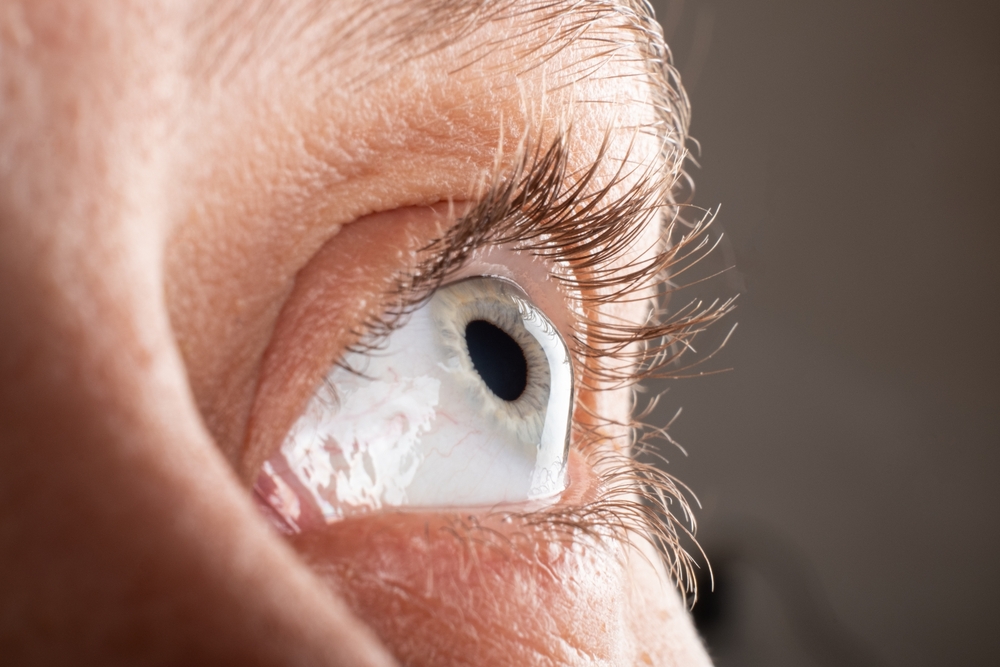
How Optogenetic Therapy Makes Surviving Eye Cells Respond To Light
Retinitis pigmentosa damages photoreceptors, the specialised cells in the retina that normally detect light and convert it into electrical signals. As the condition progresses, these cells gradually lose their function, making it increasingly difficult for the brain to receive the information needed for vision. Although the damage can be severe, some other cells in the retina may survive for longer, creating an opportunity for scientists to approach sight restoration differently.
One group of surviving cells is known as retinal ganglion cells, which transmit visual information towards the brain. Researchers use gene therapy to give these cells the ability to respond directly to light, effectively allowing them to take on a function that would normally depend on the damaged photoreceptors. Dr José-Alain Sahel, another lead author from the University of Pittsburgh Medical Center, explained: “These cells are not the primary cells targeted by the disease, so that’s why they are good candidates for the therapy.”
The treatment begins with a single injection into the eye containing a harmless synthetic virus that delivers genetic instructions to surviving ganglion cells. Those instructions enable the cells to produce a light-sensitive protein, changing how they respond when light reaches them. The strategy could be useful across different genetic forms of retinitis pigmentosa because it targets surviving retinal cells rather than correcting one specific genetic mutation responsible for the disease.
Special Goggles Help Patients Turn Light Into Visual Signals
After receiving the injection, participants use specially designed goggles that capture images of the environment and convert them into pulses of light at a single wavelength. These pulses stimulate the ganglion cells that have been modified by the gene therapy, allowing signals to travel towards the brain. The resulting perception is limited and monochrome, meaning patients do not regain ordinary colour vision through the system.
The goggles are an essential part of the process because the treated cells need suitable light stimulation to produce useful visual information. The system translates what the wearer sees into signals that the modified cells can detect, creating a pathway around the damaged photoreceptors. This approach combines gene therapy with an external device rather than relying on the injection alone to restore sight.
Researchers treated only the eye with the worst vision in each participant and followed their outcomes for up to five years. The study reported that the therapy’s effects could remain stable for four or five years in some patients, providing early evidence that improvements may persist. However, the duration and degree of benefit can vary, and further research will be needed to establish how consistently the approach works across a larger population.
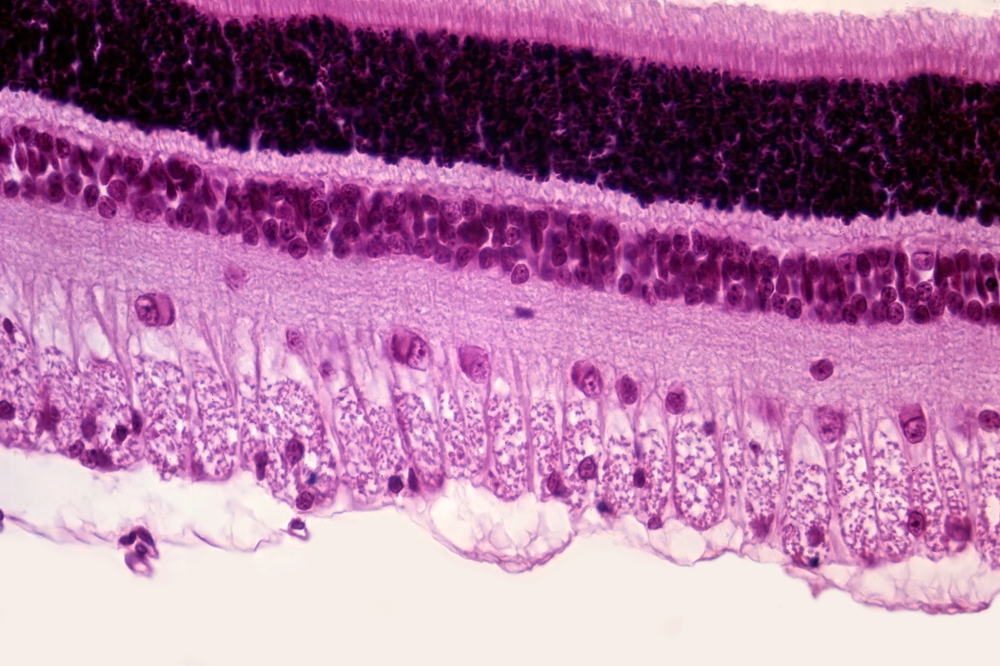
Six Participants Experienced Meaningful Improvements In Light Sensitivity
Six of the 10 participants showed clinically meaningful improvements in their ability to detect light following treatment. Some also improved at tasks that required them to locate objects and respond to their surroundings while wearing the goggles. These included finding a notebook, reaching out to touch it, locating a door and walking along a line, giving researchers practical ways to assess the visual information participants could use.
The ability to complete these tasks represents a different kind of progress from simply detecting that light is present. Locating an object requires a person to gain information about where something is positioned, while reaching towards it involves using that information to guide movement. The results suggest that some participants could use the system to do more than register basic light signals, although the level of visual detail remained limited.
The researchers also observed that participants who spent more time training with the goggles tended to perform better on the tasks. This suggests that learning to interpret the system’s visual signals may be an important part of using the technology effectively. However, the trial does not establish a precise training schedule that would guarantee improvements, and four participants did not experience the same level of clinically meaningful improvement in light sensitivity.
The Treatment Still Cannot Restore Detailed Central Vision
Despite the encouraging results, the current approach has a major limitation: patients cannot yet recognise faces using the restored visual function. Professor Roska explained that participants could detect objects but could not identify faces, pointing to the arrangement of the treated cells as one reason for the restriction. The technology currently targets a ring of ganglion cells around the fovea, a small area of the retina responsible for sharp central vision.
The fovea is essential for seeing fine details, including facial features and small text. Because the treated cells are arranged around this central region, the visual information generated by the current system does not provide the detail needed for face recognition. Patients may be able to identify an object’s location without being able to determine precisely what it looks like, showing the difference between recovering some visual function and restoring detailed sight.
This limitation means the therapy cannot yet offer the same experience as natural vision. The results demonstrate that surviving retinal cells can be made responsive to light, but the system must become more precise before it can support tasks that depend on fine detail. Researchers now face the challenge of improving the quality of the visual signals delivered to the brain while maintaining the safety observed in the trial.
Researchers Hope To Restore Higher-Resolution Vision
Professor Roska said the next goal is to work towards restoring high-resolution vision, with researchers hoping to achieve that within five to 10 years. This is a research target rather than a guaranteed deadline, and further testing will be needed to determine whether the technology can deliver the level of detail required for more complex visual tasks. The current findings provide a foundation for that work, but they do not establish that normal sight will become possible within the proposed timeframe.
Improving resolution could help patients gain more useful information about their surroundings. However, the researchers must determine how the modified retinal cells can be stimulated to convey finer details and how effectively the brain can interpret those signals. The role of training also deserves further investigation, given the observed relationship between time spent practising with the goggles and performance on practical tasks.
The study’s safety findings are another important part of the next stage of development. Only one severe eye-related side effect was reported, and it resolved within minutes, while no side effects related to the therapy were reported elsewhere in the body. Although this offers encouraging early evidence, a study involving 10 people cannot rule out uncommon complications, so larger trials will be needed to establish the treatment’s safety and effectiveness more firmly.
What The Findings Could Mean For People Living With Blindness
Retinitis pigmentosa is thought to affect more than 1.5 million people worldwide, according to the research report. For people with advanced disease, the gradual loss of photoreceptors can severely restrict their ability to detect light and interact with their surroundings. A treatment that works through surviving cells could provide another option for some patients, particularly because the approach does not depend on identifying and correcting one particular genetic cause.
The trial suggests that optogenetic therapy can restore limited visual function in some people whose retinas have already undergone substantial damage. The improvements in object detection and locating everyday items offer evidence that the system can produce useful visual information, rather than simply changing a laboratory measurement. At the same time, the variation between participants shows that the results cannot yet predict how an individual patient will respond.
The findings also underline how difficult it is to restore a complex sense such as vision. Scientists have found a way to make surviving cells respond to light and use those responses to provide limited sight, but recreating the fine detail of natural vision remains a separate challenge. For people living with advanced blindness, the next milestone will be whether researchers can turn these early gains into clearer and more dependable visual abilities.
Sources:
Sahel, J., Futterknecht, S., Audo, I., Martel, J. N., Ling, S., Pagot, C., Arleo, A., Boulanger-Scemama, E., Duret, A., De Saint Aubert, J., Delaux, A., Esposti, S. D., Coen, C., De Montleau, C., Aravich, D., Smith, W., Hayem, C., Taiel, M., Behrmann, M., & Roska, B. (2026). Optogenetic therapy for restoring aspects of visual function. New England Journal of Medicine, 395(14), 1399–1408. https://doi.org/10.1056/nejmoa2602215