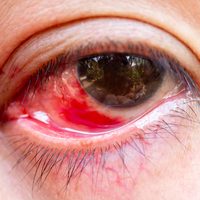
A treatment developed for dogs with an inherited eye condition has produced a result that could change how scientists approach certain forms of blindness. Researchers found that a single dose of gene therapy did more than improve the animals’ vision. It also appeared to repair damaged connections inside the retina, including structures that had failed to develop normally. The findings suggest that the adult retina may retain a surprising ability to reorganize itself, even after years of abnormal development.
The research, led by a team from Michigan State University, focused on a faulty copy of the CaBP4 gene, which plays an essential role in communication between cells in the retina. Published in Molecular Therapy Advances, the study reported improvements in vision alongside physical changes in the treated tissue. The results have raised questions about whether similar approaches could eventually help people with inherited vision loss, although human applications remain unproven and will require further research.
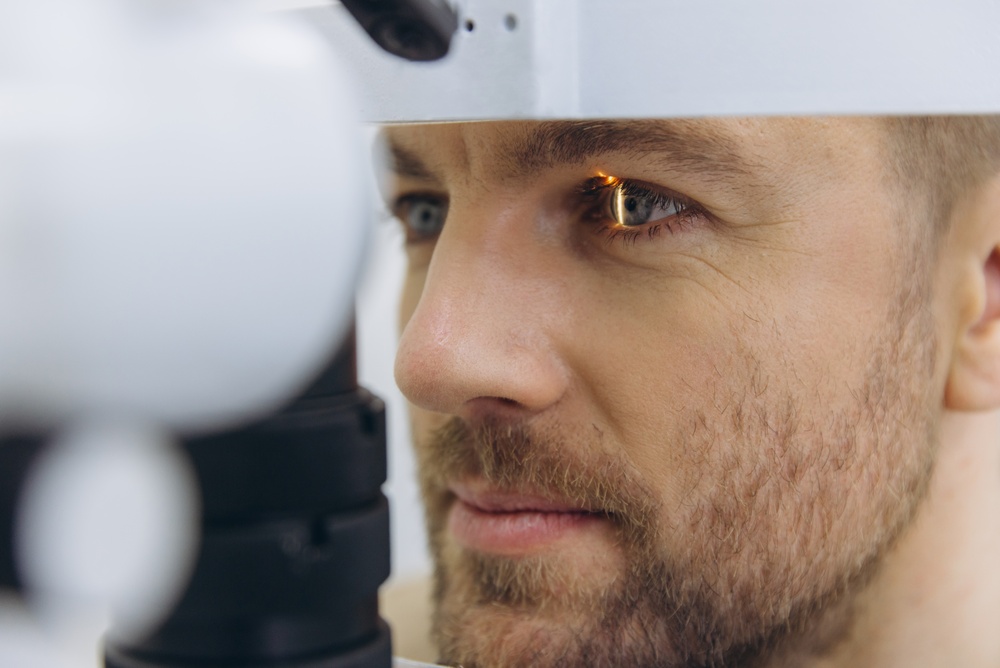
Researchers Discovered That Gene Therapy Did More Than Improve Vision
The researchers investigated an inherited condition linked to faulty copies of the CaBP4 gene, which can cause poor vision from childhood in both humans and dogs. The gene produces a protein involved in chemical signaling inside the retina, the light-sensitive tissue at the back of the eye. When the gene fails to work properly, essential connections between retinal cells develop abnormally, interfering with the processing of visual information. After identifying CaBP4 as the cause of vision loss in a group of whippet dogs, the team investigated whether delivering a functional copy of the gene could improve their condition.
The treatment involved injecting the retina with a harmless virus carrying a working copy of CaBP4. This approach, known as gene augmentation therapy, aims to supply cells with the genetic instructions they need to produce a functional protein. Following treatment, the dogs showed substantial improvements in vision, particularly in dim light, where the effects of the protein deficiency were especially noticeable. The researchers also observed less deterioration in treated regions of the retina, suggesting that the therapy could help preserve tissue while restoring some of its function.
Veterinary ophthalmologist Billie Beckwith-Cohen, who was involved in the research at Michigan State University, described the structural changes as evidence of plasticity in the adult retina. “We were able to show three independent structural changes supporting plasticity in the adult retina,” Beckwith-Cohen said. She also emphasized that the findings extended beyond the formation of new components, explaining, “Not only were new components added, but pre-existing abnormalities were repaired.” These observations gave the team evidence that the treatment had affected the physical organization of the retina as well as the dogs’ ability to see.
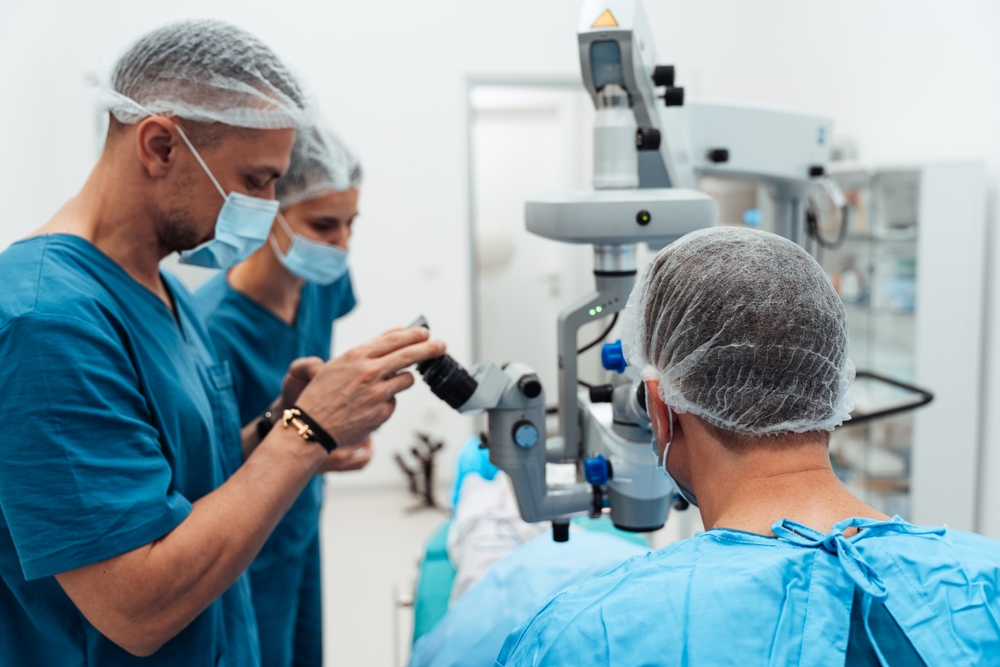
How A Single Gene Therapy Dose Changed The Retina
The treatment was designed to address the genetic problem responsible for the condition rather than simply compensate for poor vision. The CaBP4 gene provides instructions for producing a protein that helps regulate communication within the retina. When those instructions are faulty, the connections responsible for transmitting visual signals can develop incorrectly. By introducing a working copy of the gene, researchers aimed to restore the missing function and give the affected cells an opportunity to operate more normally. The use of a viral delivery system allowed the genetic material to be introduced directly into the targeted tissue.
Beckwith-Cohen compared the genetic defect to a mistake in a set of building instructions. “One can essentially discuss the mutations in the retinal gene as a typo in a blueprint that makes the instructions incomprehensible to the system, resulting in a faulty design and subsequent vision loss,” she explained. She described the therapy as a way of correcting that mistake by providing the missing instructions. “Our therapy essentially provides new instructions for the misspelled segment, like an editor.” The comparison illustrates why gene augmentation can be useful for certain inherited conditions: rather than replacing the entire system, the treatment supplies a functional version of the genetic instructions that cells need.
The reported results were particularly notable because the team observed lasting benefits after a single dose. Follow-up observations extended to three years, providing evidence that the improvements were not necessarily temporary. The study also found structural changes in areas of the retina that had developed abnormally before treatment. However, the findings apply to the specific inherited condition investigated in these dogs. Additional research will be needed to establish the treatment’s safety, effectiveness and durability in humans, as well as whether similar approaches could work for other genetic causes of blindness.
The Retina Began Repairing Connections That Had Developed Abnormally
One of the most important findings involved the outer plexiform layer, or OPL, a region of the retina containing connections that help transmit visual information between cells. In animals affected by the CaBP4 condition, this layer does not develop normally, leaving the visual system with an abnormal structure. After treatment, the researchers observed a significant expansion of the OPL in treated retinal regions. They also found that these regions experienced less deterioration, suggesting that restoring the gene’s function could help improve the organization of tissue that had previously developed incorrectly.
The team also observed changes in synaptic ribbons, specialized structures inside the retina’s light-sensing cells that help relay signals to neighboring cells. These structures were underdeveloped in affected dogs, but after gene therapy, the researchers found evidence of ribbon elongation and maturation. Together with the expansion of the OPL, the changes suggested that parts of the retinal network could continue developing or reorganizing in adulthood. This was particularly interesting because the abnormalities had originated during development, rather than appearing solely as a result of a recent injury.
The researchers wrote that their findings demonstrated substantial plasticity in the OPL and showed that synaptic ribbons could mature and elongate following gene augmentation therapy well into adulthood. The evidence suggests that some structural abnormalities may be reversible when the underlying genetic problem is addressed. It does not establish that every damaged nerve connection can be repaired, or that the same process would occur throughout the nervous system. Instead, the results provide a specific example of how a targeted genetic treatment may influence both the function and the physical structure of adult neural tissue.
Why The Dogs’ Vision Improved Most In Dim Light
The researchers reported particularly noticeable improvements in dim-light vision, a condition in which the CaBP4 protein deficiency has a significant effect. The protein helps regulate calcium-dependent signaling, which plays an important role in communication between cells in the retina. When the gene is faulty, that communication becomes disrupted, making it harder for the visual system to process incoming information normally. Supplying a functional copy of the gene may help restore some of the signaling needed for vision, which could explain the improvements observed in the treated animals.
The study also documented several distinct changes following treatment:
- Improved visual function: The treated dogs showed substantial improvements in vision, particularly in dim light.
- Reduced retinal deterioration: Treated regions showed less degradation associated with the inherited condition.
- Expansion of the outer plexiform layer: The OPL grew significantly in treated areas, suggesting structural recovery.
- Maturing synaptic ribbons: The specialized structures involved in retinal communication became longer and more developed.
- Lasting observed benefits: Follow-up periods extended to three years, suggesting that the effects could persist over time.
These findings provide a broader picture of recovery than improved visual performance alone. The researchers observed changes in the tissue responsible for processing visual information, alongside changes in how the dogs could see. However, the study does not establish precisely how much each structural change contributed to the improvement in vision. Further research will be needed to clarify the mechanisms involved and determine whether comparable changes can be achieved in other forms of retinal disease.
Could The Same Treatment Eventually Help Humans?
The findings have raised the possibility that a similar approach could eventually help people with inherited retinal conditions. The CaBP4 gene is relevant to vision in both dogs and humans, making the canine results potentially useful for understanding the condition in people. The researchers expressed confidence that the approach could translate, but the study did not demonstrate that the treatment is safe or effective in human patients. Human applications would require further investigation, including appropriate clinical testing and evidence that the benefits outweigh any risks.
The genetic cause of a person’s vision loss will also be important. Gene augmentation therapy is designed to address a particular genetic problem, so a treatment aimed at CaBP4 would not automatically work for blindness caused by unrelated mutations or other types of damage. Researchers would need to determine which patients could benefit, how the therapy should be delivered and whether the improvements would last. They would also need to establish whether the structural changes seen in dogs can be reproduced in human retinas.
Even with those limitations, the research offers a useful direction for scientists studying inherited blindness. The team demonstrated that restoring a missing gene function was associated with improvements in vision and changes in retinal structures that had developed abnormally. If further studies confirm these results, the approach could help researchers better understand how adult retinal tissue responds to genetic treatment. For now, the findings represent an encouraging step in animal research rather than an available treatment for people with vision loss.
A Decade Of Research Opened New Questions About Retinal Repair
The study followed approximately a decade of research into inherited eye conditions. By identifying the genetic cause of vision loss in the affected whippets, the researchers were able to test whether supplying a functional copy of the gene could improve the condition. The results suggested that correcting the underlying genetic problem could produce changes extending beyond the retina’s immediate function. The OPL expanded, synaptic ribbons matured, and the treated tissue showed evidence of improved structural organization.
The findings also raise questions about the role of calcium signaling in retinal development and recovery. Because the CaBP4 protein helps regulate communication between cells, researchers may be able to use this model to investigate how changes in signaling affect the formation and maintenance of neural connections. Understanding those mechanisms could help identify other conditions in which targeted treatment might support the recovery of damaged or underdeveloped neural structures. The extent to which these findings apply beyond the specific condition studied remains uncertain.
The researchers’ results add to ongoing efforts to restore or preserve vision through approaches that target different parts of the visual system. Some investigations focus on protecting light-sensitive cells, while others explore ways to restore functions in damaged tissue. The Michigan State University team’s work points toward another possibility: correcting a genetic defect may also give certain retinal connections the opportunity to recover. Establishing whether that potential can be translated into safe and effective human treatments will require further research.
For now, the clearest finding is that a single dose of gene therapy was associated with lasting improvements in vision and measurable structural changes in dogs with an inherited retinal condition. The research offers no guarantee that human retinas will respond in the same way, but it gives scientists a specific mechanism to investigate. The next challenge is determining whether the same capacity for repair can be harnessed safely in people whose vision has been affected by inherited disease.
Sources:
- Beckwith-Cohen, B., Sun, K., Occelli, L. M., Winkler, P. A., Somma, A. T., Montiani-Ferreira, F., Marinho, L. F. L. P., Schall, P. Z., Parys, M., Yuzbasiyan-Gurkan, V., & Petersen-Jones, S. M. (2026). Gene therapy induces synaptic ribbon maturation, synaptogenesis and vision recovery in an adult dog model of retinal degeneration. Molecular Therapy Advances, 34(3), Article 201782. https://doi.org/10.1016/j.omta.2026.201782
- Zeitz, C., Kloeckener-Gruissem, B., Forster, U., Kohl, S., Magyar, I., Wissinger, B., Mátyás, G., Borruat, F.-X., Schorderet, D. F., Zrenner, E., Munier, F. L., & Berger, W. (2006). Mutations in CABP4, the gene encoding the Ca²⁺-binding protein 4, cause autosomal recessive night blindness. The American Journal of Human Genetics, 79(4), 657–667. https://doi.org/10.1086/508067